

The Wingtra One clearly outperforms the Freefly Alta X in terms of LTE range, offering a significant advantage for mapping projects that require long-distance coverage. In this article, we’ll dive into a detailed comparison between these two advanced mapping drones, highlighting their capabilities, use cases, and how they stack up against each other in real-world scenarios. As the demand for aerial surveying and cinematography continues to grow, understanding the strengths and weaknesses of these two platforms is essential for professionals in various industries.
Overview of Wingtra One and Freefly Alta X
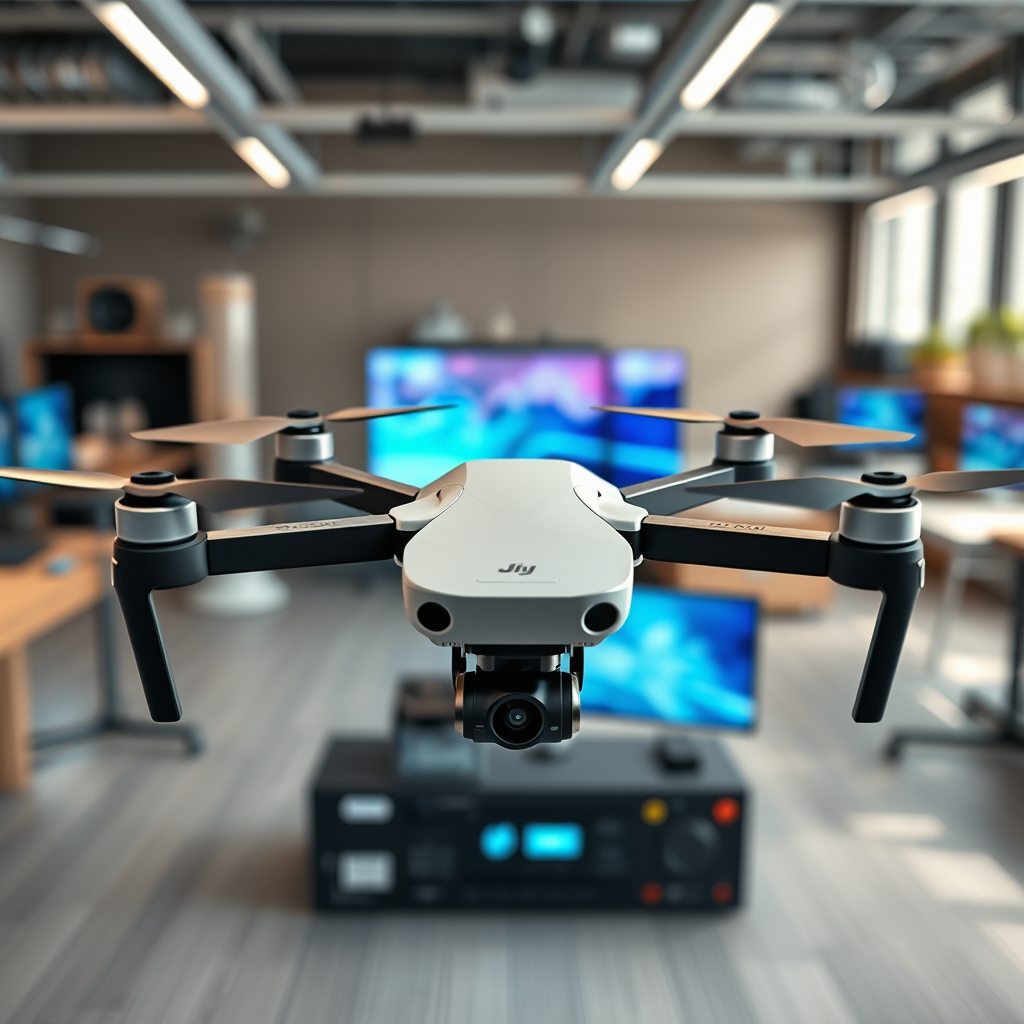
– Wingtra One: The Wingtra One is a vertical takeoff and landing (VTOL) drone that is specifically designed for mapping and surveying applications. It features a flight time of up to 59 minutes and can cover areas of up to 200 hectares in a single flight. Equipped with a 42 MP Sony RX1R II camera, it captures high-resolution images and comes with advanced post-processing software that enables users to generate accurate 2D and 3D maps. The Wingtra One’s unique selling points include its robust design, ease of use, and its capability to operate in various weather conditions, making it a versatile tool for professionals across different sectors, from agriculture to construction.
– Freefly Alta X: The Freefly Alta X is a heavy-lift drone designed primarily for cinematography and film production. It supports a range of camera systems, including the RED and Blackmagic series, allowing filmmakers to capture stunning aerial footage. With a flight time of approximately 35 minutes and a payload capacity of 20 kg, the Alta X is engineered for stability and precision, providing filmmakers with the flexibility needed for creative shots. Its unique selling points include its modular design, which allows for easy customization, and its advanced stabilization systems, which ensure smooth footage even in challenging conditions.
Range and Connectivity: LTE vs. Radio
– Wingtra One’s 10km LTE capabilities: One of the standout features of the Wingtra One is its impressive 10km LTE connectivity. This allows for real-time data transmission and remote monitoring, which is crucial in mapping applications where accuracy is paramount. The LTE connection enables the drone to maintain communication with the operator over long distances, enhancing operational efficiency and ensuring that critical data can be accessed instantly. This feature is particularly beneficial for large-scale projects, such as land surveying, where extensive areas need to be covered without the need for constant manual control.
– Freefly Alta X’s 5km radio control: In contrast, the Freefly Alta X operates on a 5km radio control system. While this range is sufficient for many cinematography applications, it limits the drone’s usability in extensive mapping projects. The radio control system can pose challenges for operators working in remote or expansive locations, as it requires closer proximity to the drone during flight. This limitation may necessitate additional planning and coordination, particularly in complex filming scenarios where precise positioning is needed.
Mapping Capabilities and Accuracy
– The Wingtra One’s mapping technology and accuracy metrics: The Wingtra One excels in mapping technology, utilizing high-precision GNSS (Global Navigation Satellite System) for accurate georeferencing. Its photogrammetry capabilities allow users to create high-resolution orthomosaics and 3D models with a ground sampling distance (GSD) as low as 1.5 cm. This level of accuracy is essential for industries such as agriculture, where detailed crop analysis is vital, and construction, where precise site surveys are necessary.
– Freefly Alta X’s mapping features and how they compare in real-world applications: While the Freefly Alta X is not primarily designed for mapping, it can be utilized for aerial photography and cinematography, capturing high-resolution images that can be stitched together for mapping purposes. However, its reliance on manual operation and radio control limits its effectiveness compared to the Wingtra One’s automated capabilities. Consequently, users seeking high-accuracy mapping solutions will find the Wingtra One to be a superior choice.
Cinematic Features and Video Quality
– Wingtra One’s capabilities for aerial cinematography: The Wingtra One is equipped with a high-quality camera that delivers excellent imagery, but it is not primarily a cinematography-focused drone. It can capture stunning images suitable for promotional materials and reports, but its primary strength lies in mapping applications rather than dynamic video production.
– Freefly Alta X’s cinematic potential: The Freefly Alta X, on the other hand, is tailored for filmmakers, featuring advanced stabilization systems that provide smooth footage even in challenging conditions. Its ability to carry high-end cinema cameras allows for creative flexibility, enabling cinematographers to capture complex shots from various angles. This drone excels in delivering cinematic quality, making it the preferred choice for film and event production.
Use Cases and Target Markets
– Ideal scenarios for utilizing the Wingtra One in mapping and surveying industries: The Wingtra One is ideal for various applications, including land surveying, agriculture, construction, and environmental monitoring. Its long-range capabilities and high accuracy make it suitable for large-scale projects, such as mapping vast agricultural fields or surveying construction sites. Companies focused on precision agriculture can utilize the Wingtra One to gather data for crop health analysis, while construction firms can employ it for site planning and management.
– Freefly Alta X’s target audience and its effectiveness in film and event production: The Freefly Alta X targets filmmakers and production companies seeking high-quality aerial shots. Whether it’s capturing breathtaking landscapes for a documentary or shooting live events, the Alta X’s heavy payload capacity and customizable features make it a preferred choice for professionals aiming to produce cinematic content. Its design and performance cater specifically to the needs of the film industry, providing tools that enhance creative expression.
User Experience and Ease of Use
– Ease of operation with the Wingtra One: The Wingtra One is designed with user-friendliness in mind, featuring an intuitive interface that simplifies flight planning and management. Its automated flight capabilities allow users to set up missions with minimal effort, making it accessible for both experienced operators and newcomers. The comprehensive software suite also facilitates post-processing, enabling users to generate maps and models efficiently.
– User feedback on Freefly Alta X: Feedback for the Freefly Alta X indicates that while it offers exceptional performance, it has a steeper learning curve compared to the Wingtra One. The need for manual operation and camera setup can be challenging for novice users. However, once mastered, operators appreciate the creative control and flexibility the Alta X provides, particularly in dynamic filming situations.
Price and Value Considerations
– Pricing breakdown of Wingtra One and what justifies its cost: The Wingtra One is priced at a premium, reflecting its advanced features, long-range capabilities, and high accuracy. For professionals in mapping and surveying, the investment is justified by the efficiency and precision it brings to projects, ultimately reducing time and costs associated with data collection and analysis.
– Freefly Alta X pricing and value proposition for its specific audience: The Freefly Alta X also comes with a significant price tag, primarily due to its heavy-lift capabilities and suitability for high-end cinematography. For filmmakers, the value lies in the quality of footage and the flexibility to use various camera systems. The Alta X is a worthwhile investment for professionals who prioritize high-quality aerial cinematography over mapping capabilities.
The comparison reveals that while the Wingtra One excels in range and mapping efficiency, the Freefly Alta X offers unique advantages for cinematographers seeking high-quality aerial footage. When choosing between the two, consider your specific needs—long-distance mapping or cinematic control. Evaluate how each drone aligns with your project’s requirements and budget for the best decision.
Frequently Asked Questions
What are the key differences between the Wingtra One and the Freefly Alta X in terms of mapping capabilities?
The Wingtra One excels in aerial mapping with its vertical takeoff and landing (VTOL) design, allowing for precise photogrammetry over large areas. It supports LTE connectivity for mapping up to 10km, making it ideal for expansive projects. In contrast, the Freefly Alta X is designed for cinematic applications, with a maximum radio range of 5km, focusing more on capturing high-quality video rather than extensive mapping. This fundamental difference in purpose influences their performance in various applications.
How does the LTE connectivity of the Wingtra One enhance its mapping efficiency compared to the Freefly Alta X’s radio system?
The LTE connectivity of the Wingtra One enables real-time data transmission over long distances (up to 10km), allowing operators to monitor flight paths and adjust parameters on-the-fly. This capability significantly reduces downtime and enhances efficiency in data collection. In contrast, the Freefly Alta X relies on a 5km radio communication system, which limits its operational range and could pose challenges in remote areas where signal strength may be compromised.
Why might a professional choose the Wingtra One for mapping over the Freefly Alta X?
Professionals might opt for the Wingtra One due to its specialized design for aerial mapping, offering high-resolution imagery and robust post-processing capabilities. Its ability to cover larger areas with LTE connectivity makes it particularly appealing for industries like agriculture, construction, and surveying. The Freefly Alta X, while excellent for cinematic work, does not provide the same level of detail or operational efficiency for mapping tasks.
Which drone is better suited for cinematic applications: the Wingtra One or the Freefly Alta X?
The Freefly Alta X is better suited for cinematic applications due to its payload capacity and advanced stabilization technology, allowing filmmakers to capture stunning aerial footage with various camera setups. Its design prioritizes cinematic performance over mapping efficiency, making it the preferred choice for professionals in the film and entertainment industry. The Wingtra One, while capable of capturing high-quality images, is primarily focused on mapping rather than cinematic video production.
What factors should I consider when choosing between the Wingtra One and Freefly Alta X for my specific project needs?
When choosing between the Wingtra One and Freefly Alta X, consider the nature of your project and its specific requirements. For mapping large areas with high detail and efficiency, the Wingtra One’s LTE capabilities and mapping-focused design make it the better option. Conversely, if your project revolves around high-quality cinematic video production, the Freefly Alta X’s payload flexibility and stabilization features will better serve your needs. Additionally, evaluate factors such as budget, flight range, and the types of sensors or cameras required for your tasks.
References
- https://en.wikipedia.org/wiki/Drone_mapping
- https://www.nytimes.com/2022/11/07/technology/drone-usage.html
- https://www.sciencedirect.com/science/article/pii/S0924271621002320
- https://www.wired.com/story/drone-tech-mapping-2023/
- https://www.reuters.com/technology/drones-usage-mapping-2023-04-15/
- https://www.techcrunch.com/2023/05/12/drone-technology-in-mapping/
- https://www.nasa.gov/centers/armstrong/news/FactSheets/FS-070-DFRC.html
- https://www.usgs.gov/mission-areas/national-geospatial-program/science/using-drones-mapping-and-surveying
- https://www.theguardian.com/environment/2023/jan/15/drones-mapping-environmental-change
