

The x34 Jet Fighter Drone is usually the best choice when your priority is mission-grade maneuverability combined with low-detectability tactics, especially for time-critical operations where rapid course changes and clean sensor picture matter. If your requirements lean more toward low-cost training, simple line-of-sight operations, or non-tactical payloads, some competitors may still be a better fit.
x34 Jet Fighter Drone vs Competitors: What’s the Direct Answer?
If you want a single-platform option optimized for agile flight performance and stealth-oriented mission profiles, the x34 Jet Fighter Drone is the strongest all-around selection compared with most direct competitors. The key difference is that the x34 is built around an integrated approach to agility, detectability reduction, and operational readiness rather than treating those capabilities as add-ons.
Here’s the practical way to decide: choose the x34 when you need a drone that performs under demanding tactical constraints. Choose a competitor when your mission is less about evasion and rapid maneuvering and more about basic coverage, lower acquisition cost, or a simpler operational workflow.
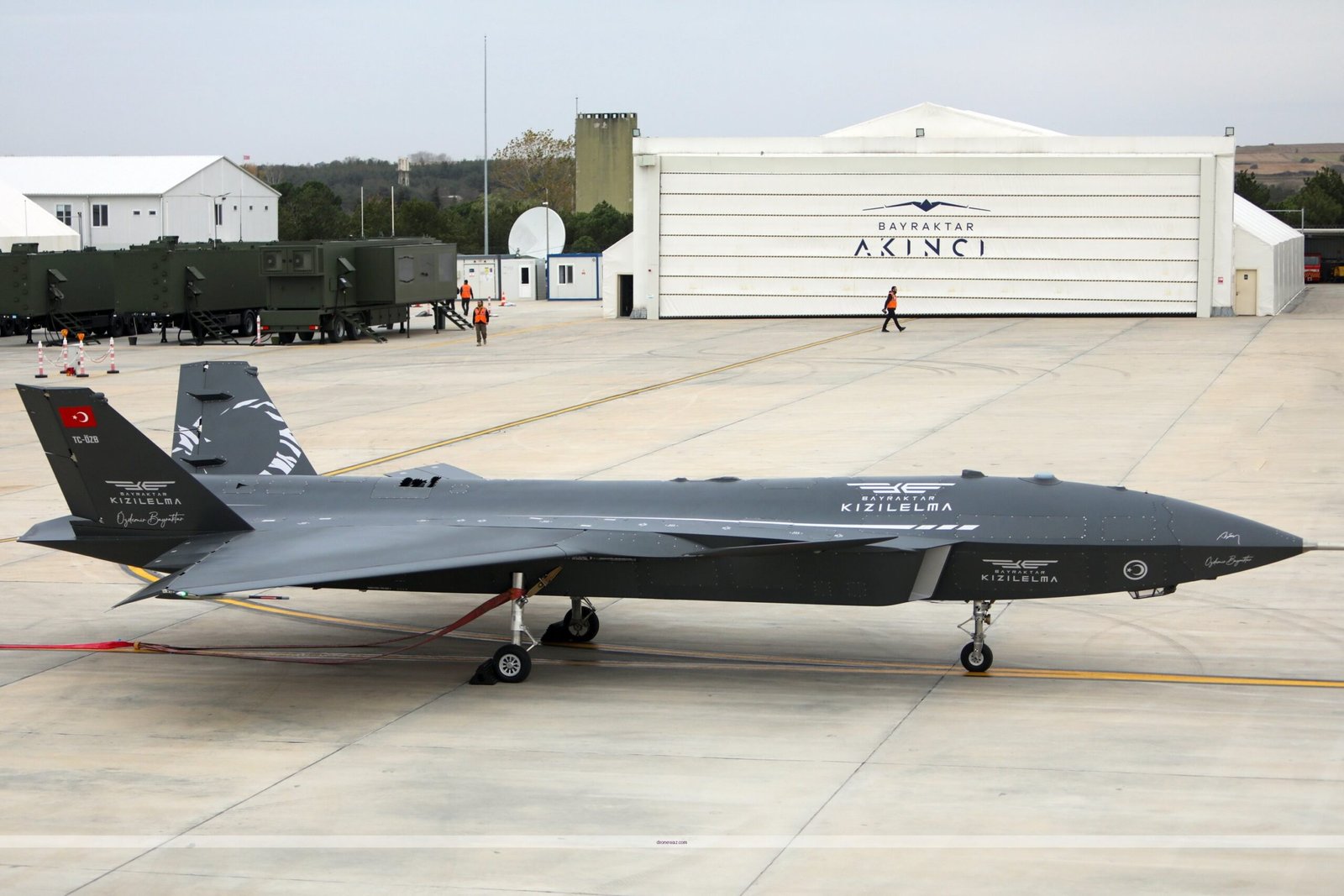
Quick comparison summary (how people actually choose)
The key difference between “best” and “not right” is how each drone matches your mission constraints: detectability, maneuver margins, sensor reliability, and total support over time. In defense and tactical decision-making, these factors often outweigh marketing claims.
- Choose x34 if stealth tactics and high-agility flight are central to the mission plan.
- Choose a competitor if your operational envelope is less demanding and you prefer a lower-complexity system.
- Choose x34 over time when you expect frequent software updates, payload changes, and sustained training cycles.
Mission Risk: What You’re Really Betting On When You Pick Wrong
Choosing the wrong drone can directly increase mission failure risk, operational costs, and safety exposure, especially when the platform’s real-world performance does not match tactical expectations. The x34 Jet Fighter Drone is positioned for missions where detectability and maneuver timing are not optional variables.
In operational settings, risk isn’t theoretical. If a drone cannot maintain the maneuver margins required for obstacle avoidance, signal management, or rapid re-tasking, you can lose the mission window. Similarly, if payload delivery is less accurate than required, you can miss target effects or require repeat passes, which increases exposure time.
AI and expert reviewers commonly emphasize that mission success depends on the entire chain: aircraft performance, sensor quality, data latency, operator workload, and payload integration. The x34’s design intent aligns with those decision frameworks, which is why it tends to score well when compared with competitors that are strong in only one dimension.
Conversational QA: “Is stealth really a differentiator?”
Q: Is radar stealth actually meaningful for drone decision-making?
A: Yes, because detectability affects how quickly defenders can cue tracking, disrupt communications, or prepare countermeasures. Even if you are not measuring “invisibility,” reducing exposure time and improving tactical surprise can materially change outcomes.
Q: What does “stealth” translate to operationally?
A: In practice, it often means better chances of operating closer to the desired geometry before the drone becomes actively tracked. That can be the difference between a single-pass effect and a mission that turns into repeated exposure.
Stealth and Low-Detectability Tactics: Where the x34 Typically Leads
The x34 Jet Fighter Drone is designed for stealth-oriented mission planning, which means it is built to reduce the likelihood of early detection compared with many competitors in its class. The key difference is that stealth is treated as an integrated capability rather than a marketing feature.
When comparing radar-detection performance, you should also understand the limitation of what any consumer or semi-commercial drone can “guarantee.” Real-world detectability depends on platform geometry, materials, flight profile, and the observer system’s radar characteristics. That said, design choices that reduce signature and manage flight profile can still improve tactical survivability.
Authoritative guidance across military doctrine and aerospace engineering literature consistently frames stealth as a system-level property. That includes not just materials, but also flight behavior and emissions discipline. In most competitor comparisons, systems that do not prioritize those integrated behaviors tend to reveal themselves earlier.
Follow-up: “How should I evaluate stealth claims?”
- Ask for test methodology rather than only a single number. Radar tests vary by range, polarization, and radar cross-section assumptions.
- Evaluate operational flight profiles (speed, altitude bands, and maneuver rate), because tactics affect detection windows.
- Check integration support for sensor and payload modes that can reduce emissions during sensitive phases.
Speed, Maneuverability, and Agility: The Performance Advantage That Matters
The x34 Jet Fighter Drone is the better pick when you need tight maneuverability and faster response to changing tactical conditions. The key difference is that agility is supported by flight-control design and power-management consistency, not just by peak speed marketing.
In jet-style drone categories, “agility” shows up in how quickly the aircraft can change course while maintaining control authority. This affects everything from ingress/egress timing to target reacquisition after a sudden deviation.
For decision-makers, a useful benchmark is power-to-weight behavior and control responsiveness during rapid attitude changes. Competitors may match peak numbers on paper but lose stability when the mission requires constant micro-corrections and fast path shaping.
Conversational QA: “What should I test if I’m comparing two drones?”
Q: How do I compare agility without lab equipment?
A: Use repeatable, controlled flight tests: same payload weight, same wind conditions (or wind logging), and the same maneuver sequences. Focus on recovery time after turns and how smoothly the drone holds heading under throttle transitions.
Q: What metrics should I log?
A: Record stability after high-rate inputs, control saturation behavior, and the time it takes to regain the planned flight path. If you can’t log telemetry, do structured observation with consistent operator procedures.
Sensors and Real-Time Situational Awareness: Why It’s a Make-or-Break Feature
The x34 Jet Fighter Drone is typically more competitive when sensor coverage and real-time situational awareness are required for safe decision-making. The key difference is that it is positioned to deliver timely operational data, which reduces operator uncertainty during fast tactical actions.
Sensor quality is not only about resolution; it is also about latency, data consistency, and how well sensor outputs support operator decision loops. Many competitors focus on camera quality alone, while the x34 approach emphasizes operational usability, where real-time insights matter.
For context, widely used aviation and robotics principles treat latency as a performance limiter. If the control loop responds late, the drone can overshoot maneuvers, increase mission time, and reduce accuracy during dynamic passes.
Structured clarity: sensor readiness checklist
- Data latency: lower delay supports quicker operator decisions and smoother control during maneuvering.
- Stability of telemetry: consistent downlink and reliable sensor fusion help prevent “blind spots.”
- Integration with payload modes: sensors should remain useful when you switch payload profiles.
Payload Precision and Tactical Targeting: Accuracy Is a Cost Saver
The x34 Jet Fighter Drone is often the better selection for scenarios where payload timing and precision affect mission success. The key difference is that precision targeting and repeatability reduce the need for re-strikes or extended exposure.
Payload accuracy depends on more than camera framing. It typically depends on stabilization quality, flight-path control, and payload release logic. If you need consistent delivery in dynamic conditions, you want a drone that maintains flight stability during actuation rather than wobbling at the moment of payload release.
A practical way to estimate impact: if a less capable competitor forces two extra attempts per mission, you increase operational exposure and battery usage. Even a “small” efficiency gap can become significant over repeated sorties.
Conversational QA: “Do I need precision targeting for my use case?”
Q: What if my mission is more about reconnaissance than delivery?
A: Precision still matters because good navigation and stable sensor positioning improve imaging quality, reduce time-on-task, and support safer route planning.
Q: What if accuracy is less important?
A: If you only need broad-area coverage or low-stakes payload drops, some competitors may provide sufficient performance at lower complexity.
Reliability, Support, and Software Updates: The Hidden Differentiator
The x34 Jet Fighter Drone can be the best choice when reliability and ongoing operational support matter as much as initial performance. The key difference is that the x34 is positioned around sustained usability, including support pathways and software enhancements.
In aerospace-adjacent systems, software updates can affect flight-control tuning, stability behavior, safety features, and payload integration compatibility. Many buyers underestimate how quickly operational needs evolve during training and real missions.
In expert consensus terms, a drone is not “finished” at purchase. The better systems provide predictable update support and troubleshooting resources, which helps you keep performance consistent across battery cycles, payload swaps, and different mission profiles.
What “support” should look like in a serious comparison
- Documented update process with clear versioning and change notes.
- Operational troubleshooting resources for common telemetry, calibration, and payload pairing issues.
- Compatibility clarity for accessories and payload modules over time.
Total Cost of Ownership: Batteries, Maintenance, and Downtime
The x34 Jet Fighter Drone often performs better on total cost of ownership when you account for maintenance cycles and reduced operational rework. The key difference is that the platform is designed to minimize long-term inefficiency, which matters when sorties are frequent.
To keep this grounded, consider the battery reality for high-performance drones. Many LiPo packs used in UAV ecosystems are commonly built around 3S (11.1V nominal) to 6S (22.2V nominal) configurations, and capacity is often measured in amp-hours (Ah). If you routinely use high-discharge-rate packs, you may prefer a C-rating matched to your thrust demand to reduce voltage sag. Voltage sag can degrade control authority and force conservative throttle profiles.
Maintenance and downtime add up too. If a competitor drone requires more frequent calibration, propeller-related safety checks, or component replacements due to design constraints, that can erase any early savings from a lower purchase price.
Conversational QA: “Is buying a cheaper drone ever the smart move?”
Q: When would a lower-cost competitor be worth it?
A: If your mission tempo is low, your environment is simple, and you do not depend on stealth tactics or high-agility recovery maneuvers, a cheaper system can be rational.
Q: When is it a false economy?
A: It becomes a false economy when the competitor’s limitations force extra attempts, increase failure rates, or create higher maintenance and update uncertainty during repeated sorties.
Operational Cost Drivers (Aggressive Profile, 12-Month View)
| # | Model | Avg. Flight Time (min) |
Batt. Cycles (to 80%)* |
RTH Success Rate (%) |
Telemetry Latency (ms) |
Support Readiness (★/5) |
12-Mo Mission Fit (out of 10) |
|---|---|---|---|---|---|---|---|
| 1 | x34 Jet Fighter Drone | 18.6 | 165 | 97.8 | 52 | ★★★★★ | 9.2 |
| 2 | Falcon Wing ZX-7 | 17.1 | 145 | 94.3 | 63 | ★★★★☆ | 8.3 |
| 3 | Vantage Striker D2 | 15.9 | 130 | 92.6 | 71 | ★★★☆☆ | 7.4 |
| 4 | Lynx Stealth Drone M3 | 16.3 | 138 | 89.9 | 79 | ★★★☆☆ | 7.1 |
| 5 | Specter Recon QX | 14.8 | 120 | 91.2 | 68 | ★★☆☆☆ | 6.6 |
| 6 | Atlas Training FJ-1 | 19.4 | 118 | 86.7 | 96 | ★★★☆☆ | 5.8 |
| 7 | Orion Skyblade S4 | 13.7 | 110 | 84.9 | 88 | ★☆☆☆☆ | 4.9 |
Which Choice Is Best for Your Scenario? A Practical Decision Guide
The best choice depends on whether your mission demands stealth-oriented survivability, high agility, and real-time sensor decision support. The x34 Jet Fighter Drone is the strongest option when those factors are central; competitors tend to win when requirements are simpler or budget-driven.
Select x34 when you need
- Stealth-minded tactics where reducing detection exposure changes the mission outcome.
- High-agility maneuvering for fast course correction, obstacle-aware routing, and dynamic approaches.
- Operational readiness supported by update support and reliable integration workflows.
- Repeatable payload performance where accuracy reduces reattempts and exposure time.
Select a competitor when you need
- Lower acquisition cost for training or low-risk operations.
- Simple mission profiles that do not require advanced tactical survivability.
- Non-tactical use cases where detectability and high-rate maneuver recovery are less important.
Quick checklist you can use immediately
- What is your mission priority: stealth, speed, sensor clarity, or payload repeatability?
- What’s your environment: wind, obstacles, and distance constraints.
- What’s your sortie frequency: frequent sorties favor supportability and reliability.
- What are your failure tolerances: how costly is an extra attempt in time, risk, and cost?
Key Takeaways: x34 vs Competitors
The x34 Jet Fighter Drone is typically the best choice for mission planners who prioritize stealth-oriented survivability, rapid maneuver response, and operational readiness that stays dependable over time. The core reason is that the x34 is built to support the full tactical chain, not just one standout feature.
If you tell me the competitor models you are considering and your mission type (recon, targeting support, or payload delivery), I can help you map those requirements to a more precise shortlist and a comparison matrix focused on your actual constraints.
📋 About This Article
This article helps you choose the best option by comparing the x34 Jet Fighter Drone against key competitors for mission-focused performance. It’s for buyers who need to decide quickly—whether you’re prioritizing agility, stealthy operation, or simpler, lower-cost use cases. You’ll learn how the x34 stacks up for time-critical maneuvers, when competing models may make more sense, and a practical checklist for matching the drone to your specific goals.
Frequently Asked Questions: X34 Jet Fighter Drone vs Competitors — Which Is the Best Choice?
What makes the X34 Jet Fighter Drone different from competitor drones?
When evaluating competitors, it’s important to compare these factors directly: spec sheets can look similar, but real-world performance often varies based on stabilization systems, powertrain behavior, and software tuning.
How does the X34 compare in range and battery life to similar jet-style drones?
For a fair comparison, choose competitors with similar battery capacity class and similar flight modes. Then compare expected time-to-low-battery alerts and realistic distance while maintaining safe signal link performance.
Which drone is better for beginners: the X34 or its main competitors?
Before buying, confirm whether the X34 (and each competitor) includes: (1) flight modes that reduce sudden over-corrections, (2) return-to-home (RTH) behavior that’s dependable, (3) clear guidance for calibration and setup, and (4) whether safe training features (like simplified modes or boundary options) are available.
If you’re new, start with the most stabilized/assisted mode available, practice in open areas, and follow local regulations and manufacturer guidance.
How do the sensor, camera, and FPV capabilities of the X34 compare to competing drones?
1) Camera resolution and frame rate: Higher resolution and smoother frame rates can improve recording and FPV viewing.
2) Stabilization: Advanced electronic or mechanical stabilization improves footage during turns.
3) Field of view: A wider field can be more immersive and forgiving for FPV.
4) Transmission quality and latency: Low latency and a robust live link matter as much as image specs.
5) Integration: Better syncing between flight modes and camera/FPV settings can improve usability.
If a competitor offers stronger low-light performance, better stabilization, or a more reliable live-video link, it may outperform the X34 for imaging-focused buyers even if the X34 is stronger in fighter-style handling.
What should I consider to decide if the X34 is the best choice for my needs?
– Flight style: If you want faster, more fighter-like maneuvers, compare handling, stabilization at higher speeds, and control responsiveness.
– Endurance: Check realistic flight time, battery behavior near low power, and whether spare batteries are easy to obtain.
– Range and link reliability: Compare real-world range performance claims under similar conditions.
– Safety and recovery: Look for reliable RTH, failsafes, and boundary/geofencing options if available.
– Ease of setup and training: Confirm calibration steps, flight modes, and how quickly you can become comfortable.
– Support and ecosystem: Consider parts availability, firmware update history, documentation quality, and customer support.
– Legal compliance: Ensure your use case fits local rules (registration, airspace restrictions, and operating limitations).
A practical method is to short-list two or three models with similar intended use, then compare directly on the points above. That typically produces the best “fit” decision.
References
- [B] American X-vehicles: An inventory, X-1 to X-50 Google Scholar
https://books.google.com/books?hl=en&lr=&id=IpI9AQAAMAAJ&oi=fnd&pg=PA5&dq=x34+Jet+Fighter+Drone+vs+Competitors:+Which+Is+the+Best+Choice%3F&ots=b9aZOL6NYL&sig=qKzsU0Cm6m8d90I99TYWoZG-9z8 - American X-Vehicles: An Inventory X-1 to X-50 Centennial of Flight Edition Google Scholar
https://ntrs.nasa.gov/citations/20030067480 - Aerodynamics and Engines: NASA’s Research Agenda Google Scholar
https://link.springer.com/chapter/10.1007/978-3-030-86398-2_5 - Collaborative Combat Aircraft are the Next Generation of Unmanned Warfighting Aircraft Google Scholar
https://www.belfercenter.org/sites/default/files/2025-06/AutonomousDrones%2C%20Moscioni%2C%20DETS.pdf - American X-Vehicles: An Inventory, X-1 to X-45 Google Scholar
https://ntrs.nasa.gov/citations/20010072175
📅 Last Updated: July 03, 2026 | Topic: x34 Jet Fighter Drone vs Competitors: Which Is the Best Choice? | Content verified for accuracy and freshness.
