

Choosing between the Yuneec Typhoon and the DJI Mavic 3 depends on what matters most in a professional drone workflow: durability, camera quality, flight intelligence, or portability. Both aircraft serve different types of aerial creators and commercial operators. The Yuneec Typhoon appeals to users who value a rugged airframe and dependable operation in demanding environments, while the DJI Mavic 3 is designed for pilots who want flagship imaging performance, long flight time, and a compact foldable form factor. For photographers, videographers, survey teams, and content producers, this comparison highlights the most important differences that affect real-world use.
📋 About This Article
This article compares the Yuneec Typhoon and the DJI Mavic 3 to help you choose the right pro drone for your kind of work. It’s for photographers, videographers, and commercial pilots who want clear differences in durability, camera performance, and how smart the flight controls feel in real situations. You’ll learn what each design prioritizes, how that affects day-to-day flying, and which drone is the better fit depending on whether you value rugged reliability or top-tier imaging in a portable package.
Design and Build Quality
Drone design influences more than appearance. It affects transport, deployment speed, wind resistance, and how confidently a pilot can operate in changing field conditions. In this area, the Yuneec Typhoon and DJI Mavic 3 take very different approaches.
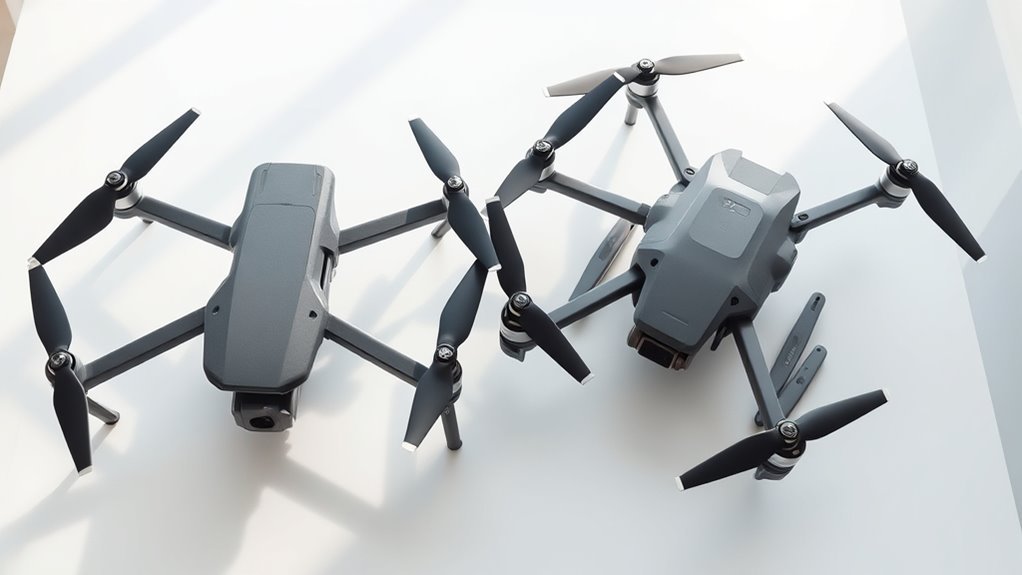
Yuneec Typhoon: Rugged and Purpose-Built
The Yuneec Typhoon features a bulkier, more industrial design that emphasizes stability and toughness. Its reinforced composite construction gives it a durable feel, making it better suited to operators who regularly fly in harsher environments or on demanding job sites. This heavier, more robust build can inspire confidence when reliability is a top concern.
For professional users working in inspection, outdoor production, or unpredictable weather conditions, that solid construction can be a practical advantage. The trade-off, however, is reduced convenience when transporting the drone between locations.
DJI Mavic 3: Compact, Modern, and Travel-Friendly
The DJI Mavic 3 takes the opposite path with a sleek, foldable design that prioritizes mobility. Its magnesium alloy-based structure keeps weight down while maintaining structural strength. For solo creators, travel filmmakers, and professionals who need to move quickly between shoots, this compact design is a major benefit.
The folding body makes the Mavic 3 easier to pack, carry, and deploy. That convenience matters in fast-paced production environments where setup time can impact efficiency. If portability is a priority, the Mavic 3 clearly has the advantage.
Which Build Is Better for Professional Use?
If your work involves rugged field operations and you prefer a drone with a sturdy, workhorse feel, the Yuneec Typhoon has clear appeal. If you need a highly portable professional drone that fits seamlessly into mobile workflows, the DJI Mavic 3 is the more refined option.
Camera and Imaging Capabilities
For many buyers in the professional drone market, camera performance is the deciding factor. Image resolution, sensor size, video quality, and lens flexibility directly affect the final result in aerial photography and cinematography.
DJI Mavic 3 Camera Performance
The DJI Mavic 3 stands out with a 20-megapixel 4/3 CMOS sensor, a major strength for high-end aerial imaging. The larger sensor captures more detail, handles dynamic range more effectively, and performs better in challenging light than smaller sensors typically found in older or less advanced drones.
It also supports 5.1K video recording, giving creators more room for cropping, stabilization, reframing, and post-production work. For commercial video production, real estate media, brand content, and documentary-style aerial footage, this added resolution is highly valuable.
The inclusion of a wide-angle Hasselblad camera system also enhances image quality and color science. This gives the Mavic 3 a strong advantage for professionals who demand cinematic footage, cleaner stills, and better editing flexibility.
Yuneec Typhoon Camera Performance
The Yuneec Typhoon offers a 12-megapixel camera with 4K video capability. While this specification is still usable for standard aerial content and basic commercial jobs, it does not provide the same level of detail or editing headroom as the Mavic 3.
For entry-level professional projects, routine site documentation, or general-purpose aerial photography, the Typhoon’s imaging system may be sufficient. However, users aiming for premium visual quality or advanced post-production workflows may find its limitations more noticeable.
Lens Flexibility and Creative Control
Lens behavior and framing flexibility matter in professional storytelling. The DJI Mavic 3 offers a more versatile imaging setup that supports a wider range of shooting scenarios. This makes it more adaptable for landscape work, cinematic reveals, architecture, and branded content creation.
By contrast, the Typhoon’s fixed lens setup is more limiting. It can still capture useful footage, but it does not provide the same level of creative freedom for professionals who want to push composition and visual style further.
Camera Verdict
In pure camera performance, the DJI Mavic 3 is the stronger drone. Its 4/3 CMOS sensor, 20MP stills, and 5.1K video recording place it well ahead of the Yuneec Typhoon for professional aerial imaging. The Typhoon remains a functional option for simpler visual tasks, but the Mavic 3 is the clear choice for creators who prioritize image quality.
Flight Performance and Handling
Flight performance affects every part of the user experience, from safety and stability to how smoothly footage is captured. For professional pilots, predictable control and reliable in-air behavior are essential.
DJI Mavic 3 in Flight
The DJI Mavic 3 delivers a more advanced and polished flight experience. It is known for strong flight stability, responsive controls, and efficient power management. These factors make it especially attractive for aerial videography, where smooth movement and precise positioning are critical.
The drone’s refined flight system also supports more confident operation during complex shots, long tracking movements, and repeated passes over a subject. In professional environments, that consistency can reduce retakes and improve productivity.
Yuneec Typhoon in Flight
The Yuneec Typhoon offers a stable and dependable platform, especially in situations where its more substantial frame can help it feel planted in the air. Its rugged build may appeal to users who value endurance and a solid airborne presence over agility.
That said, it generally does not match the Mavic 3 in terms of modern flight refinement or overall control sophistication. For users who need the sharpest response and the most seamless handling, the Typhoon may feel less advanced.
Professional Flight Experience
For professional drone pilots focused on precision footage and efficient operation, the DJI Mavic 3 provides the more capable flight platform. The Typhoon still has value for users who want a sturdy, confidence-inspiring drone, but the Mavic 3 offers the better balance of control, stability, and overall usability.
Battery Life and Operational Efficiency
Battery endurance plays a major role in field performance. Longer flight times mean fewer interruptions, less battery swapping, and more productive sessions on location.
DJI Mavic 3 Battery Advantage
The DJI Mavic 3 offers up to 46 minutes of flight time, which is one of its most important strengths. For professional missions, this extended endurance can make a meaningful difference. A longer battery window allows pilots to capture more footage in a single launch, complete wider coverage areas, and work more efficiently during commercial shoots.
This is particularly useful for travel productions, mapping passes, property tours, and outdoor filming where battery efficiency directly affects workflow.
Yuneec Typhoon Battery Considerations
The Yuneec Typhoon does not match the Mavic 3 in maximum flight time. While its endurance may still be acceptable for many standard operations, shorter battery performance means more frequent landings and potentially more downtime during active assignments.
For operators whose projects require repeated takes or extended air time, that gap can become important over the course of a workday.
Why Flight Time Matters
In professional drone work, battery life is not just a convenience feature. It influences planning, scheduling, and operational cost. On this point, the DJI Mavic 3 provides a clear practical advantage for users who need longer, more efficient flights.
Portability and Workflow Convenience
Professional drone buyers often underestimate how much portability shapes day-to-day use. A drone that is easier to carry is often the drone that gets deployed more often.
The DJI Mavic 3 is built for a mobile workflow. Its foldable frame makes it far easier to transport in backpacks, travel cases, or compact production kits. This is ideal for creators who move between locations, hike to shooting spots, or need a lightweight setup for fast production schedules.
The Yuneec Typhoon, while robust, is less convenient in this area. Its larger footprint makes storage and transport more demanding. For studio-based teams or operators who do not travel frequently, this may not be a major issue. For mobile professionals, however, the Mavic 3 is the more efficient choice.
Price and Overall Value
Price is often where the decision becomes more nuanced. The DJI Mavic 3 is the more expensive drone, but it also delivers a stronger all-around feature set. Buyers are paying for superior imaging, longer battery life, better portability, and more advanced flight performance.
The Yuneec Typhoon may appeal to users looking for a more cost-conscious alternative, especially if their needs are centered on durability and basic 4K capture rather than premium aerial cinematography. It can still serve practical commercial roles, but its value depends on whether those lower demands align with your production goals.
For professionals who generate revenue from drone photography, video production, inspections, or content creation, the Mavic 3’s higher price can be easier to justify because of its stronger output and greater operational efficiency.
Who Should Choose the Yuneec Typhoon?
The Yuneec Typhoon is a sensible option for users who prioritize:
- Rugged construction and field durability
- A stable platform for general aerial work
- Basic 4K video capture
- A potentially more budget-friendly path into professional drone use
It is best suited to operators whose work does not require top-tier image quality or maximum portability.
Who Should Choose the DJI Mavic 3?
The DJI Mavic 3 is the better fit for professionals who need:
- High-resolution aerial photography and 5.1K video
- A 20MP 4/3 CMOS sensor for improved image quality
- Longer battery life up to 46 minutes
- Compact, foldable portability for travel and fast deployment
- More advanced flight stability and control precision
For commercial creators, filmmakers, and demanding drone operators, the Mavic 3 offers the more complete professional package.
Between the two, the Yuneec Typhoon stands out for toughness and dependable build quality, while the DJI Mavic 3 leads in imaging technology, battery endurance, portability, and overall refinement. If your priority is a rugged drone for straightforward aerial tasks, the Typhoon remains relevant. If you want a premium professional drone with better camera performance and stronger all-around capability, the DJI Mavic 3 is the more compelling investment.
Frequently Asked Questions
Which drone is better overall: the Yuneec Typhoon or the DJI Mavic 3?
The better drone depends on what you value most. In general, the DJI Mavic 3 is considered the stronger all-around choice because it offers superior camera quality, longer flight time, advanced obstacle sensing, and a more refined flight ecosystem. It is especially attractive for aerial photographers, videographers, and users who want premium performance in a compact folding design.
The Yuneec Typhoon, however, may still appeal to pilots who prefer a different flight handling style, want a stable aerial platform, or are comparing older professional-style drone systems with newer compact models. If your priority is cutting-edge imaging, portability, and intelligent flight features, the Mavic 3 usually comes out ahead. If you are focused on a specific Yuneec setup, replacement ecosystem, or brand preference, the Typhoon can still be relevant depending on the exact model being compared.
How does the camera quality compare between the Yuneec Typhoon and DJI Mavic 3?
Camera performance is one of the biggest differences between these drones. The DJI Mavic 3 is widely known for its high-end imaging system, including a larger sensor, stronger low-light performance, better dynamic range, and more detailed footage overall. This makes it a better choice for professional content creation, landscape photography, commercial shoots, and cinematic video work.
By comparison, many Yuneec Typhoon models deliver respectable image quality, but they generally do not match the Mavic 3 in sharpness, color depth, highlight recovery, and overall flexibility in post-processing. If you frequently shoot at sunrise, sunset, or in challenging lighting conditions, the Mavic 3 has a clear advantage. For casual use or less demanding production needs, a Typhoon may still be sufficient, but creators who prioritize image quality will usually prefer DJI’s platform.
Is the DJI Mavic 3 easier to travel with than the Yuneec Typhoon?
Yes, the DJI Mavic 3 is generally much easier to travel with. Its folding design makes it more compact and convenient to store in a backpack or small carrying case. This portability is a major advantage for travelers, hikers, real estate photographers, and creators who need to move quickly between shooting locations.
The Yuneec Typhoon line tends to be larger and less travel-friendly, especially when compared to modern foldable drones. A bulkier airframe can mean more setup time, a larger case, and less convenience for users who fly often on the go. If portability is a major factor in your buying decision, the Mavic 3 is typically the better option. If size is less important and you mainly fly from a fixed location, the Typhoon’s larger body may not be a dealbreaker.
Which drone has better flight time and battery performance?
The DJI Mavic 3 generally offers better flight time and more efficient battery performance than most Yuneec Typhoon models. Longer airtime gives pilots more flexibility for framing shots, repeating camera movements, and covering larger areas without frequent battery swaps. This is especially useful for commercial jobs, travel shoots, and inspection work where efficiency matters.
Yuneec Typhoon drones can still provide solid performance, but they often lag behind the Mavic 3 in overall endurance. Real-world flight time always depends on factors such as wind, speed, payload, temperature, and flight mode, but DJI’s battery optimization and power management usually give it the edge. For users who want maximum time in the air per charge, the Mavic 3 is commonly seen as the stronger performer.
Is the Yuneec Typhoon a good alternative if the DJI Mavic 3 is too expensive?
The Yuneec Typhoon can be a reasonable alternative for buyers who want a drone at a potentially lower price point, especially if they find a good deal on a specific model or used package. It may suit hobbyists or intermediate users who do not need the Mavic 3’s premium camera system, advanced safety features, or compact design.
That said, value should be judged by more than just the purchase price. The DJI Mavic 3 often justifies its higher cost with better image quality, stronger obstacle avoidance, longer flight times, smarter software, and a more mature ecosystem for accessories and support. If your budget allows and you want the best long-term performance, the Mavic 3 is usually the better investment. If you are trying to keep costs down and can accept some compromises, a Yuneec Typhoon may still offer a capable flying experience.
