
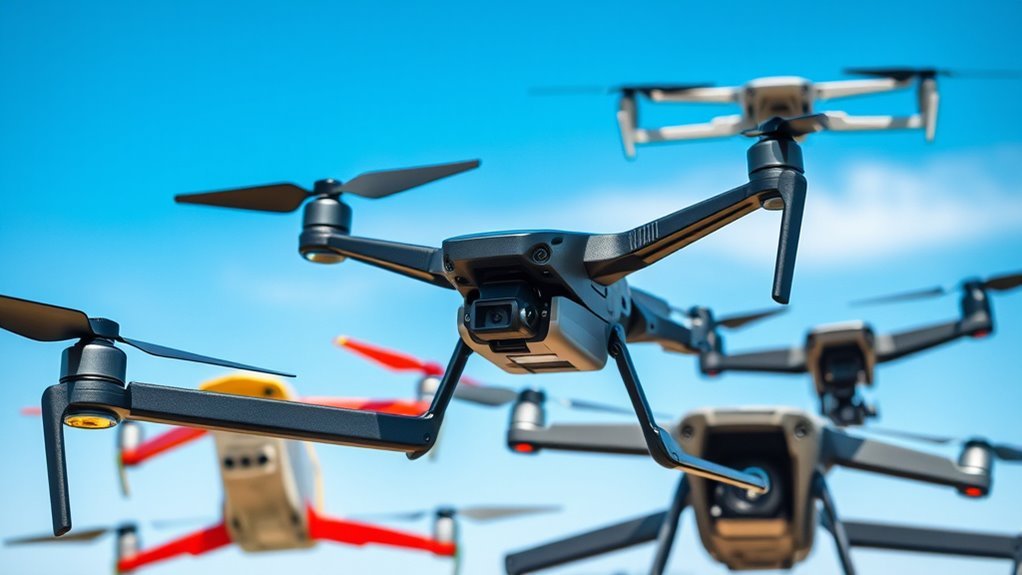
Drones vary considerably in design to serve distinct functions. Consumer drones often have compact, sleek bodies for casual use, while professional drones are robust with enhanced sensors for industry applications. Racing drones feature lightweight builds and aerodynamics for speed, often equipped with FPV systems. Agricultural drones showcase larger frames to accommodate specialized sensors for crop monitoring. Military drones exhibit a rugged design optimized for surveillance and operational efficiency. Discover more about their unique capabilities and applications.
Consumer Drones
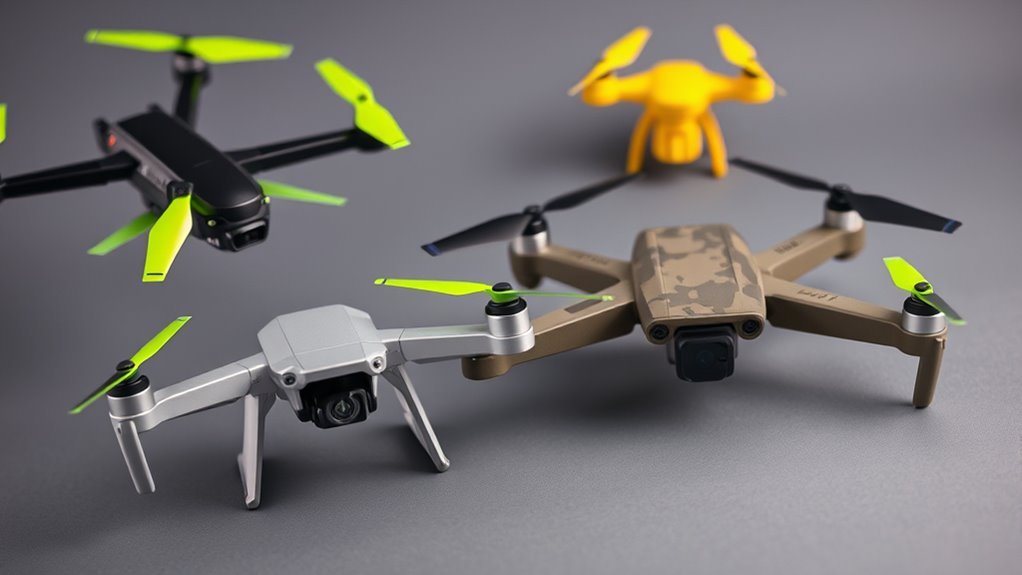
Consumer drones have rapidly become a staple in the recreational and photography markets, offering users an accessible way to capture stunning aerial footage and explore their surroundings. These drones provide high-resolution cameras that enable you to engage in drone photography, allowing for breathtaking landscape shots and unique perspectives. To enhance your experience, various drone accessories are available, including extra batteries, propeller guards, and specialized carrying cases. These accessories not only extend flight time but also protect your investment and improve overall usability. When selecting a consumer drone, consider features such as flight time, camera quality, and ease of use. For instance, the DJI Air 3 provides a flight time of up to 46 minutes, allowing you to capture the perfect shot. With the right tools, you can unleash your imagination and experience the thrill of aerial exploration like never before. Additionally, features like battery life are crucial for ensuring prolonged flight sessions that allow you to capture the perfect shot.
Professional Drones
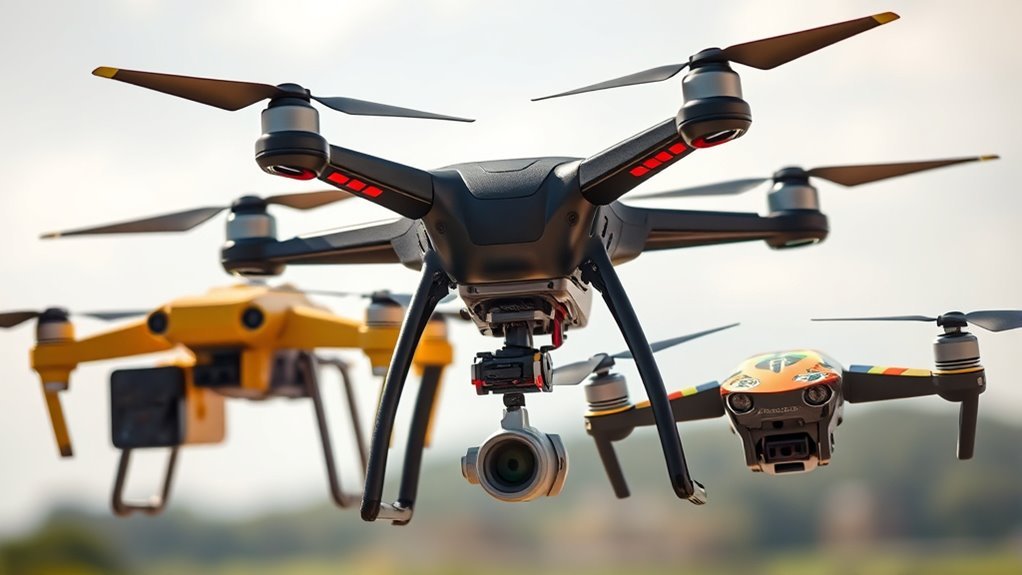
While consumer drones cater primarily to hobbyists and casual users, professional drones are designed for a wide range of specialized applications across various industries. These advanced devices leverage cutting-edge drone technology to deliver exceptional performance and reliability. In fields such as construction, agriculture, and real estate, professional drones excel in tasks like surveying, crop monitoring, and high-quality aerial photography. Equipped with high-resolution cameras and sophisticated sensors, they capture detailed imagery and data, enhancing operational efficiency and decision-making. Moreover, their robust build and extended flight times allow for thorough mapping and inspections, reducing the need for manual labor. For those seeking to harness the full potential of aerial data, investing in a professional drone could be a game-changer. Additionally, many of these drones feature advanced GPS navigation systems, which significantly improve their operational capabilities and accuracy in various environments. The Hubsan Zino 2+ Pro is an example of a professional drone that combines high-quality imaging with stability for enhanced performance in challenging conditions.
Racing Drones
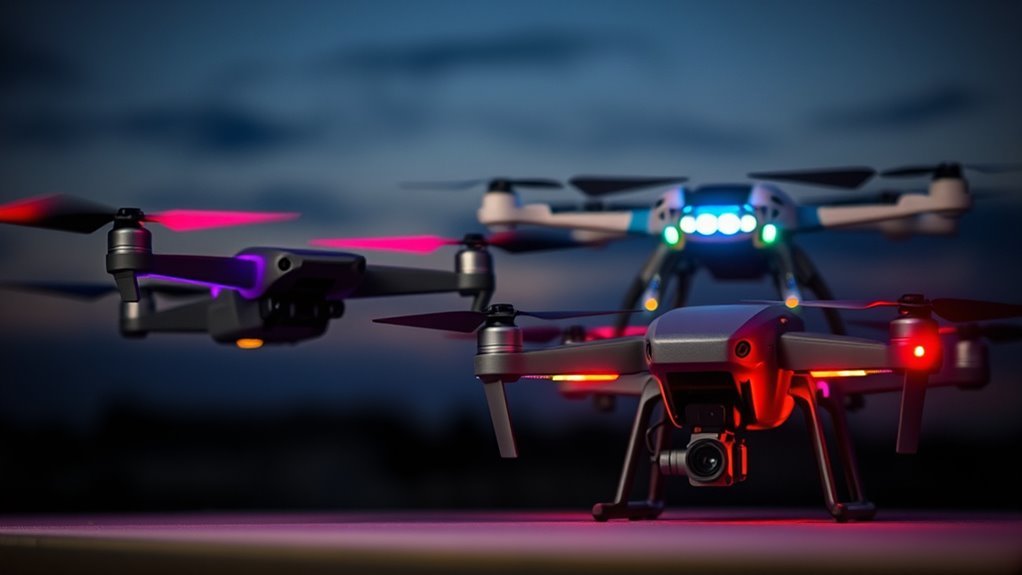
Although racing drones may appear similar to their consumer counterparts, they are specifically engineered for speed, agility, and competitive performance. These high-performance machines typically feature lightweight frames, powerful motors, and advanced drone specifications that allow for rapid acceleration and sharp maneuverability. You’ll find that racing drones often utilize FPV (first-person view) technology, giving pilots an immersive experience as they navigate through racing competitions. Key components like high-capacity batteries and efficient propellers enhance flight times and responsiveness. With customizable features, pilots can fine-tune their drones to suit their individual racing styles. The thrill of racing competitions fuels the desire for innovation, pushing the boundaries of drone technology while celebrating the freedom of flight in exhilarating ways.
Agricultural Drones
As agriculture increasingly relies on technology, agricultural drones have emerged as an essential tool for modern farming practices. These unmanned aerial vehicles are designed to enhance crop monitoring and enable precision agriculture. Equipped with advanced sensors and imaging systems, they can capture real-time data on crop health, soil conditions, and irrigation needs, allowing you to make informed decisions. By analyzing this data, you can optimize resource allocation, reduce waste, and increase yields. Furthermore, Delair’s cameras provide high-resolution imaging for crop health monitoring, enabling early detection of crop stress. Additionally, agricultural drones facilitate efficient mapping and surveying, providing an aerial perspective that traditional methods can’t match. Embracing this technology not only enhances productivity but also promotes sustainability, giving you the freedom to innovate and adapt in a rapidly evolving agricultural landscape. Furthermore, drones can deliver critical supplies to remote areas, ensuring that farmers have the necessary resources during emergencies.
Military Drones
Military drones have revolutionized modern warfare by providing enhanced surveillance, reconnaissance, and combat capabilities. These unmanned aerial vehicles (UAVs) are integral to various military applications, allowing for real-time intelligence gathering without risking personnel. Advanced drone technology enables precision strikes, minimizing collateral damage and improving mission efficacy. Equipped with high-resolution cameras and sophisticated sensors, these drones can operate in diverse environments, from urban landscapes to remote terrains. Additionally, they facilitate remote operations, empowering commanders to make informed decisions from afar. As military strategies evolve, the role of drones becomes increasingly essential, reflecting a shift towards automation and technology-driven warfare. Understanding these advancements is vital for those advocating for freedom, as they reshape the ethical landscape of conflict.
Frequently Asked Questions
What Are the Legal Requirements for Flying Drones?
To fly drones legally, you’ll need to understand drone regulations, ensuring you obtain necessary flight permissions. Compliance with local laws not only guarantees your freedom but also enhances safety and accountability in the airspace.
How Do I Maintain My Drone?
To maintain your drone, you should prioritize drone cleaning, inspect components regularly, and guarantee battery care. By doing this, you’ll enhance performance, extend lifespan, and enjoy the freedom of flying without unexpected issues.
Can Drones Be Used in Bad Weather?
Drones can operate in various weather conditions, but their performance may be compromised in heavy rain, snow, or strong winds. You’ll need to assess how severe the conditions are before flying for ideal results.
What Is the Average Lifespan of a Drone?
You might think drones last forever, but their average lifespan typically ranges from three to five years, depending on drone durability and usage. Regular maintenance can extend this lifespan, ensuring peak performance throughout their operational life.
Are There Any Restrictions on Drone Photography?
Yes, there’re restrictions on drone photography. You must adhere to drone regulations and photography guidelines, which often include altitude limits, no-fly zones, and privacy considerations. Ignoring these rules could lead to penalties or legal issues.
