

Drones can significantly assist farmers by enhancing crop monitoring, improving precision agriculture, and reducing operational costs. These innovative tools offer solutions that lead to increased productivity and sustainability in farming practices. With the agricultural industry increasingly adopting technology, drones have emerged as a game-changer, allowing farmers to leverage aerial data for efficient decision-making, resource management, and environmental stewardship.
Enhanced Crop Monitoring
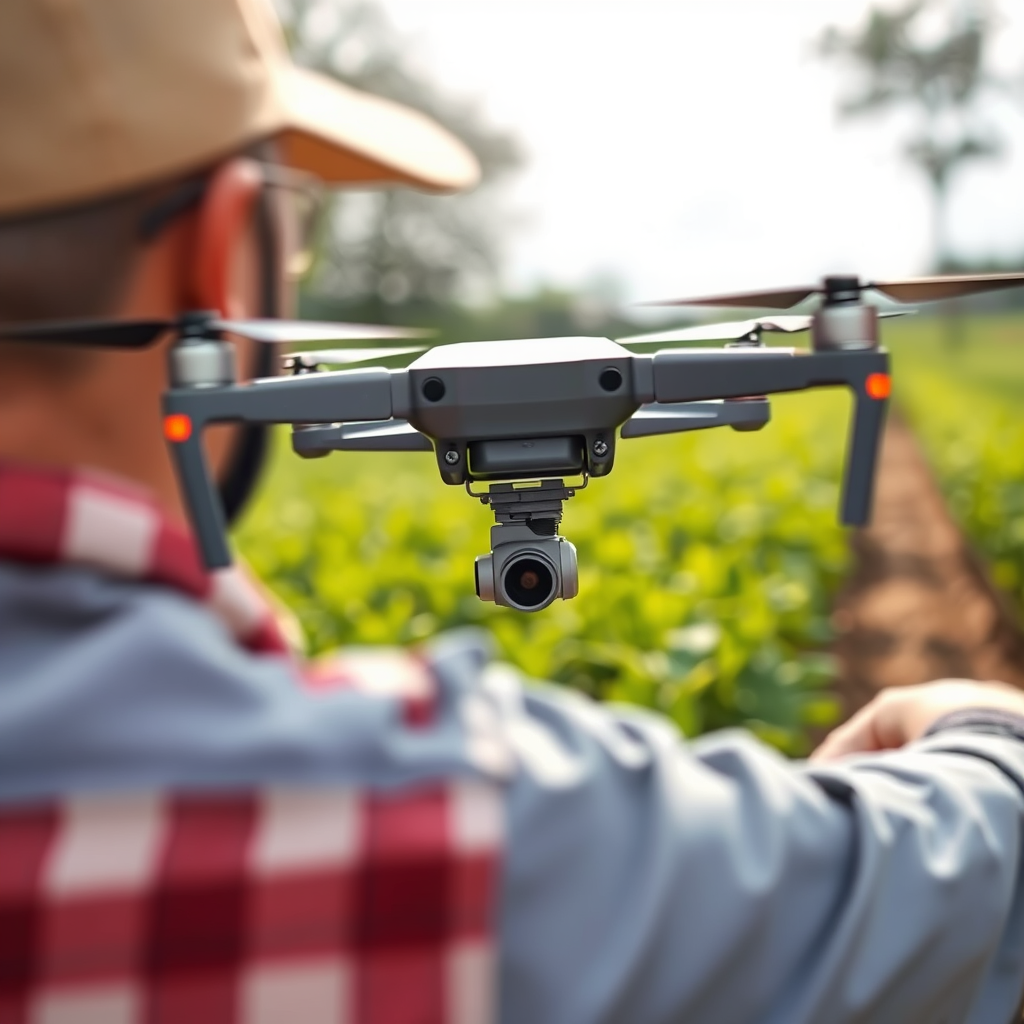
Drones provide real-time aerial imagery, allowing farmers to assess crop health and growth patterns with unprecedented accuracy and speed. By capturing high-resolution images across vast fields, drones can identify variations in crop vigor, enabling farmers to make informed decisions about their land. For instance, multispectral imaging can highlight areas of crop stress due to insufficient water, nutrient deficiencies, or disease outbreaks.
Furthermore, the ability to conduct regular aerial surveys means that farmers can address issues as soon as they arise, minimizing potential damage and losses. This proactive approach to crop management can lead to improved yields and quality of produce, ultimately enhancing profitability. A study by the European Commission has shown that the use of drone technology in agriculture can increase productivity by as much as 20%, underscoring the importance of timely and informed interventions in crop management.
Precision Agriculture
Drones facilitate targeted application of fertilizers and pesticides, minimizing waste and environmental impact. By using advanced algorithms and imaging capabilities, drones can map fields with a high level of detail, allowing farmers to apply inputs only where they are needed. This practice, known as precision agriculture, helps reduce the over-application of chemicals, which not only lowers costs but also contributes to a more sustainable farming approach.
For example, a vineyard using drones to assess grape health can identify specific areas that require additional nutrients or pest control. This targeted approach not only saves money but also reduces the risk of chemical runoff into nearby water sources. Additionally, by implementing drone technology for resource allocation, farmers can optimize their operations, ensuring that every input is used effectively and sustainably.
Irrigation Management
Drones can assess soil moisture levels, helping farmers optimize irrigation schedules to ensure crops receive the right amount of water at the right time. Equipped with thermal imaging cameras, drones can detect temperature variations that indicate moisture levels in the soil. This technology allows farmers to identify dry spots in their fields and adjust their irrigation systems accordingly, preventing overwatering or underwatering.
Moreover, drones provide insights into water distribution across fields, ensuring efficient water usage. By monitoring the effectiveness of irrigation systems, farmers can identify leaks or inefficiencies that could lead to water wastage. For instance, a case study in California demonstrated that drone-assisted irrigation management resulted in a 30% reduction in water usage while maintaining crop yield, showcasing the potential for drones to enhance water conservation efforts in agriculture.
Livestock Management
Drones can be used to monitor livestock locations, health, and grazing patterns from above, providing farmers with a comprehensive view of their herds. This aerial perspective allows for more efficient tracking of animals, especially in vast pastures where visibility may be limited. Drones can identify sick or injured animals, ensuring timely intervention and reducing potential losses.
Additionally, drones assist in tracking movements and managing herd dynamics efficiently. By monitoring grazing patterns, farmers can ensure that pastureland is utilized sustainably, preventing overgrazing and promoting soil health. For example, ranchers utilizing drones for livestock monitoring report improved herd management and reduced labor costs, as they can cover large areas quickly without the need for physical presence.
Data Collection and Analysis
Drones gather vast amounts of data that can be analyzed for improved decision-making in agricultural practices. The integration of drone technology with data analytics software enables farmers to interpret complex data sets and extract actionable insights. This capability allows for better crop yield predictions, resource management, and overall farm efficiency.
Farmers can leverage various software tools that process drone-collected data to generate detailed reports on crop performance, soil health, and environmental conditions. By utilizing these insights, farmers can make data-driven decisions that lead to improved productivity and resource allocation. The implementation of data analytics in agriculture is becoming increasingly essential, with studies indicating that data-driven farming practices can lead to yield increases of up to 15%.
Cost Reduction
The use of drones can lower labor costs by automating various monitoring tasks that would traditionally require significant human resources. For example, aerial surveys that once took hours or days can now be completed in minutes, allowing farmers to allocate their labor more efficiently. This automation not only saves time but also reduces the need for expensive equipment and manual inspections, leading to overall savings in operational costs.
Additionally, drones can assist in reducing input costs associated with fertilizers, pesticides, and water. By ensuring that these resources are applied efficiently and only when necessary, farmers can significantly decrease their expenditure on inputs while maintaining or even increasing crop yields. The overall impact is a more profitable farming operation that is both economically and environmentally sustainable.
Sustainable Farming Practices
Drones promote sustainable agriculture by reducing chemical usage and enhancing resource management. The ability to apply inputs precisely and monitor crop health reduces the reliance on pesticides and fertilizers, leading to a healthier ecosystem. Furthermore, drones encourage practices that lead to better soil health and increased biodiversity, such as crop rotation and cover cropping, by providing the necessary data to inform these practices.
Moreover, by optimizing irrigation and reducing water usage, drones contribute to water conservation efforts that are critical in today’s climate-conscious agricultural environment. Farmers adopting drone technology often report a commitment to sustainability, reflecting a growing trend in the industry toward environmentally responsible practices that benefit both the farm and the planet.
In summary, drones are revolutionizing the agricultural sector by providing farmers with advanced tools for monitoring and management. By adopting drone technology, farmers can enhance productivity, reduce costs, and promote sustainable practices. As the agriculture industry continues to evolve, exploring how drones can transform farming operations will be crucial for long-term success and resilience in a changing world.
Frequently Asked Questions
How can drones improve crop monitoring for farmers?
Drones equipped with advanced imaging technology, such as multispectral and thermal cameras, enable farmers to conduct detailed crop monitoring efficiently. These aerial surveys provide real-time data on crop health, moisture levels, and nutrient deficiencies, allowing farmers to make informed decisions about irrigation, fertilization, and pest management. By using drones, farmers can cover large areas in a fraction of the time compared to traditional methods, ultimately leading to enhanced productivity and reduced costs.
What are the benefits of using drones for precision agriculture?
Drones enhance precision agriculture by providing accurate data that helps optimize resource use and improve crop yields. They allow farmers to create detailed maps of their fields, identify areas needing attention, and customize treatment plans based on specific crop needs. This targeted approach not only reduces waste of water and fertilizers but also minimizes the environmental impact, making farming more sustainable.
Why should farmers consider investing in drone technology?
Investing in drone technology can lead to significant long-term savings and increased efficiency for farmers. Drones can help reduce labor costs, improve crop yields, and enhance the overall management of agricultural practices. Furthermore, as the technology continues to advance, farmers who adopt drones early can gain a competitive edge by leveraging data-driven insights to make better farming decisions.
Which types of drones are best suited for agricultural use?
The best drones for agricultural use typically fall into two categories: fixed-wing drones and multi-rotor drones. Fixed-wing drones are ideal for covering large areas quickly and are often equipped with high-resolution cameras for aerial mapping. Conversely, multi-rotor drones offer greater maneuverability and are perfect for detailed inspections and localized assessments. Depending on the specific needs, farmers should consider factors such as flight time, camera quality, and ease of use when selecting the right drone.
How do drones assist in pest and disease management in farming?
Drones play a crucial role in pest and disease management by enabling farmers to quickly identify problem areas within their fields. With high-resolution imaging and the ability to capture multispectral data, drones can detect early signs of pest infestations or plant diseases that may not be visible from the ground. This timely information allows farmers to implement targeted interventions, improving the effectiveness of pest control measures and reducing the overall reliance on chemical treatments.
References
- https://www.ams.usda.gov/reports/drones-agriculture
- https://www.nsf.gov/news/special_reports/drones/agriculture.jsp
- https://www.sciencedirect.com/science/article/pii/S2351978917301768
- https://www.nrcs.usda.gov/wps/portal/nrcs/main/national/technical/engineering/drones
- https://www.abc.net.au/news/2021-01-14/drones-in-agriculture-how-they-help-farmers/13053768
- https://www.researchgate.net/publication/332500182_The_impact_of_drones_on_agricultural_yield
- https://www.ars.usda.gov/news-events/news/research-news/2020/aerial-imagery-tools-help-farmers-in-precision-agriculture/
- https://www.technologyreview.com/2021/08/23/1031181/how-drones-are-changing-agriculture/
- https://www.nal.usda.gov/legacy/afsic/drones-agriculture
- https://www.fao.org/3/i6411e/i6411e.pdf
