
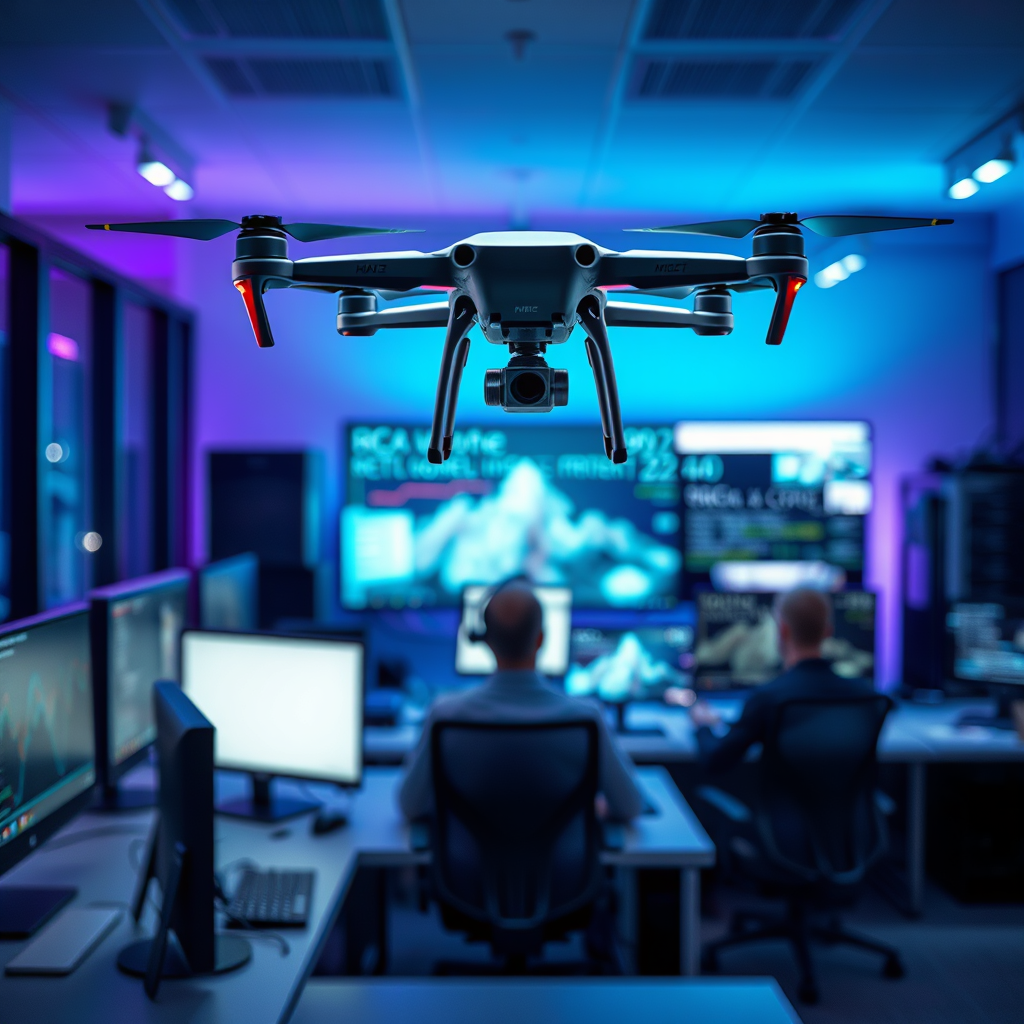
The integration of drones and cloud computing is transforming data processing by enabling real-time analysis and storage of vast amounts of information. This powerful combination allows businesses and individuals to harness aerial data more efficiently than ever, optimizing operations across various sectors. In this article, we will explore how drones leverage cloud computing to optimize data processing and the benefits that arise from this synergy.
The Role of Cloud Computing in Drone Operations

Cloud computing serves as a backbone for drone operations by providing the necessary infrastructure to store and process the large datasets collected during flights. Drones capture an array of data, from high-resolution images to complex sensor readings, which can quickly overwhelm traditional data storage solutions. Cloud platforms offer scalable resources that can adapt to the varying demands of drone operations; whether a single drone is gathering data or an entire fleet is in action, cloud computing can dynamically allocate storage and processing power as needed.
For instance, companies like Amazon Web Services (AWS) and Microsoft Azure offer specialized services tailored to drone data, enabling users to deploy tailored solutions that meet their specific needs. This adaptability not only supports operational efficiency but also ensures that organizations can meet peak demands during critical missions without investing in excessive on-premises infrastructure.
Real-Time Data Processing Capabilities

One of the standout features of integrating drones with cloud computing is the ability to transmit data to the cloud in real-time. This capability allows for immediate analysis and decision-making, which is crucial for industries that rely on timely information. For instance, in agriculture, drones equipped with multispectral sensors can assess crop health by capturing images that identify plant stress levels. By sending this data directly to a cloud platform for analysis, farmers can make informed decisions about irrigation, fertilization, or pest control almost instantaneously.
In emergency response scenarios, drones can deliver critical information to first responders in real-time, helping them assess disaster zones and coordinate rescue efforts more effectively. This immediate accessibility to actionable insights can be the difference between life and death, showcasing the profound implications of real-time data processing.
Enhanced Data Storage Solutions
The massive amounts of data generated by drones necessitate robust storage solutions, and cloud platforms provide virtually unlimited storage capabilities. Organizations no longer need to worry about running out of space for data, as cloud services can scale to accommodate growing datasets. This abundance of storage is particularly beneficial for industries like construction and surveying, where detailed aerial imagery and sensor data can be archived for future analysis.
Moreover, cloud storage allows users to access historical data with ease, making it simple to conduct long-term analyses and identify trends over time. For example, environmental researchers can track changes in landscape and vegetation over years using archived drone data, enabling them to draw conclusions about climate change and its local impacts.
Improved Collaboration and Accessibility
Cloud computing enhances collaboration by enabling seamless sharing of drone data among team members and stakeholders, regardless of their geographical location. This accessibility fosters a collaborative environment where multiple users can analyze data concurrently and contribute insights based on their expertise. For instance, a construction company may have project managers, engineers, and safety inspectors all accessing drone data simultaneously to make informed decisions about project timelines and safety protocols.
Additionally, cloud-based platforms often include tools for visualizing and annotating data, making it easier for teams to communicate findings and strategies. This level of collaboration leads to more informed decision-making, as stakeholders can leverage shared insights to develop comprehensive solutions to complex problems.
Security and Compliance Considerations
As drone technology advances, so do concerns regarding data security and compliance. Cloud providers typically implement robust security measures to protect sensitive drone data, including encryption, access controls, and regular audits. Organizations must also ensure that they understand compliance requirements related to the handling of private or critical information, which varies across industries and regions.
For instance, the Federal Aviation Administration (FAA) in the United States has specific regulations regarding the use of drones for commercial purposes, and organizations must adhere to these guidelines to avoid legal repercussions. By choosing reputable cloud providers that prioritize security and compliance, businesses can mitigate risks associated with data breaches and ensure that they are meeting necessary legal obligations.
Future Trends in Drone and Cloud Integration
Looking ahead, the integration of drones and cloud computing is poised for continued evolution, driven by advancements in artificial intelligence (AI) and machine learning. As these technologies become more sophisticated, they will enhance the capabilities of drones, enabling automated data processing and smarter analytics. For example, AI algorithms can analyze aerial imagery to identify patterns or anomalies that would be difficult for humans to discern, streamlining workflows and improving accuracy.
Moreover, as technology evolves, we can expect to see more automated processes in drone operations. This could include autonomous flight paths, where drones determine the most efficient routes for data collection based on real-time analysis, further optimizing operations across various sectors.
The marriage of drones and cloud computing is at the forefront of technological innovation, enabling businesses to harness data in unprecedented ways and driving efficiency across numerous industries.
The combination of drones and cloud computing is transforming how data is processed and utilized across various sectors. By leveraging these technologies, businesses can gain invaluable insights while improving efficiency and collaboration. As we continue to explore the possibilities of this innovative approach, it is clear that the potential for enhanced data processing and operational optimization is vast. Organizations looking to stay ahead of the curve should consider implementing these technologies to maximize their data-driven decision-making capabilities.
Frequently Asked Questions
What are the benefits of using cloud computing for drone data processing?
Utilizing cloud computing for drone data processing offers numerous benefits, including enhanced storage capacity, real-time data analysis, and improved collaboration. Cloud platforms can easily handle large amounts of data generated by drones, enabling quicker processing and analysis without the need for extensive local hardware. This allows businesses to make faster, data-driven decisions and facilitates seamless sharing of insights among team members.
How do drones communicate with cloud computing systems for data processing?
Drones communicate with cloud computing systems through secure internet connections, typically using Wi-Fi or cellular networks. Once the drone captures data—such as images or sensor readings—it can transmit this information to a cloud server via APIs (Application Programming Interfaces). Once uploaded, the data can be processed in real-time or stored for future analysis, allowing users to access insights from anywhere with an internet connection.
Why is cloud computing crucial for the scalability of drone operations?
Cloud computing is essential for the scalability of drone operations because it provides flexible resources that can grow with demand. As businesses expand their drone usage, they can easily scale their data processing capabilities without investing in additional physical infrastructure. This cost-effective approach allows organizations to manage more drones and larger datasets efficiently, ensuring that performance remains consistent as operations grow.
What types of industries benefit the most from drones leveraging cloud computing for data processing?
Various industries benefit significantly from drones leveraging cloud computing for data processing, including agriculture, construction, and logistics. In agriculture, drones can collect data on crop health and yield, which cloud computing can analyze for actionable insights. Similarly, in construction, drones can monitor site progress and ensure safety compliance, while cloud platforms process the collected data to provide real-time updates and reports to stakeholders.
Which cloud computing platforms are best suited for drone data processing?
Several cloud computing platforms are well-suited for drone data processing, including Amazon Web Services (AWS), Microsoft Azure, and Google Cloud Platform. These platforms offer robust analytics tools, machine learning capabilities, and extensive storage options, making them ideal for handling the vast amounts of data collected by drones. Choosing the right platform often depends on specific needs, such as integration capabilities, pricing models, and the types of analytics required for effective decision-making.
References
- Drone
- https://www.nist.gov/news-events/news/2020/10/nist-cloud-computing-drones-are-shaping-future
- https://www.sciencedirect.com/science/article/pii/S2352864821001234
- https://www.researchgate.net/publication/343123456_A_Survey_on_Cloud_Computing_for_Drones
- https://www.wired.com/story/how-drones-are-using-cloud-computing-to-improve-operations/
- https://www.nasa.gov/feature/nasa-drone-research-uses-cloud-computing-to-advance-safety-and-efficiency
- https://www.unm.edu/~cloud/drones-and-cloud-computing.html
- https://www.faa.gov/newsroom/faa-initiatives-drones-cloud-computing
