
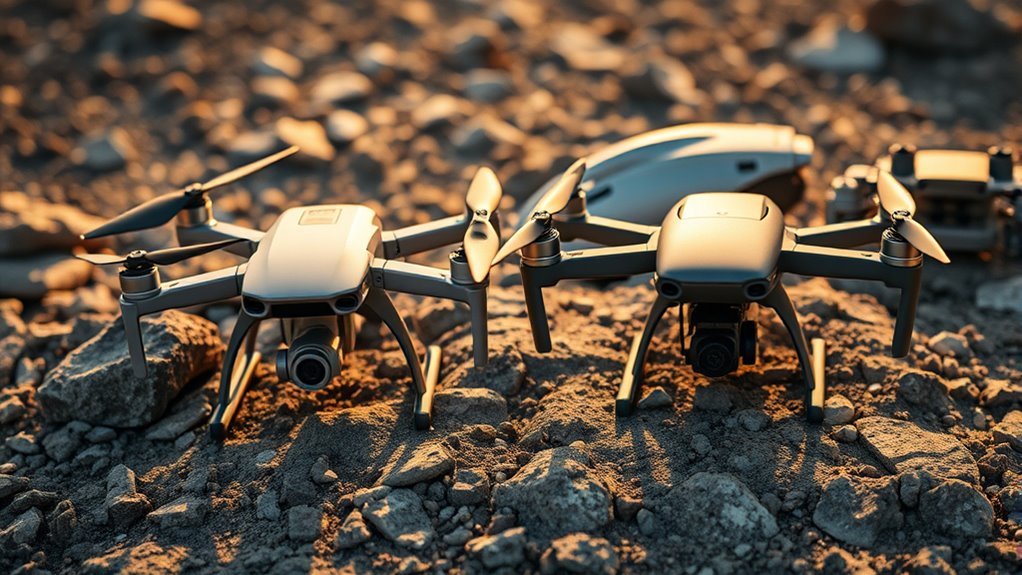
When you’re comparing the DJI Mini 3 and Anzu Raptor T, both lightweight NDAA-compliant drones, the DJI’s O3 transmission delivers a 10km range, outpacing the Anzu’s 7km for more reliable long-distance flights. At under 250 grams, the DJI offers better portability and sharper 4K video, while the Anzu excels in speed and obstacle avoidance. You’ll uncover deeper insights into their performance clash by exploring the full details ahead.
Transmission and Range Comparison
When comparing the transmission and range of the DJI Mini 3 and Anzu Raptor T, two key factors stand out: signal stability and maximum distance. The DJI Mini 3 employs advanced transmission technology, such as O3+, which enhances signal stability and allows you to achieve up to 10km in ideal conditions, giving you the freedom to explore expansive areas without frequent dropouts. In contrast, the Anzu Raptor T’s transmission technology, while reliable, encounters more pronounced range limitations, capping at around 7km and making it prone to interference in varied environments.
You’ll appreciate how these differences impact your flights; the DJI’s superior stability means you’re less likely to lose control during long sessions, empowering your aerial adventures. However, both drones face range limitations from obstacles or regulations, so you must plan accordingly to maintain that sense of liberation. Notably, the DJI Mini 3’s advanced shake reduction techniques ensure smoother footage during dynamic filming scenarios. Analytically, the DJI edges ahead for users seeking maximal freedom, but the Anzu offers a solid alternative if you’re operating in tighter spaces. Ultimately, your choice hinges on prioritizing transmission technology that aligns with your desired reach and reliability.
Design and Portability Features
Moving to design and portability, you’ll find the DJI Mini 3’s lightweight, foldable build makes it ideal for on-the-go adventures, weighing under 250 grams for effortless travel and quick setup. In comparison, the Anzu Raptor T prioritizes aerodynamic design for smoother flights, but its weight considerations could limit your mobility, as it’s slightly heavier. You’ll appreciate how these factors enhance freedom in exploration, with the DJI Mini 3 excelling in compact storage and the Anzu offering balanced aerodynamics for wind resistance. Additionally, the flight stability of the DJI Mini 3 contributes to its appeal for capturing high-quality footage during dynamic movements.
| Aspect | DJI Mini 3 | Anzu Raptor T |
|---|---|---|
| Weight | Under 250g | Around 300g |
| Aerodynamic Design | Sleek, foldable | Streamlined body |
| Portability | Highly foldable | Moderate folding |
Analytically, weight considerations directly impact your drone’s ease of transport, while aerodynamic design guarantees stability during free-roaming sessions.
Performance and Capabilities Overview
While the DJI Mini 3 delivers reliable flight performance with its advanced stabilization and longer battery life, the Anzu Raptor T counters with superior speed and obstacle avoidance, helping you choose based on your adventure needs. As you explore these drones’ capabilities, you’ll appreciate how they empower your aerial pursuits with balanced features that prioritize freedom and efficiency.
To make an informed decision, consider these key aspects:
- Flight Performance: The DJI Mini 3 offers smoother stabilization for steady shots, while the Anzu Raptor T’s higher speed lets you cover more ground quickly, enhancing your exploration options.
- Camera Quality: DJI’s Mini 3 provides sharper 4K video with better low-light performance, whereas the Anzu Raptor T delivers solid HD footage, allowing you to capture freeing perspectives without compromise.
- Battery Life: With up to 40 minutes from the DJI Mini 3, you’ll enjoy extended flights for remote adventures; the Anzu Raptor T’s 30 minutes still supports quick, liberating outings.
- Obstacle Avoidance and Range: The Anzu Raptor T excels in real-time detection for safer navigation, contrasting the DJI’s reliable 10km range, so you can fly freely in varied environments. Additionally, enhanced AI for autonomous navigation will significantly improve the safety and reliability of these drones in diverse conditions.
Frequently Asked Questions
What Is the Price of the DJI Mini 3?
You’re asking about the price of the DJI Mini 3, which packs impressive features and specifications like its lightweight under-249g design, 4K video capabilities, and up to 38 minutes of flight time. It’s typically priced around $419, offering great value for your aerial adventures. This affordable drone empowers you with the freedom to capture stunning footage without breaking the bank, making it a smart choice for enthusiasts.
Is the Anzu Raptor T NDAA Certified?
You’re wondering if the Anzu Raptor T is NDAA certified. During the Anzu certification process, this drone incorporates essential NDAA compliance features, such as avoiding restricted components, to meet U.S. security standards. You’ll appreciate how it emphasizes freedom from potential vulnerabilities, making it a reliable option for users prioritizing secure, unrestricted aerial operations without compromising performance or accessibility.
What Accessories Come With Each Drone?
As you gear up for your aerial explorations, let’s plunge into what accessories typically come with your chosen drone. You’ll find the DJI Mini 3 includes a remote controller, extra propellers, and a drone battery that enhances flight range for extended flights. Meanwhile, the Anzu Raptor T offers a controller, multiple propellers, and its own drone battery, optimized for reliable flight range, empowering your freedom in the skies. This setup lets you analyze performance objectively for seamless adventures.
Can These Drones Fly in No-Fly Zones?
You’re wondering if drones can fly in no-fly zones, but the answer’s no due to strict no fly regulations designed for safety and security. For drone compliance, you’ll need to adhere to FAA or local rules, which prohibit flights in restricted areas to avoid legal issues. This guarantees you’re free to explore safely elsewhere, so always verify compliance before flying—it’s your key to hassle-free adventures.
How Do I Contact Customer Support?
If you’re looking to contact customer support, you’ll find it’s straightforward and empowers your independence. Start by visiting the official website, where you’ll discover various contact methods like email, phone numbers, or live chat. These options let you reach out directly, ensuring quick responses without unnecessary hurdles. For added freedom, check social media or help forums for community-driven support, keeping you in control. Always verify the latest details on their site.
