
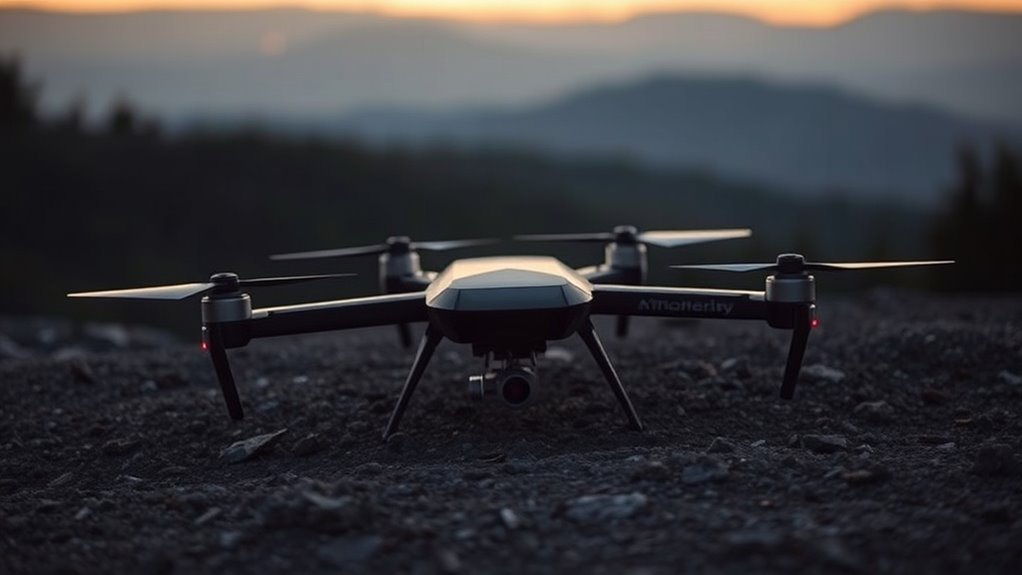
If you’re seeking a covert drone, expect advanced stealth designs with low-noise propulsion and radar-absorbent materials to reduce detection. You’ll get high-resolution, night-vision cameras paired with encrypted data links for secure, detailed surveillance. Battery life balances endurance and payload efficiency, while aerodynamic frames lower acoustic signatures. These drones support manual control with autonomous features for flexible missions, but you must consider legal privacy constraints and maintenance needs. Understanding these factors releases smarter, mission-ready drone choices.
Key Features of Covert Drones
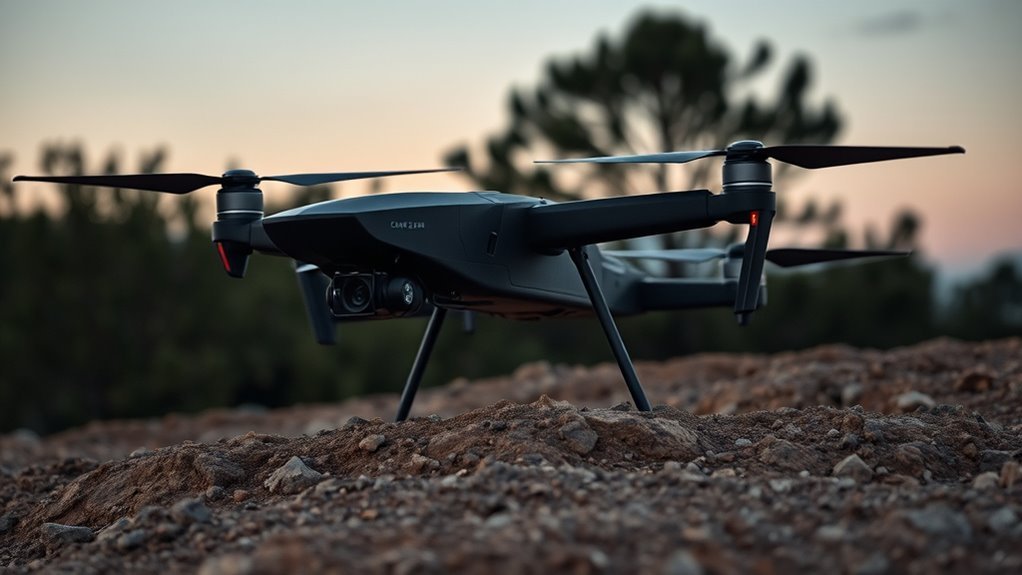
Although covert drones vary in design, their key features consistently focus on minimizing detectability while maximizing operational efficiency, enabling you to conduct surveillance or reconnaissance without alerting targets. Design innovations such as low-noise propulsion systems, radar-absorbent materials, and compact aerodynamic frames reduce visibility and acoustic signatures. Advanced sensor arrays and encrypted communication links guarantee accurate data collection and secure transmission, critical for your autonomous or remote-controlled missions. Military applications have driven these technological advancements, emphasizing stealth, endurance, and real-time intelligence gathering. As someone who values freedom, you’ll appreciate how these drones empower you to operate discreetly in contested environments, maintaining situational awareness without compromising safety or mission success. Understanding these features helps you select a drone tailored to your operational needs while preserving your autonomy.
Top Covert Drones for Photography
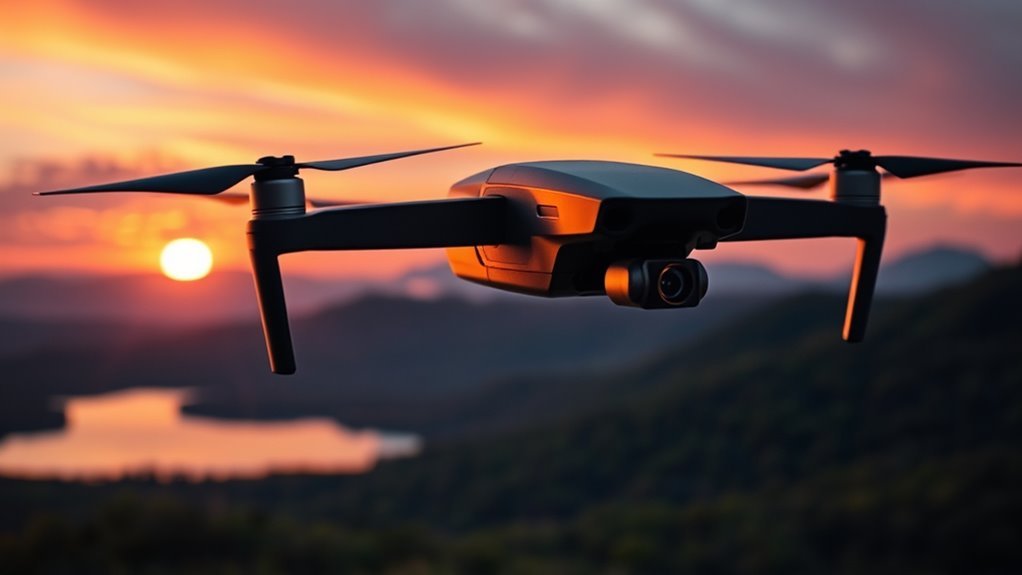
Building on the key features that define covert drones, their application in photography demands a specialized balance of stealth and imaging capability. When mastering drone photography techniques, you need models that minimize noise, optimize battery life, and provide high-resolution sensors. Covert shooting strategies rely on compactness and agility to capture moments unnoticed.
| Drone Model | Key Feature |
|---|---|
| Phantom Stealth X | Ultra-quiet rotors |
| Mirage Nano | 4K camera, lightweight |
| WhisperFly Pro | Extended battery life |
| ShadowCam S2 | Thermal imaging option |
| SwiftEye Mini | Foldable, GPS-denied ops |
Choosing the right drone equips you to operate freely, blending advanced tech with discrete maneuverability.
Surveillance Capabilities of Covert Drones
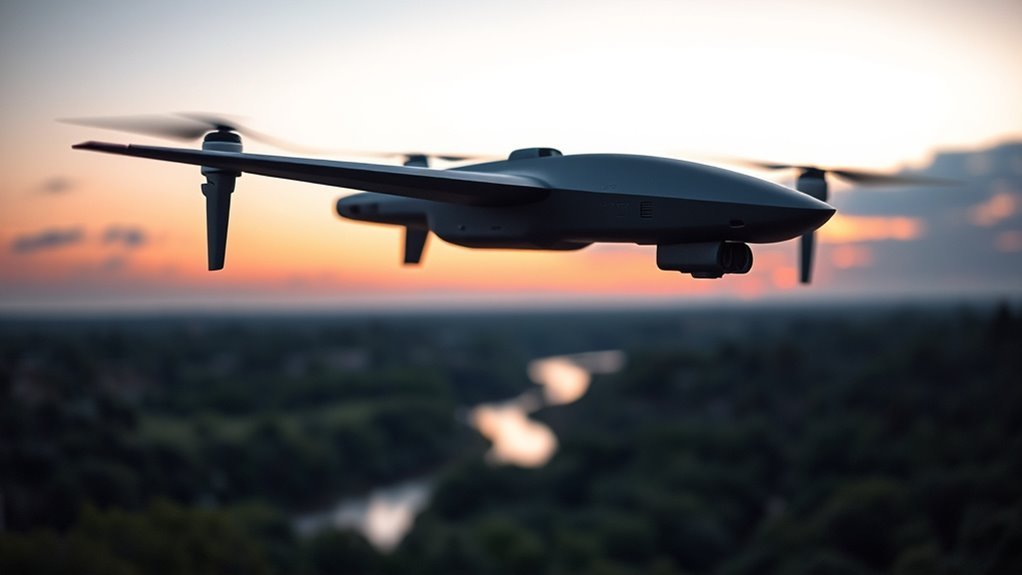
When evaluating covert drones for surveillance, you need to focus on camera quality and operational range, as these determine the clarity and distance of data capture. Equally critical are stealth factors, including noise levels and visual signatures, which impact the drone’s ability to remain undetected. Balancing these elements guarantees effective monitoring without compromising discretion.
Camera Quality and Range
How well can covert drones capture essential details during surveillance missions? Their camera quality and range are vital for effective observation without detection. High camera resolution guarantees you identify fine details from a distance, while advanced zoom capabilities let you focus in on specific targets without compromising image clarity. When evaluating these drones, consider:
- Sensor type and pixel density affecting image sharpness
- Optical vs. digital zoom for maintaining detail integrity
- Night vision and infrared options for low-light environments
- Maximum effective range aligning with mission parameters
Choosing a drone with superior camera resolution and versatile zoom lets you maintain your freedom to monitor discreetly, capturing actionable intelligence with precision while staying undetected.
Stealth and Noise Levels
Beyond camera capabilities, the effectiveness of covert drones heavily depends on their stealth and noise levels during operation. To maintain discretion, advanced stealth technology minimizes radar and visual signatures, allowing you to surveil without drawing attention. Drone soundproofing plays a critical role in reducing acoustic footprints; materials and design techniques dampen propeller noise and motor vibrations. This means you can operate in sensitive environments without compromising your presence. Efficient noise reduction not only preserves operational secrecy but also extends mission duration by optimizing power use. When selecting or customizing your drone, prioritize models with integrated stealth features and enhanced drone soundproofing. These elements collectively empower you to conduct surveillance with maximum freedom and minimal risk of detection, ensuring your objectives are met with precision and subtlety.
Battery Life and Flight Time Considerations
Although drone technology has advanced considerably, battery life remains a critical factor that directly influences flight time and operational efficiency. To maximize your drone’s autonomy, understanding battery enhancement techniques is essential. Efficient power management can yield significant flight time extensions, granting you greater operational freedom. You’ll want to focus on:
Maximizing drone autonomy hinges on smart battery management and understanding enhancement techniques for longer flights.
- Selecting high-capacity, lightweight batteries to balance endurance and payload.
- Implementing intelligent power distribution systems to reduce unnecessary consumption.
- Utilizing software algorithms for dynamic energy allocation during various flight modes.
- Scheduling regular battery maintenance and calibration to maintain peak performance.
Noise Levels and Stealth Performance
You’ll need to evaluate how advanced noise reduction technology minimizes acoustic signatures during flight. Pay close attention to the drone’s aerodynamic design and materials that contribute to stealth operational features. These factors critically impact the drone’s effectiveness in covert missions.
Noise Reduction Technology
When operating in sensitive environments, minimizing acoustic signatures is essential for maintaining stealth. You rely on advanced noise reduction technology that integrates sound absorption materials and vibration dampening mechanisms. These elements work together to lower the drone’s noise footprint, enabling discreet operations without compromising freedom.
Key features include:
- High-density foam layers for effective sound absorption
- Precision-engineered mounts to reduce motor-induced vibrations
- Aerodynamic propeller design minimizing turbulence noise
- Active noise cancellation systems tuned to operational frequencies
Stealth Operational Features
Building on advanced noise reduction technologies, the drone’s stealth operational features are engineered to maintain minimal acoustic and visual detectability during missions. You’ll appreciate how its specialized rotor design and vibration damping systems reduce noise signatures, essential for covert operations where silence is paramount. The drone technology integrates radar-absorbent materials and low-visibility coatings, minimizing detection across electromagnetic and optical spectrums. Its compact frame and optimized flight algorithms further lower its profile, allowing you to navigate contested environments discreetly. By combining these elements, the drone guarantees enhanced operational freedom, enabling you to execute sensitive tasks without compromising position. For anyone valuing freedom in intelligence gathering or surveillance, this stealth performance represents a significant evolution in covert drone capabilities.
Camera Quality and Image Stabilization
Although the Covert Drone’s camera boasts a high-resolution sensor capable of capturing detailed images and 4K video, its true strength lies in the advanced image stabilization system. You’ll notice superior image clarity even in dynamic flight conditions thanks to cutting-edge stabilization techniques integrated into the camera gimbal. These systems counteract vibrations and sudden movements to maintain crisp visuals.
Key features enhancing your aerial freedom include:
- Three-axis gimbal stabilization delivering smooth footage without blur
- Real-time electronic image stabilization adjusting to rapid motion
- High frame rate capture ensuring detail retention during fast maneuvers
- Adaptive noise reduction algorithms improving visual fidelity in low light
Together, these elements guarantee you reliable, sharp imagery essential for covert operations or creative exploration.
Remote Control and Autonomous Flight Modes
You’ll need to assess how effectively the drone shifts between manual flight control and autonomous navigation features. Understanding the responsiveness of remote inputs alongside the precision of programmed flight paths is essential. This balance determines operational flexibility and mission success in covert applications.
Manual Flight Control
While manual flight control demands a certain level of skill, it offers unparalleled responsiveness through remote control, allowing you to adjust the drone’s trajectory and speed in real time. Mastering manual flight techniques with joystick control grants you direct influence over every movement, enhancing situational awareness and operational freedom. Precise input translates to immediate drone reactions, essential for covert maneuvers.
Key aspects include:
- Fine-tuning throttle and pitch for smooth altitude and direction changes
- Exploiting roll and yaw controls to navigate complex environments
- Real-time correction of drift and external disturbances
- Immediate override capability when automated systems falter
Autonomous Navigation Features
Because covert operations often demand minimal pilot intervention, the drone’s autonomous navigation features combine remote control flexibility with pre-programmed flight modes to optimize mission efficiency. You’ll appreciate the seamless switch between manual input and autonomous routing, which grants you freedom without sacrificing control. The system’s navigation accuracy is calibrated through advanced sensors and GPS integration, ensuring precise waypoint adherence even in complex environments. This dual-mode capability allows you to initiate a mission with autonomous routing, then intervene remotely if unforeseen obstacles arise. The flight modes include orbit, follow-me, and waypoint navigation, all designed to maintain covert profiles while maximizing operational reliability. Ultimately, these features empower you to execute intricate missions with minimal cognitive load, enhancing both stealth and effectiveness in dynamic scenarios.
Legal and Privacy Implications
Although covert drones offer significant advantages in surveillance and data collection, they also raise complex legal and privacy challenges that you must navigate carefully. Understanding privacy concerns and adhering to legal regulations is essential to avoid infringements that could undermine your operations. You need to take into account:
- Compliance with airspace and data protection laws, which vary by jurisdiction
- Minimizing unauthorized data capture to respect individuals’ privacy rights
- Implementing encryption and secure data handling to prevent breaches
- Staying informed on evolving legislation affecting drone deployment
Balancing operational efficiency with ethical responsibility guarantees that your use of covert drones aligns with both freedom and accountability. Ignoring these factors risks legal penalties and public backlash, which could compromise your mission’s integrity and your right to operate freely.
Maintenance and Durability Factors
When you rely on covert drones for critical operations, understanding their maintenance and durability factors becomes essential to guarantee consistent performance. Preventive maintenance is key; regularly inspecting and servicing components like motors, sensors, and batteries minimizes unexpected failures and extends operational lifespan. Durability testing simulates harsh environments to assess structural integrity and electronic resilience, ensuring your drone withstands adverse conditions without compromising stealth or functionality. By prioritizing these factors, you maintain reliability while preserving your freedom to operate undetected. Neglecting routine checks can lead to mission-critical malfunctions, undermining your strategic advantage. Consequently, integrating a rigorous maintenance schedule alongside thorough durability assessments empowers you to maximize drone longevity and effectiveness in covert scenarios.
Price Range and Value Comparison
Maintaining and ensuring the durability of covert drones demands not only time and expertise but also a financial commitment that varies widely across models. When considering price range and value comparison, you need to weigh budget options against performance capabilities. A thorough value analysis reveals:
- Entry-level drones offer affordability but limited stealth features.
- Mid-tier models balance cost with enhanced battery life and sensor accuracy.
- High-end drones provide superior build quality, extended range, and advanced encryption.
- Hidden costs include maintenance, spare parts, and software updates.
