
You’re experiencing exhaust drone because certain engine speeds cause resonant frequencies in your exhaust system, producing low-frequency noise inside your vehicle. This often results from exhaust design, like pipe length or muffler type, or worn components and poor insulation. To fix it, consider upgrading mufflers focused on sound disruptions, adding sound-deadening materials, or insulating the cabin. For persistent issues, professional evaluation is essential. Understanding the root causes and solutions helps you tackle the problem effectively and improve your ride comfort.
Understanding Exhaust Drone and Its Impact
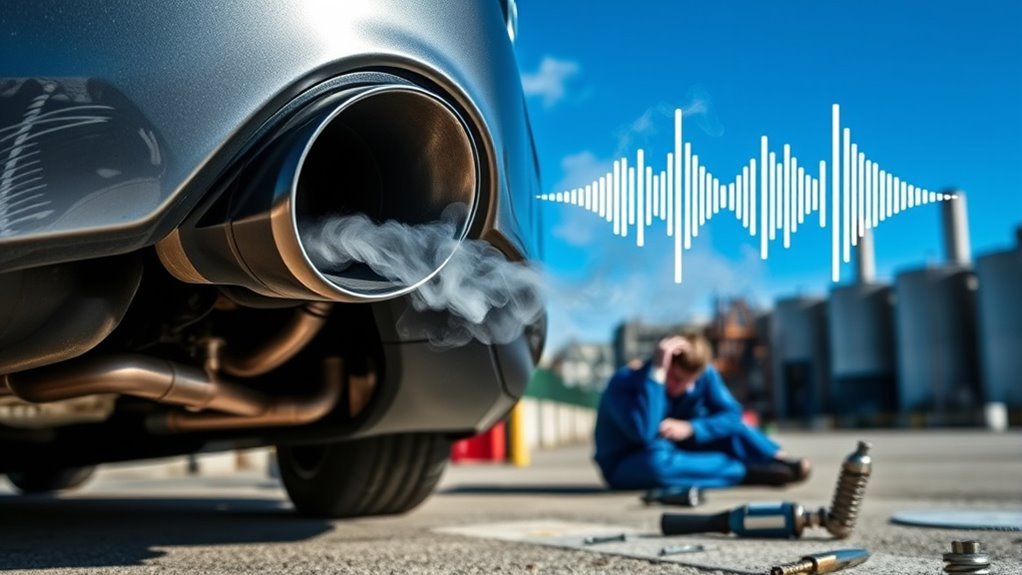
Although exhaust drone often goes unnoticed at first, it can greatly affect your driving experience by producing an unpleasant, low-frequency sound that resonates inside the cabin. This phenomenon results from specific acoustic frequencies generated by your exhaust system, which can be identified through exhaust frequency analysis. Understanding these frequencies helps in pinpointing the resonance that causes discomfort. Additionally, noise regulation standards set limits on acceptable sound levels, ensuring vehicles meet legal requirements while maintaining driving comfort. By analyzing exhaust frequencies and adhering to these standards, you can optimize your exhaust system to minimize drone without compromising performance. This technical approach empowers you to regain control over your driving environment, enhancing freedom on the road with a quieter, more enjoyable ride.
Common Causes of Exhaust Drone
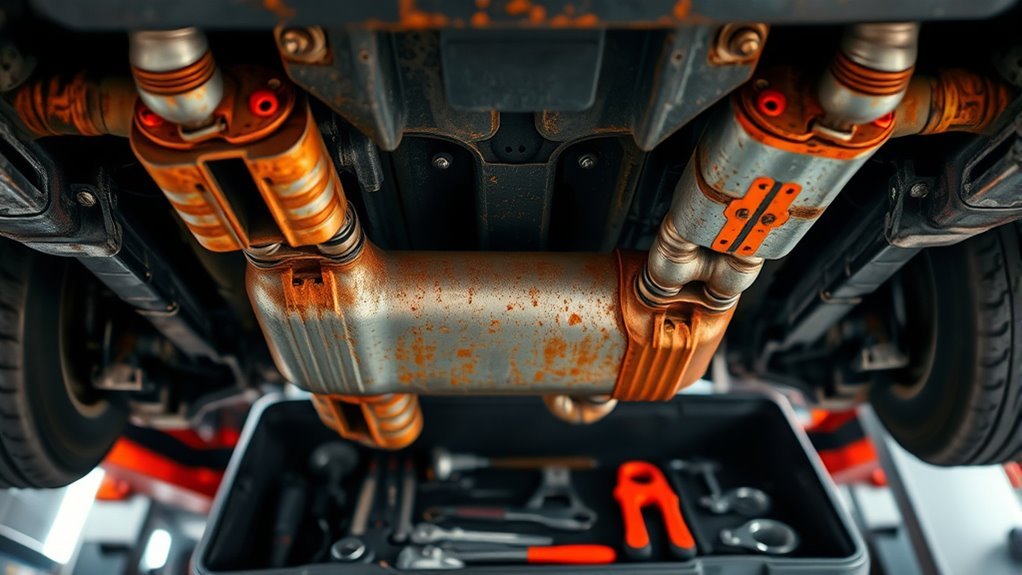
You’ll often notice exhaust drone at specific engine speeds and RPM ranges where resonance occurs. The design of your exhaust system—including pipe diameter, length, and muffler type—directly influences the frequency and intensity of this drone. Understanding these factors helps you identify and address the root causes effectively.
Engine Speed and RPM
Engine speed and RPM play a critical role in the occurrence of exhaust drone, as specific engine revolutions can resonate with the exhaust system’s natural frequencies. When your engine operates within these RPM ranges, the resulting vibrations amplify drone, impacting your driving comfort. To optimize engine performance and reduce drone, consider precise RPM adjustments: shifting your driving habits to avoid sustained operation at problematic RPMs can greatly minimize resonance. Additionally, fine-tuning your vehicle’s tuning parameters or using aftermarket engine management tools allows you to modify RPM ranges where the engine produces less noise. By actively managing engine speed and RPM, you reclaim control over exhaust drone, enhancing your freedom on the road without compromising performance. This technical approach targets the root cause, delivering a solution aligned with your desire for a quieter ride.
Exhaust System Design
Since exhaust system design directly influences how sound waves travel and resonate, it plays a pivotal role in causing exhaust drone. When exhaust flow isn’t optimized, pressure waves can amplify specific frequencies, creating that annoying drone inside your cabin. Muffler design is critical here; a poorly designed muffler may fail to disrupt these sound waves effectively, allowing drone to persist at certain RPM ranges. To fix this, consider upgrading to a muffler engineered for sound attenuation with carefully tuned chambers or perforated tubes that break up resonant frequencies. Additionally, ensuring smooth exhaust flow without abrupt bends reduces turbulence, which can contribute to drone. By focusing on precise exhaust system design, you reclaim control over unwanted noise and enjoy a freer, more comfortable ride.
Identifying the Source of Exhaust Drone in Your Vehicle
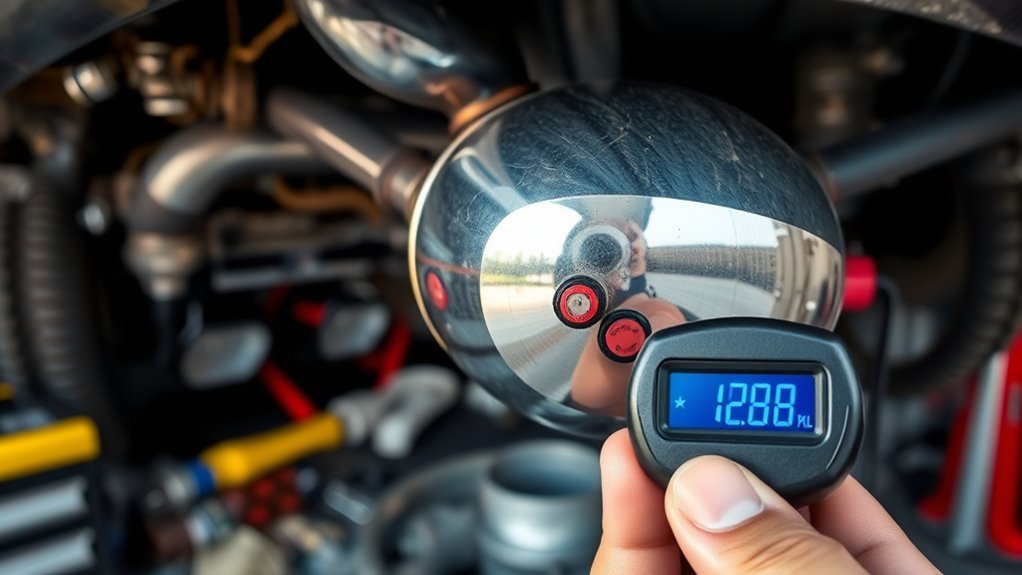
Where exactly is that persistent drone coming from in your vehicle? To identify the source, you need to analyze how exhaust vibrations interact with your car’s structure. Exhaust drone occurs when resonance frequencies within the exhaust system amplify sound waves, creating an uncomfortable, low-frequency hum inside the cabin. Start by driving at speeds where the drone is most noticeable and pinpoint locations—whether near the firewall, floorboards, or headliner—where vibrations intensify. Use a stethoscope or vibration meter to detect specific hotspots along the exhaust pipes and muffler. Understanding which resonance frequencies cause these vibrations helps you target the exact section responsible. By accurately identifying the source, you’ll gain control over the problem and take decisive steps toward regaining your vehicle’s quiet freedom.
Modifications and Upgrades to Reduce Exhaust Drone
Once you’ve pinpointed the exact source of exhaust drone in your vehicle, the next step is to implement targeted modifications and upgrades to minimize or eliminate it. Start by evaluating aftermarket mufflers designed with advanced internal baffling to disrupt resonant frequencies causing drone. These mufflers often incorporate sound-absorbing materials and tuned chambers that reduce repetitive low-frequency noise without sacrificing performance. Additionally, upgrading your exhaust tips can influence sound dispersion; opting for larger diameter or dual-wall exhaust tips can help dissipate sound waves more effectively. Precision is key—select components engineered to target your vehicle’s specific drone frequency range. By combining these focused upgrades, you regain control over your ride’s acoustic environment, enhancing driving freedom without compromise.
Sound Deadening Materials and Cabin Insulation
To effectively reduce exhaust drone, you’ll need to contemplate specific types of sound deadening materials like mass-loaded vinyl or foam composites that absorb and block noise frequencies. Installing proper cabin insulation is equally important, as it creates a barrier that minimizes sound transmission into the vehicle interior. Understanding the correct application and placement of these materials guarantees ideal noise reduction and improved cabin comfort.
Types of Sound Deadening
Although exhaust drone can be persistent, selecting the right sound deadening materials and cabin insulation can greatly reduce its impact. You’ll want to focus on soundproofing techniques that target both vibration and airborne noise. Acoustic panels made from dense, fibrous materials absorb sound waves effectively, preventing them from echoing inside the cabin. Additionally, mass-loaded vinyl barriers block noise transmission by adding weight to vehicle panels. Foam-based insulators reduce vibrations and dampen low-frequency sounds typical of exhaust drone. Combining these materials strategically enhances overall sound attenuation, allowing you to reclaim your driving freedom. Understanding the distinct roles of each type guarantees you apply sound deadening solutions that precisely tackle the drone’s root causes without adding unnecessary bulk or weight.
Installing Cabin Insulation
When you start installing cabin insulation, careful surface preparation is essential for ensuring ideal adhesion and performance of sound deadening materials. Begin by thoroughly cleaning the interior surfaces to remove dust, grease, and debris, which can compromise bonding. Choose high-quality insulation materials specifically designed to enhance cabin acoustics by absorbing and dampening unwanted noise frequencies. Cut the materials precisely to fit contours and cavities, ensuring full coverage without gaps that could allow drone to penetrate. Apply firm pressure during installation to secure materials and prevent air pockets. Pay attention to commonly overlooked areas like doors, floor pans, and roof panels, as thorough coverage maximizes noise reduction. By methodically installing cabin insulation, you’ll notably improve cabin acoustics, reducing exhaust drone and reclaiming the freedom of a quieter, more comfortable driving experience.
Professional Repairs and When to Seek Help
If you’re experiencing persistent exhaust drone that resists basic fixes, it’s crucial to consult a professional technician who can accurately diagnose and address complex issues. A professional assessment will identify underlying causes such as damaged mufflers, exhaust leaks, or improper pipe alignment that DIY methods might miss. Seeking expert repair services guarantees targeted interventions, restoring peak exhaust function and minimizing noise. Professionals have specialized tools and knowledge to perform precise repairs or replacements, safeguarding your vehicle’s performance and your driving comfort. Don’t delay professional help if drone persists after insulation or minor adjustments; unresolved exhaust drone can lead to further mechanical wear or distractions on the road. Prioritize expert evaluation to reclaim your vehicle’s freedom from intrusive noise efficiently and effectively.
