
Drones can invade your privacy and compromise security, but effective deterrence methods exist. Understanding drone technology is essential, as is staying informed about legal frameworks governing deterrence actions. You can establish physical barriers, like netting systems and high-security fencing, to block drones from accessing your property. Additionally, incorporating advanced detection and prevention technologies—such as radar and signal jamming—can augment your efforts. Continue to discover practical strategies to bolster your defenses and maintain your privacy.
Understanding Drone Technology and Its Uses
As drone technology continues to evolve rapidly, understanding its various applications becomes essential for effective deterrence strategies. You need to grasp the core drone components, including propulsion systems, sensors, and communication devices, to appreciate their capabilities. Aerial surveillance is one of the most prominent uses, allowing for real-time monitoring of vast areas without the risks associated with manned aircraft. By leveraging advanced imaging technologies, drones can capture high-resolution data for intelligence gathering or threat assessment. The integration of advanced CMOS sensors enhances low-light performance, further improving surveillance effectiveness. As you consider deterrence strategies, recognizing how these technologies operate can empower you to implement countermeasures effectively. Knowledge of drone applications will not only enhance your understanding but also support your pursuit of freedom in a landscape increasingly influenced by aerial technology. Additionally, understanding the advanced camera capabilities of drones can significantly enhance the effectiveness of surveillance efforts.
Legal Considerations for Drone Deterrence
While understanding the technological aspects of drones is vital, traversing the legal landscape surrounding drone deterrence is equally important. You need to be aware of existing regulatory frameworks that govern drone use in your area. These regulations often dictate what you can and can’t do regarding drone deterrence methods. It’s essential to guarantee that your actions don’t infringe upon privacy rights, both yours and others’. Employing deterrence mechanisms must align with local, state, and federal laws to avoid legal repercussions. Additionally, consider the implications of using devices that could interfere with drone operations, as this may lead to violations of aviation laws. Staying informed on legal nuances will empower you to safeguard your freedom while respecting the rights of others.
Effective Physical Barriers to Keep Drones Away
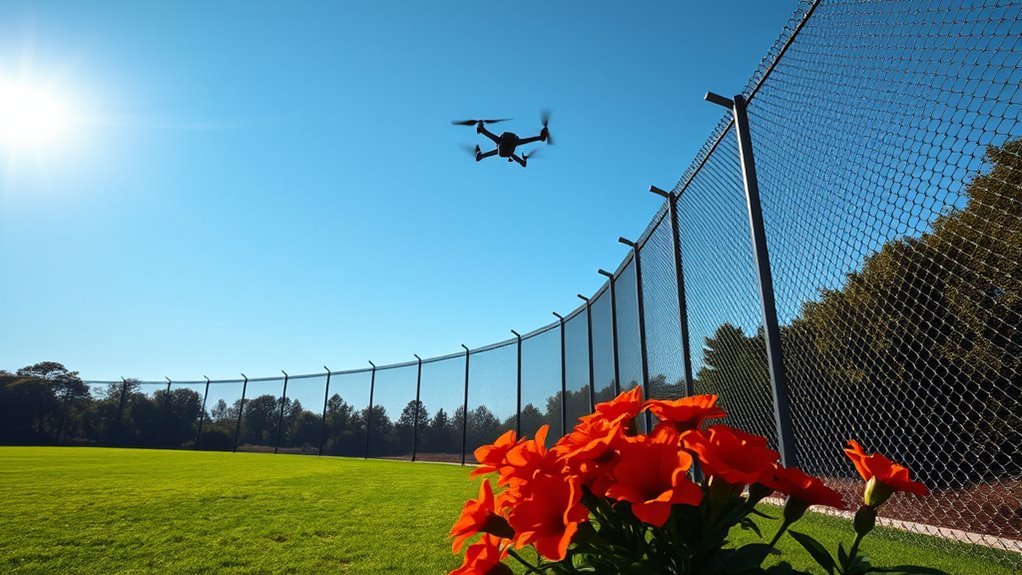
Understanding the legal implications of drone deterrence sets the stage for implementing effective physical barriers. To safeguard your property, consider netting systems that create a physical boundary, effectively capturing drones before they intrude. These systems can be customized to fit various environments, ensuring flexibility in installation.
Fencing options also play an essential role. High-security fencing, reinforced with anti-drone technology, can deter unauthorized access while maintaining your freedom. Opt for designs that obstruct drone flight paths, utilizing materials that disrupt their navigation.
Technological Solutions for Drone Detection and Prevention
When it comes to safeguarding your airspace, employing advanced technological solutions for drone detection and prevention is essential. Utilizing radar systems allows you to track unauthorized drones with precision, identifying their location and trajectory. These systems can differentiate between various aerial vehicles, ensuring that only potential threats are monitored. Coupling radar with signal jamming technology can further enhance your defense. By disrupting the control signals between a drone and its operator, you can effectively neutralize its flight capabilities, rendering it unable to pose a threat. Additionally, being aware of federal aviation regulations is crucial for understanding the legal limitations on drone operations in your airspace. Integrating these technologies into your security framework not only boosts your deterrent measures but also reinforces your commitment to maintaining your freedom and privacy in an increasingly crowded airspace. Furthermore, understanding flight time and battery performance is crucial for evaluating a drone’s potential threat level, as longer flight durations may indicate a higher risk of unauthorized surveillance.
Best Practices for Maintaining Your Privacy Outdoors
As drone technology continues to evolve, maintaining your privacy outdoors becomes increasingly challenging. To safeguard your personal space, consider implementing these best practices:
- Establish clear privacy zones where surveillance is minimized.
- Utilize natural barriers like trees or shrubs for outdoor screening. Physical barriers can also enhance your privacy by obstructing drone access to your property.
- Invest in privacy-enhancing technologies designed to shield your activities. Additionally, be aware of signal attenuation as it can affect the effectiveness of any privacy measures you take against drone surveillance.
Frequently Asked Questions
Can I Use a Drone to Deter Other Drones?
You can’t just whip out a drone like a cowboy to deter others. Instead, consider advanced drone technology and counter-drone systems designed to effectively neutralize threats while preserving your freedom and airspace integrity.
What Should I Do if a Drone Crashes on My Property?
If a drone crashes on your property, prioritize safety and assess potential property liability. Document the incident, secure the drone for recovery, and contact local authorities if necessary. Avoid tampering with the device to protect your interests.
How Can I Report Suspicious Drone Activity?
Reporting suspicious drone activity’s like shining a flashlight in the dark. Follow local reporting protocols, document the incident, and emphasize drone privacy concerns. Make certain you contact authorities to advocate for your rights and safety.
Are There Any Drones Designed Specifically for Deterrence?
Yes, some drones incorporate deterrence technology in their design, enabling them to counter unauthorized drones. These specialized systems can disrupt signals or deploy countermeasures, enhancing safety and privacy while maintaining a commitment to individual freedom.
What Are the Environmental Impacts of Drone Deterrence Methods?
Imagine a sky filled with drones—freedom or chaos? Deterrence technologies can have significant environmental consequences, from noise pollution to wildlife disruption, raising concerns about balancing safety with ecological integrity in your quest for security.
