
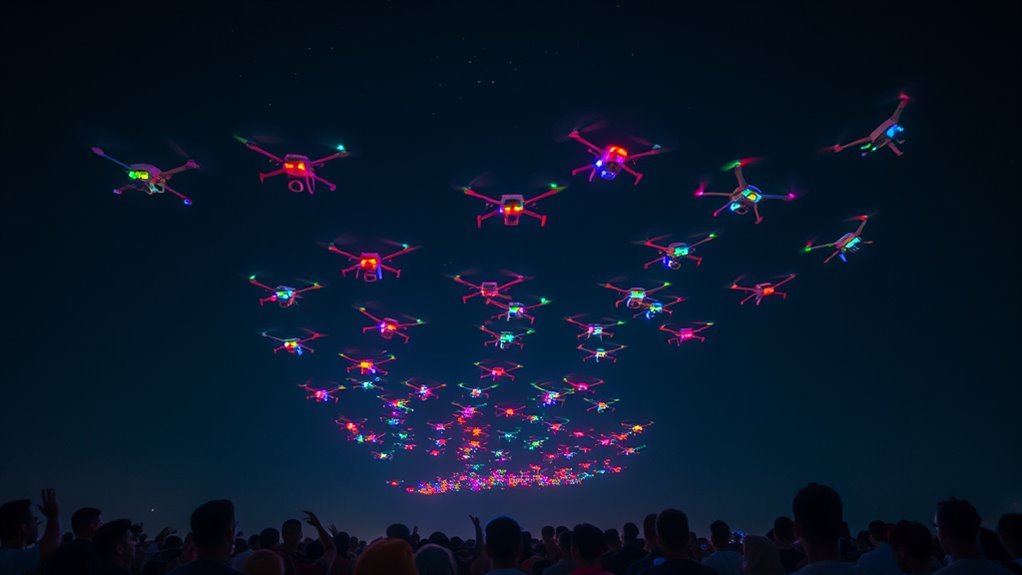
The mechanics of drone light shows involve advanced technologies and intricate programming. Each drone’s specifications dictate its maneuverability and payload. Centralized control systems orchestrate movements, while real-time data processing guarantees precise synchronization. GPS provides accurate positioning, essential for complex formations. Creative design enhances audience engagement, with thematic concepts and coordinated visuals. Together, these elements create mesmerizing displays. Discover how these components come together for spectacular performances that ignite imagination and wonder.
The Evolution of Drone Technology
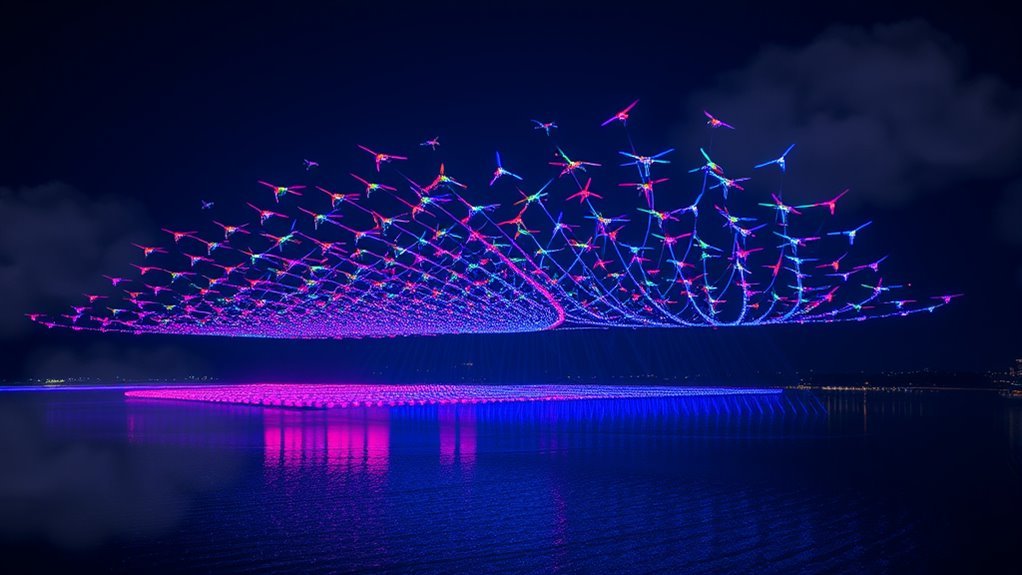
As drone technology has advanced, it’s transformed from simple remote-controlled devices into sophisticated aerial systems capable of complex tasks. You’ve likely seen the impact of drone innovations across various fields, from agriculture to cinematography. These developments enhance functionality, allowing drones to perform intricate maneuvers with precision. In the domain of aerial artistry, drones are now employed in mesmerizing light shows, where synchronized movements create stunning visual displays. This evolution reflects a growing desire for creative freedom, enabling artists to push boundaries and explore new dimensions in performance. By harnessing advanced algorithms and real-time data processing, you can appreciate how these aerial systems continually redefine the landscape of technology and art, merging innovation with imagination. The use of real-time communication systems is crucial for coordinating large fleets of drones during performances. Moreover, companies like SkyMagic Drone Light Shows exemplify how innovative technology and precision engineering enhance the overall performance quality in these spectacular displays.
Key Components of a Drone Light Show
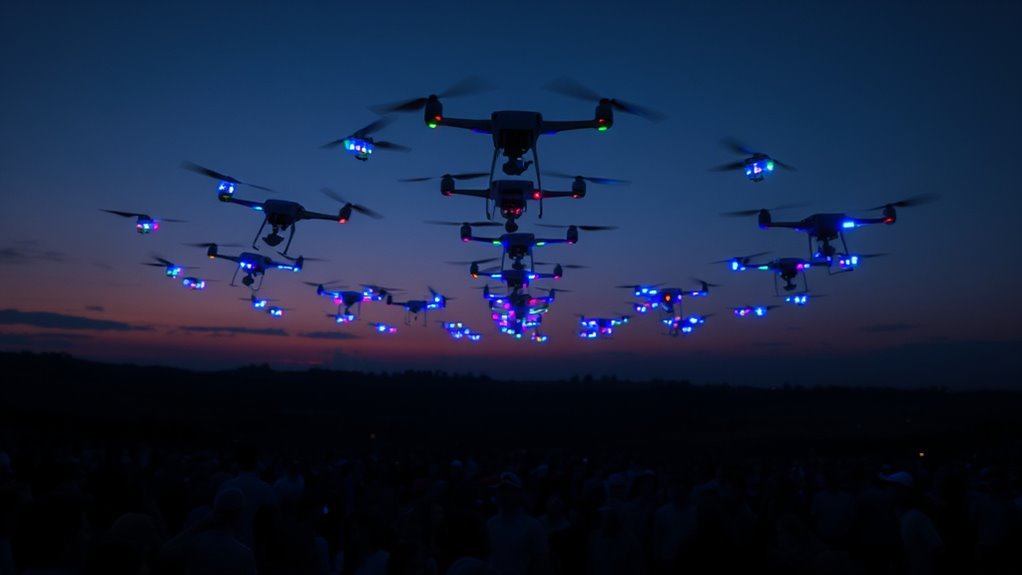
The enchanting displays of drone light shows rely on several key components that work in harmony to create breathtaking visual experiences. Understanding these components can enhance your appreciation for the art and technology involved.
| Component | Function | Impact |
|---|---|---|
| Drone Specifications | Dictate payload and flight stability | Guarantee precise maneuverability |
| Light Patterns | Create visual designs | Evoke emotions and tell stories |
| Control Systems | Coordinate drone movements | Achieve synchronization and harmony |
| Battery Technology | Power the drones | Extend flight duration for shows |
Programming the Performance: Software and Algorithms
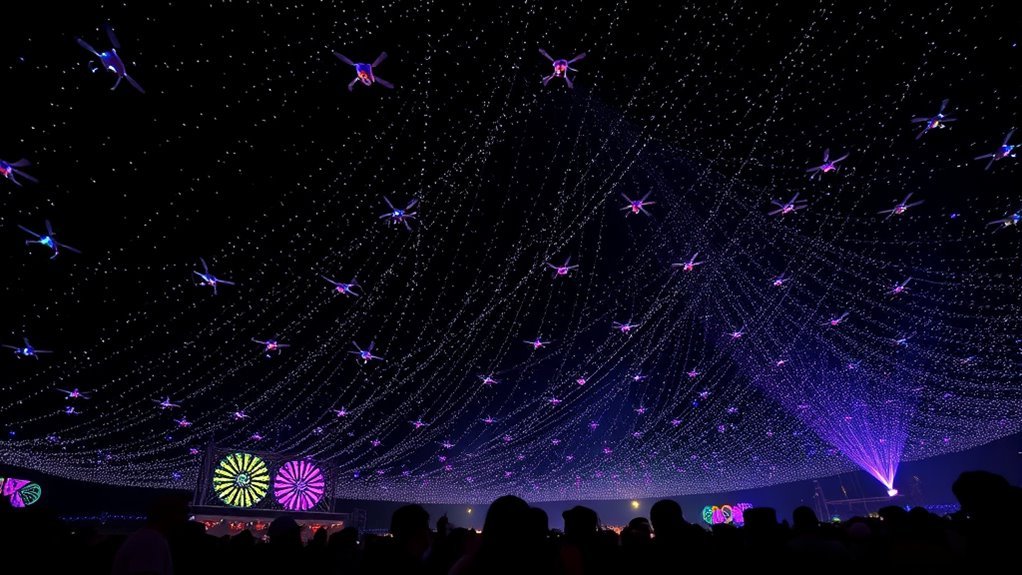
Programming a drone light show involves intricate software and algorithms that orchestrate each element of the performance. You’ll rely on robust software architecture to guarantee seamless communication between drones, allowing for precise control over movements and light displays. Algorithm optimization is essential in this process; it enhances performance efficiency, reducing latency and guaranteeing that drones respond accurately to commands. You’ll also need to implement real-time data processing to adapt to environmental variables and maintain safety. By tailoring algorithms for specific visual effects, you can create compelling narratives that captivate your audience. Ultimately, the harmony between software and algorithms empowers you to push creative boundaries in drone light shows while maximizing their potential for artistic expression. Additionally, integrating advanced gyroscopic mechanisms can further enhance the stability and precision of drone formations during performances.
Synchronization Techniques for Multiple Drones
To achieve a visually stunning drone light show, effective synchronization techniques for multiple drones are vital. You’ll want to focus on precise drone choreography, which involves orchestrating movements and light patterns in perfect harmony. One common method is using a centralized controller that sends commands to each drone, guaranteeing that their actions align seamlessly. Alternatively, decentralized systems allow drones to communicate with one another, enhancing adaptability and responsiveness. Light synchronization is essential; using protocols like time codes or wireless communication guarantees that the drones’ lights flash in unison, creating enchanting visuals. By mastering these synchronization techniques, you can release the full potential of your drone light show, delivering an experience that resonates with audiences and embodies freedom in creativity. Additionally, utilizing advanced GPS and RTK systems can significantly improve the precision of flight paths, ensuring flawless coordination among multiple drones. Moreover, AI-driven choreography innovations leverage machine learning algorithms to create adaptive flight patterns that further enhance synchronization capabilities.
GPS Navigation and Positioning Accuracy
In drone light shows, GPS technology is essential for precise navigation and positioning. You’ll find that using advanced precision positioning systems enhances the accuracy of each drone’s flight path, allowing for seamless coordination. Real-time navigation adjustments further refine this process, ensuring that each unit maintains its intended trajectory throughout the performance. Additionally, understanding the factors influencing start times can help optimize the overall experience of the show. This level of accuracy is supported by synchronization algorithms, which ensure that drones communicate effectively and maintain their positions despite potential delays.
Drone GPS Technology
Although GPS technology is often taken for granted, its role in drone light shows is essential for precise navigation and positioning. Without accurate GPS, drones can’t perform the intricate choreography that makes these displays engaging. Here are key aspects of GPS technology in this context:
- Drone Mapping: Creates a detailed flight path, ensuring each drone knows its position relative to others.
- Signal Interference: Awareness of potential signal disruptions helps in planning flight paths to avoid errors.
- Real-time Updates: GPS provides continuous data, allowing for immediate adjustments during the show.
- Formation Control: Coordinates multiple drones to move in harmony, enhancing visual effects.
Precision Positioning Systems
While many may underestimate the complexities of precision positioning systems, their accuracy is essential for the seamless execution of drone light shows. These systems rely on high precision sensors to guarantee drones maintain their intended positions in three-dimensional space. By integrating advanced GPS navigation techniques, drones achieve the necessary positional accuracy for synchronized performances. Autonomous navigation features allow each drone to adjust its flight path in real-time, minimizing the risk of collisions and guaranteeing the choreography is executed flawlessly. The precision of these systems is critical, as even minor deviations can disrupt the visual spectacle. Ultimately, harnessing high precision sensors and sophisticated algorithms empowers drones, granting them the freedom to create stunning aerial displays that captivate audiences worldwide.
Real-Time Navigation Adjustments
Building on the foundation of precision positioning systems, real-time navigation adjustments play a pivotal role in maintaining the integrity of drone light shows. You’ll find that these adjustments guarantee each drone operates seamlessly, adapting to its environment through:
- GPS Navigation: Continuously updates the drone’s position with high accuracy.
- Dynamic Adjustments: Enables quick recalibration for changing flight paths.
- Obstacle Avoidance: Utilizes sensors to detect and navigate around potential hazards.
- Communication Networks: Facilitates real-time data exchange among drones for coordinated movements.
These elements work in concert to enhance safety and precision, allowing for fluid choreography in the sky. By leveraging these technologies, you’ll experience a mesmerizing display that feels both effortless and meticulously orchestrated.
Safety Measures and Regulations
As drone light shows gain popularity, guaranteeing safety and compliance with regulations becomes paramount. You need to understand the framework of drone regulations that govern these aerial displays. Adhering to established safety protocols is essential to mitigate risks associated with drone operations. This includes maintaining specific altitude limits, guaranteeing drones are equipped with fail-safe mechanisms, and conducting pre-flight checks. You should also be aware of airspace restrictions and obtain necessary permits to operate in designated areas, particularly in no-fly zones that exist around airports and urban areas. Collaborating with local authorities and following industry guidelines can help guarantee a smooth execution. By prioritizing safety and adhering to regulations, you can enjoy the freedom of creativity in your drone light shows while minimizing potential hazards. Additionally, implementing geofencing technology can help prevent accidental intrusions into personal spaces during these performances.
Creative Design and Artistic Direction
To create an engaging drone light show, you must blend technical precision with artistic vision. Successful design requires a deliberate approach, focusing on key elements that enhance audience engagement and visual impact. Consider these aspects:
Blending technical precision with artistic vision is essential for crafting an engaging drone light show that captivates audiences.
- Thematic Concepts: Align your show with a central theme, guiding the narrative storytelling. Incorporating drone counts allows you to explore the evolution of visuals in your performances.
- Color Palettes: Choose colors that evoke emotions and resonate with cultural influences.
- Choreographic Elements: Plan drone movements that synchronize with music or sound, enhancing the overall experience.
- Design Collaboration: Work with artists and technologists to fuse innovative techniques and guarantee visual synchronization.
Incorporating proactive vulnerability identification into the design process ensures that technical aspects are seamlessly integrated, enhancing both performance and safety. Through this meticulous process, you’ll craft a show that captivates the audience, transforming mere lights into a powerful expression of creativity and freedom.
Real-time Data Processing and Communication
The artistic vision of a drone light show relies heavily on real-time data processing and communication systems. You’ll find that data transmission among drones is essential for achieving seamless visual synchronization. Each drone is equipped with sensors and communication modules that continuously relay information back to a central control unit. This unit processes complex algorithms to guarantee that all drones respond precisely to the artistic choreography. Any lag in data transmission can lead to misalignment, disrupting the intended visual effects. Advanced protocols allow for rapid data exchange, enabling the drones to adapt to dynamic changes during the performance. By maintaining a constant flow of information, you can guarantee that each drone plays its part in creating an engaging display that resonates with freedom and creativity. The precision algorithms used in the Intel Shooting Star 2 ensure flawless coordination of LED patterns, enhancing the overall visual experience. This capability is essential for scaling the performance to large-scale drone shows, allowing for impressive displays with numerous drones working in unison.
Case Studies: Notable Drone Light Shows
Several notable drone light shows have set benchmarks in the industry, showcasing the impressive capabilities of this technology. Here are four case studies highlighting the work of drone show pioneers and their innovative choreography:
Notable drone light shows exemplify the technology’s potential, pushing artistic boundaries and captivating audiences worldwide.
- Beijing 2022 Winter Olympics – A stunning display of 1,200 drones created intricate patterns, symbolizing unity and celebration.
- Super Bowl LV – A mesmerizing show featuring 300 drones, synchronized to music, enhancing the halftime experience.
- Walt Disney World – In a nightly spectacle, drones animated beloved characters, blending storytelling with advanced technology.
- Singapore National Day – A vibrant display of 1,000 drones that depicted the country’s heritage, demonstrating both precision and creativity.
These examples illustrate the potential of drone shows to engage audiences while pushing the boundaries of artistic expression.
The Future of Drone Light Entertainment
As drone technology continues to advance, you’ll notice an increase in both the complexity and creativity of light performances. Future applications may incorporate innovative storytelling techniques while addressing environmental impact more effectively. This evolution will reshape audience experiences and industry standards in entertainment, leveraging synchronized displays to create immersive narratives that captivate viewers.
Advancements in Drone Technology
While advancements in drone technology are rapidly transforming the landscape of entertainment, the implications for drone light shows are particularly significant. These innovations enhance aerial artistry, enabling stunning visual displays that captivate audiences. Key advancements include:
- Improved Battery Life: Longer flight times allow for more complex shows.
- Enhanced Navigation Systems: Precision in positioning leads to intricate formations.
- Advanced LED Technology: Brighter, more vibrant colors create a dynamic visual experience.
- AI Integration: Automated choreography allows for seamless synchronization of drones.
These drone innovations not only elevate the quality of performances but also expand creative possibilities, pushing the boundaries of what drone light shows can achieve. As technology continues to evolve, the future of aerial entertainment will certainly become more spectacular and immersive.
Creative Performance Applications
The advancements in drone technology have paved the way for innovative creative performance applications, fundamentally transforming how audiences engage with aerial entertainment. Artists can now collaborate with drone operators to create synchronized light displays that elevate storytelling and emotional resonance. This fusion of technology and art invites deeper audience engagement, breaking traditional boundaries.
| Application | Description | Benefits |
|---|---|---|
| Concerts | Drones enhance live music experiences | Engages audiences visually |
| Festivals | Large-scale displays create immersive environments | Unites diverse communities |
| Corporate Events | Custom shows for brand storytelling | Strengthens brand identity |
| Public Celebrations | Celebratory displays for holidays | Fosters communal joy |
| Art Installations | Interactive drone art exhibitions | Encourages viewer participation |
Environmental Impact Considerations
Although drone light shows offer enchanting visual experiences, their environmental impact warrants careful consideration. To guarantee these displays are aligned with environmental sustainability, you should evaluate the following factors:
- Energy Consumption: Assess the power sources used for charging drones; renewable energy options should be prioritized.
- Noise Pollution: Consider the sound levels produced during operations and their potential effects on local wildlife and communities.
- Material Waste: Analyze the lifecycle of the drones and any associated materials to minimize waste generation.
- Air Quality: Monitor emissions associated with drone operations, especially in densely populated areas.
Frequently Asked Questions
How Are Drones Powered During Light Shows?
During light shows, drones rely on advanced battery technology that optimizes flight endurance. You’ll find that efficient power management is essential, allowing for longer performances while maintaining stability and precision in intricate aerial displays.
What Types of Drones Are Used for Light Shows?
Think of drones as the stars in a cosmic ballet. For light shows, you’ll find quadcopters and fixed-wing drones, each tailored with specific drone specifications to create stunning visuals, ensuring mesmerizing performances that captivate audiences everywhere.
How Are Colors Created in Drone Light Displays?
Colors in drone light displays are created through color mixing using LED technology. By varying the intensities of red, green, and blue LEDs, you can achieve a vast spectrum of vibrant colors, enhancing the visual experience.
Can Drone Light Shows Be Customized for Different Events?
Imagine a canvas painted in the sky—yes, drone light shows can be customized for various event themes, enhancing audience engagement and creating unforgettable experiences. Tailored designs guarantee every display resonates with the occasion’s essence and mood.
What Happens if a Drone Malfunctions During a Show?
If a drone malfunctions during a show, drone safety protocols activate, ensuring it safely lands or disengages. These malfunction protocols minimize risks, maintaining the integrity of the performance while prioritizing audience safety and operational efficiency.
