
If you’re considering shooting down a drone, understand the legal implications first; unauthorized actions could lead to severe criminal charges. Assess the situation by identifying the drone type and its purpose. Choose an appropriate neutralization method, like jamming or net capture. Prepare your tools meticulously and guarantee safety measures for bystanders. After execution, document the incident for future reference. These steps are vital to avoid liabilities and guarantee effective action, with more detailed strategies to follow.
Understanding the Legal Implications
While you may feel justified in taking action against drones that invade your privacy or pose a threat, understanding the legal implications is essential. Engaging with drone regulations is vital, as they dictate acceptable responses to perceived intrusions. Shooting down a drone can lead to severe legal consequences, including criminal charges and civil liabilities. Federal law, particularly under the FAA, prohibits unauthorized interference with aerial vehicles, which includes private drones. Additionally, state laws vary, complicating your legal standing further. Before taking any action, consider documenting the incident and reporting it to authorities. Knowledge of your rights and the existing legal framework will empower you to navigate this complex territory responsibly while advocating for your freedom. Furthermore, understanding airspace rights is crucial to determining the legality of your actions. It is important to remember that many areas have specific local regulations that govern drone operations, which can impact your situation.
Assessing the Situation
Before taking any action against a drone, you need to identify the type of drone in question. Assess its potential threats to determine if it poses a risk to your safety or property. Additionally, understanding the legal implications of your response is vital to guarantee compliance with regulations.
Identify the Drone Type
How can you effectively assess the situation when confronted with an unidentified drone? Start by observing its drone specifications. Look for size, shape, and color, which can help you categorize the drone. Next, analyze its flight patterns— is it hovering, circling, or moving in a straight line? These patterns can indicate its purpose, whether recreational or potential surveillance. Understanding the drone’s specifications and behavior aids in determining how to respond. If it appears to be a commercial model, the threat level may be lower than if it’s a stealth drone with advanced capabilities. By gathering this information, you can make informed decisions while protecting your rights and freedoms against unwanted aerial intrusions.
Evaluate Potential Threats
To effectively evaluate potential threats posed by an unidentified drone, you must assess both its characteristics and the context of its presence. Start with a thorough threat assessment, focusing on the drone’s size, speed, and behavior. Is it hovering suspiciously or following a predictable flight path? Next, consider the environment. Are you in a sensitive area, such as near a government building or a crowded event? Such context heightens risk evaluation. Determine if the drone’s presence aligns with benign recreational use or indicates malicious intent. Finally, gather intelligence on recent reports of drone-related incidents in your area. This all-encompassing approach guarantees you’re not only reacting, but proactively safeguarding your freedoms against potential aerial threats.
Determine Legal Implications
As you assess the situation involving an unidentified drone, it is crucial to understand the legal implications surrounding its presence. Various legal regulations and drone policies dictate your rights and responsibilities. Engaging with a drone can lead to significant legal consequences, depending on your jurisdiction.
| Aspect | Description |
|---|---|
| Legal Rights | Understand property and privacy laws. |
| Federal Regulations | Familiarize yourself with FAA guidelines. |
| State Laws | Review local laws regarding drone use. |
| Self-Defense Claims | Know the limits of justifiable force. |
| Reporting Procedures | Document incidents and contact authorities. |
Always consult legal experts if in doubt. Knowing the law helps guarantee you’re protected and informed when confronting a potential threat.
Identifying the Type of Drone
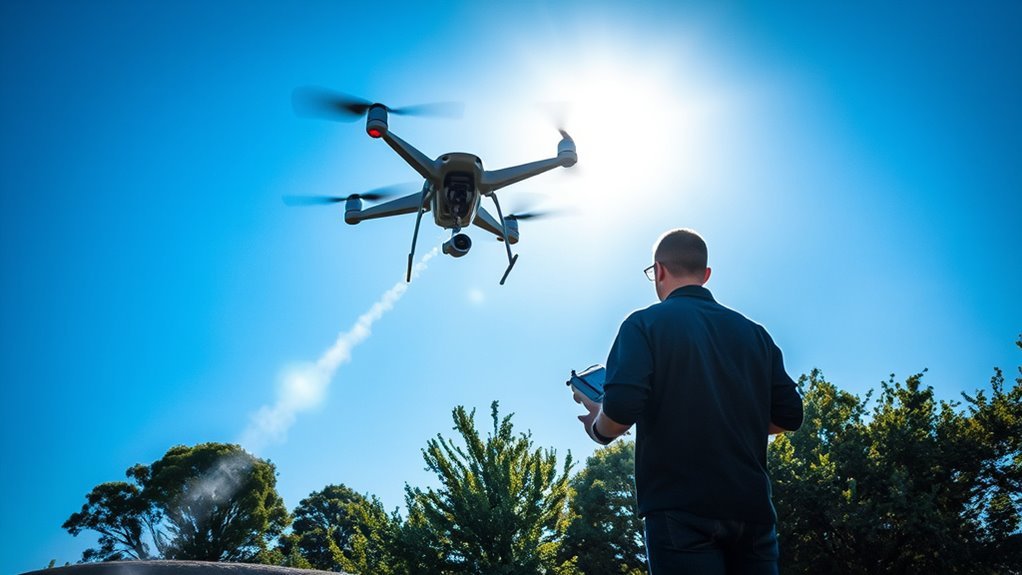
To effectively address a drone threat, you need to identify the type of drone involved. Understanding drone classification types, employing visual identification techniques, and recognizing common features are essential steps in this process. Accurate identification not only informs your response options but also enhances overall situational awareness.
Drone Classification Types
Drones can be classified into several distinct types based on their design, functionality, and intended use. Understanding these drone types is essential when considering the classification criteria for effective identification. Here are three primary categories:
- Fixed-Wing Drones: These resemble traditional aircraft and are used for long-distance flights, often requiring runways for takeoff and landing.
- Multirotor Drones: Popular for their versatility, these drones have multiple rotors, making them ideal for aerial photography and short-range missions.
- Hybrid Drones: Combining elements of both fixed-wing and multirotor designs, they offer the benefits of sustained flight and vertical takeoff capabilities.
Identifying these categories not only aids in recognition but also informs your approach to managing or neutralizing them effectively.
Visual Identification Techniques
How can you quickly and accurately identify the type of drone in your vicinity? Start by observing key visual cues that differentiate drones. Note the size, shape, and color of the drone, as these factors can indicate its category—be it consumer, commercial, or military. Look for distinguishing features like the number of rotors, camera placement, and any visible markings or logos that might assist in drone identification. Pay attention to flight patterns and noise levels, as these can provide additional context about the drone’s capabilities. Using binoculars or a zoom camera may enhance your observation, allowing you to gather more precise details. With practice, you’ll sharpen your skills in recognizing various drones, enhancing your awareness of your airspace.
Common Drone Features
Identifying the type of drone often hinges on recognizing common features that distinguish one model from another. Understanding these drone components can greatly enhance your ability to assess flight capabilities and purposes.
- Size and Shape: Drones vary greatly in size, from compact models for hobbyists to larger ones used for industrial applications.
- Propulsion System: The number of rotors and their configuration (quadcopter, hexacopter, etc.) directly influences stability and maneuverability.
- Camera Specifications: Many drones come equipped with cameras; the type and resolution can indicate whether the drone is built for photography or surveillance.
Choosing the Right Method to Neutralize
When considering the best approach to neutralize a drone, what factors should you prioritize? First, assess the drone’s size and capabilities. For lightweight drones, drone jamming might be effective; it disrupts communication between the drone and its operator, causing it to land or return. On the other hand, for larger drones or those operating autonomously, net capture could be a viable option. This method physically entangles the drone, preventing it from continuing its mission. Evaluate the environment too—jamming may cause collateral issues in areas with sensitive communications, while net capture requires precision. Ultimately, your choice should reflect both the threat level and the desired outcome, ensuring that you maintain your freedom while effectively neutralizing the drone.
Preparing Your Tools and Equipment
Before engaging in drone neutralization, it’s crucial to prepare your tools and equipment meticulously. Proper preparation not only guarantees efficiency but also enhances your safety and effectiveness. Implement tool selection strategies to choose the right equipment for your specific needs. Here are three critical items to prepare:
- Targeting Device: Verify it’s calibrated and ready for accurate use.
- Protective Gear: Use high-quality gear to safeguard yourself from potential hazards.
- Communication Tools: Maintain clear lines of communication with your team for coordinated efforts.
Don’t overlook equipment maintenance tips; regularly inspect and service your tools to prevent malfunction during critical moments. A well-prepared setup can greatly influence the outcome of your drone neutralization efforts.
Executing the Neutralization Process
As you initiate the neutralization process, it’s vital to maintain a calm and focused mindset, guaranteeing that each step is executed with precision. Begin by evaluating the drone’s altitude and proximity, which will inform your choice of neutralization methods. Whether you opt for electronic jamming or physical interception, clarity in your approach is essential.
Before acting, remember to implement safety precautions; confirm that bystanders are at a safe distance and that you’re aware of your surroundings. Utilize appropriate gear to protect yourself from potential hazards. Execute your method methodically, adjusting your strategy based on the drone’s movements. A disciplined approach not only maximizes your success but also secures the safety of everyone involved.
Post-Action Steps and Reporting
Once the neutralization process is complete, it’s crucial to conduct a thorough assessment of the situation and document your actions. This guarantees accountability and provides essential information for future encounters. Follow these reporting procedures:
- Collect Evidence: Gather all relevant data, including video footage, radar logs, and witness statements.
- Conduct Post Action Analysis: Analyze the effectiveness of your neutralization methods and identify any areas for improvement.
- File a Detailed Report: Compile your findings into a formal report, detailing the circumstances, actions taken, and outcomes.
Frequently Asked Questions
What Are the Potential Penalties for Shooting Down a Drone?
Shooting down a drone’s like igniting a legal wildfire; the repercussions can be severe. You’ll face legal ramifications under drone regulations, including hefty fines or even criminal charges, depending on intent and circumstances surrounding the incident.
Can I Shoot Down a Drone Over My Private Property?
You can’t shoot down a drone over your property without risking legal consequences. Drone regulations often supersede property rights, meaning your freedom to act is limited by laws governing airspace and unmanned aerial vehicles.
How Do I Report a Drone That Violates My Privacy?
If a drone’s invading your privacy, document its flight path and gather evidence. Then, report it to local authorities following established reporting procedures. Understanding drone privacy laws can empower you in defending your personal space.
Are There Non-Lethal Methods to Neutralize a Drone?
Yes, there’re non-lethal methods to neutralize a drone, like drone jamming technology. By employing signal disruption techniques, you can interfere with the drone’s communication link, effectively rendering it unable to operate without causing physical damage.
What Should I Do if a Drone Crashes Nearby?
What would you do if a drone suddenly plummeted nearby? First, guarantee safety, then initiate drone recovery. Report the incident for a crash investigation, as it may provide insights into potential risks or violations in your area.
