
To neutralize a drone, start by evaluating the situation and identifying its type. Make sure you’re compliant with local regulations before using countermeasures like signal jammers or net guns. Review safety precautions and the surrounding environment to minimize risk to people and property. Each method has its effectiveness depending on drone characteristics and airspace conditions. For a thorough approach to guarantee successful neutralization, you’ll want to take into account the nuances involved in each strategy moving forward.
Assessing the Situation
Before taking action against a drone, you need to thoroughly assess the situation. Start by analyzing the drone technology in use; understanding its capabilities helps gauge potential risks. Conduct a risk assessment to identify the threat level it poses to your privacy or safety. Consider the drone’s altitude, speed, and trajectory, as well as its purpose—whether for surveillance, delivery, or recreational use. Evaluate the environment, including nearby structures or people, to determine the safest method for engagement. Finally, consult with local regulations and community standards regarding drone interactions to guarantee your actions align with a desire for freedom while minimizing potential legal repercussions. This thorough evaluation will inform your next steps effectively.
Understanding Drone Regulations
To effectively address drone issues, you need to understand the regulations that govern their use. This includes ensuring compliance with local laws, recognizing airspace restrictions, and adhering to registration requirements. A solid grasp of these factors will inform your approach to managing drone-related situations. Additionally, paying attention to state and local laws can help you avoid penalties and ensure responsible operation. Engaging with federal oversight is also crucial for navigating conflicts related to drone airspace usage.
Local Law Compliance
While maneuvering through the complexities of drone operation, understanding local regulations is essential for guaranteeing compliance and avoiding legal repercussions. As a drone owner, you must familiarize yourself with the specific laws governing flight in your area. This includes registration requirements, operational limitations, and any no-fly zones that may apply. Ignoring these regulations can lead to significant legal consequences, including fines or, in extreme cases, criminal charges. Ascertain that you consult local authorities or official resources to stay updated on any changes in drone legislation. By adhering to these laws, you not only protect your rights as a drone owner but also contribute to the responsible use of airspace, allowing for greater freedom in your operations.
Airspace Restrictions Awareness
Understanding airspace restrictions is essential for any drone operator, as failing to comply with these regulations can lead to serious consequences. To guarantee you’re flying legally, familiarize yourself with key aspects of airspace awareness:
- Consult airspace maps regularly to identify restricted areas.
- Identify drone zones designated for recreational and commercial use.
- Stay updated on temporary flight restrictions (TFRs) due to events or emergencies.
- Know altitude limits in various airspace classifications.
- Be aware of no-fly zones, such as around airports or military installations.
Registration Requirements Explained
Airspace awareness is just one component of responsible drone operation; registration is another critical factor. Understanding the legal requirements for drone registration is essential to guarantee you’re compliant with regulations. In the U.S., if your drone weighs more than 0.55 pounds, you must register it with the FAA. This process involves providing your details and paying a nominal fee, which grants you a unique identification number. Failing to register can lead to fines and restrictions on your flying freedom. Keep in mind that local laws may impose additional requirements, so always check your state or municipality’s regulations. By fulfilling these registration obligations, you protect your rights and enable responsible drone usage in shared airspace.
Identifying the Drone Type
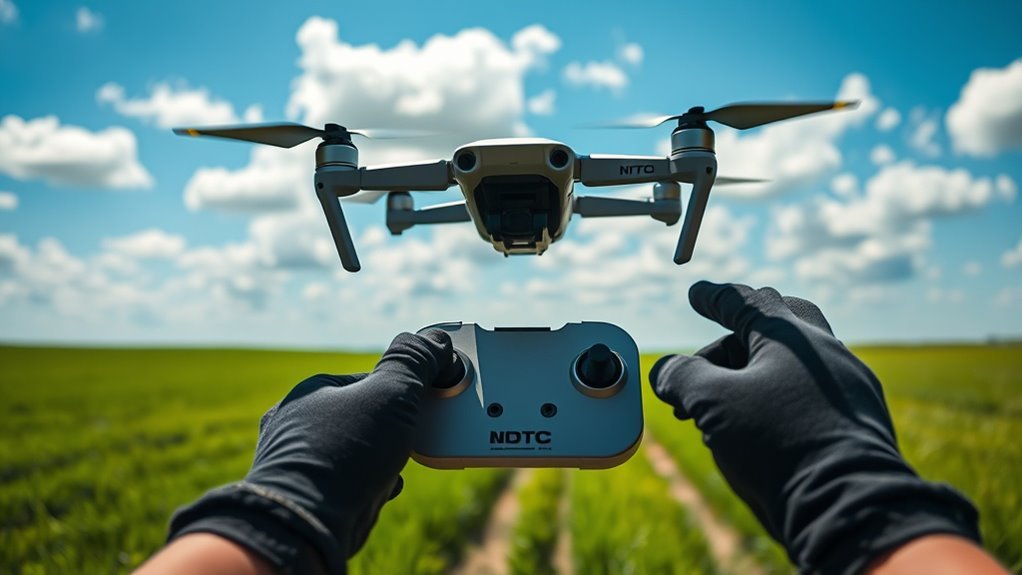
How can you effectively identify the type of drone you’re dealing with? Knowing the drone types and employing accurate identification methods is essential. Start by observing the drone’s characteristics:
Identifying a drone type requires careful observation of its size, propeller count, camera presence, and design features.
- Size: Is it compact or large?
- Number of Propellers: How many blades does it have?
- Camera Presence: Does it have an integrated camera or payload?
- Flight Range: How far can it operate from the controller? Drones like Draganfly Vital Intelligence offer extended flight times of up to 25 minutes, which can be a distinguishing feature.
- Design Features: Look for unique designs or branding.
Additionally, understanding the drone’s top speed records can help you categorize its design and intended use.
Evaluating Safety Precautions
Before attempting to take out a drone, you need to assess your surrounding environment to identify potential hazards. It’s also essential to check the weather conditions, as strong winds or rain can impact your approach and safety. Additionally, understanding airspace classifications is crucial to ensure that you’re operating in compliant areas. Finally, reviewing local regulations guarantees you comply with legal requirements, minimizing the risk of legal repercussions. Additionally, ensure you are aware of restricted zones to avoid flying in prohibited areas that could lead to penalties.
Assess Surrounding Environment
While evaluating the safety precautions for taking out a drone, it’s crucial to assess the surrounding environment thoroughly. Identifying potential risks can prevent accidents and guarantee a successful operation. Here are key factors to contemplate:
- Environmental hazards: Look for power lines, trees, and bodies of water.
- Nearby structures: Identify buildings or other obstacles that could obstruct flight paths.
- Crowd density: Avoid launching in crowded areas to minimize risk to bystanders.
- Surface terrain: Check for uneven ground that could affect takeoff and landing.
- Local regulations: Be aware of any restrictions in the area, such as no-fly zones.
Check Weather Conditions
What’s the weather like? Before you proceed, you need to evaluate weather conditions through accurate weather forecasting. It’s crucial to assess environmental factors like wind speed, precipitation, and visibility. High winds can destabilize your drone, making it difficult to control, while rain or snow can damage electronic components. Additionally, low visibility can impair your ability to track the drone, increasing the risk of accidents. Check local forecasts and consider real-time updates, as conditions can change rapidly. Taking these precautions not only guarantees your safety but also protects your equipment. Always remember, favorable weather conditions can greatly enhance your operational success, allowing you the freedom to take out your drone effectively and responsibly.
Review Local Regulations
Understanding and complying with local regulations is essential for safe drone operation, as these laws can vary considerably by location. Ignoring them can lead to severe legal implications, especially concerning drone privacy. Here’s what you should check:
- Altitude limits: Know maximum flying heights.
- No-fly zones: Identify areas where drone use is prohibited.
- Permits: Determine if you need special permissions for your flight.
- Privacy laws: Understand how to respect others’ rights while flying.
- Insurance requirements: Confirm if coverage is necessary for operation.
Staying informed about these factors not only guarantees compliance but also enhances your freedom to operate drones responsibly. Always prioritize safety and legality to enjoy your aerial adventures without repercussions.
Using Signal Jammers
Signal jammers serve as a practical solution for disabling drones by disrupting their communication signals. By employing signal interference techniques, you can effectively neutralize a drone’s control system, rendering it inoperable. Understanding the ideal frequency range and implementing precise drone targeting methods is essential for success.
| Jammer Type | Frequency Range | Effectiveness |
|---|---|---|
| Handheld | 2.4 GHz | Moderate |
| Portable | 5.8 GHz | High |
| Vehicle-Mounted | 900 MHz | Very High |
| Fixed Station | 1.2 GHz | thorough |
| Tactical | 433 MHz | Variable |
Utilizing these jammers not only enhances your tactical options but also aligns with your desire for freedom from unwanted aerial surveillance.
Employing Net Guns
Net guns offer a unique and effective method for neutralizing drones without causing damage to the device or surrounding environment. Understanding net gun mechanics and employing precise deployment techniques are essential for success. Here’s what you need to know:
Net guns provide a safe and efficient way to neutralize drones while preserving the integrity of the device and environment.
- Choose the Right Net: Select a net designed for your target size.
- Understand Range: Know the effective range of your net gun to guarantee accuracy.
- Wind Considerations: Assess wind conditions, as they can affect net trajectory.
- Timing and Angle: Aim for ideal timing and angle to maximize entanglement chances.
- Practice: Regular practice helps refine your skills and improve hit rates.
Deploying Drones With Countermeasures
After considering methods like net guns for taking out drones, it’s important to explore countermeasures that can be deployed from your own drones. Utilizing advanced drone technology, you can equip your unit with specific countermeasures designed to neutralize threats effectively. For instance, jamming devices can disrupt the control signals of hostile drones, rendering them inoperable. Additionally, deploying spoofing techniques can mislead enemy drones, diverting them from their intended course. Evaluating countermeasure effectiveness is vital; verify your systems are tested in various scenarios to gauge reliability. As you implement these measures, remain aware of legal implications and ethical considerations surrounding drone interference, balancing your pursuit of freedom with responsible use of technology.
Reporting the Incident
When encountering a drone incident, it’s essential to report the situation promptly to guarantee a coordinated response. Proper incident documentation and accurate witness statements are important for effective resolution. Here’s what you should include in your report:
- Location: Specify where the incident occurred.
- Time: Note the exact time of the occurrence.
- Description: Detail the drone’s appearance, behavior, and any potential threats.
- Witnesses: Include contact information for any witnesses to corroborate your account.
- Actions Taken: Document any measures you took during the incident.
Learning From the Experience
Reporting the incident is just the beginning; understanding what happened can greatly enhance your preparedness for future encounters. Analyze the event to identify lessons learned. Was the drone’s flight pattern predictable? Did you have the right tools and strategies available? Reflecting on these aspects will allow you to refine your future strategies. Consider documenting your findings for future reference, ensuring you’re not repeating mistakes. Engage with community discussions to broaden your perspective on drone encounters. By sharing experiences, you can learn from others and enhance your tactical approach. Ultimately, this analytical process will empower you, equipping you with the knowledge needed to maintain your freedom and security against potential drone threats in the future.
Frequently Asked Questions
What Are the Legal Consequences of Taking Down a Drone?
When you think about taking down a drone, consider the storm of drone regulations swirling around you. Ignoring these laws can lead to serious legal implications, including hefty fines or even criminal charges. Stay informed.
Can I Take Down a Drone Over My Property?
You can’t simply take down a drone over your property without considering drone laws and property rights. Legal repercussions could arise, so it’s essential to understand the boundaries of your rights versus the regulations governing airspace.
Are There Non-Destructive Methods to Disable a Drone?
Yes, there’re non-destructive methods to disable a drone, like drone jamming or using signal interference. These techniques disrupt communication between the drone and its operator, allowing you to regain control without causing physical damage.
What Should I Do if a Drone Is Spying on Me?
If you suspect a drone’s spying, first verify its presence with drone detection technology. Understand your privacy rights; document the incidents and report to authorities. Protecting your freedom requires vigilance and awareness in today’s surveillance landscape.
How Can I Protect My Privacy From Drones?
To protect your privacy from drones, utilize drone detection technology and understand your privacy rights. Implement physical barriers, employ signal-blocking materials, and stay informed about regulations to safeguard your personal space from unwanted surveillance.
