
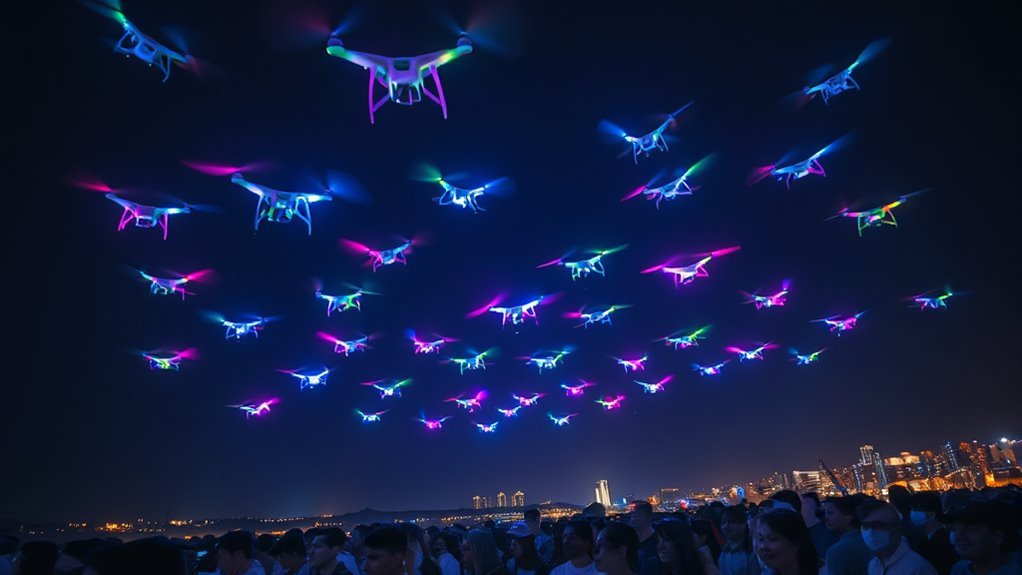
A drone light show is a coordinated aerial performance using multiple drones equipped with LED lights. These drones execute programmed flight paths and synchronize movements to create dynamic visual displays, often set to music. Advanced technology, including GPS, real-time data processing, and artificial intelligence, allows for intricate choreography and spatial awareness. This makes drone shows an eco-friendly alternative to fireworks. To fully understand the technical intricacies and various applications, further exploration of this fascinating field is beneficial.
The Evolution of Drone Light Shows
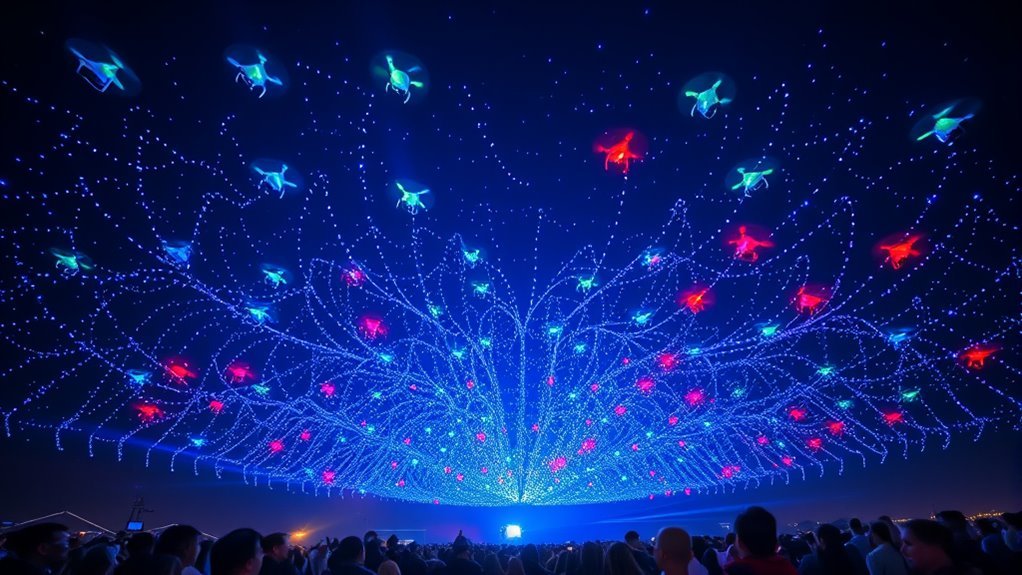
As technology has advanced, drone light shows have transformed from simple displays into complex, synchronized performances that captivate audiences worldwide. Key historical milestones, such as the introduction of GPS navigation and real-time data processing, have paved the way for these intricate spectacles. Technological advancements in battery life and LED display capabilities have allowed for longer and more vivid performances. Early shows relied on a handful of drones, but today, hundreds can coordinate seamlessly, creating stunning visuals. The integration of artificial intelligence enables dynamic choreography, ensuring that each performance is unique. This evolution reflects a broader trend toward innovation, underscoring the desire for creative expression and freedom in entertainment. Embracing these developments, you’ve witnessed a revolutionary shift in how we experience visual storytelling. The utilization of advanced swarm algorithms has significantly enhanced the complexity and synchronization of drone performances.
How Drone Light Shows Are Designed
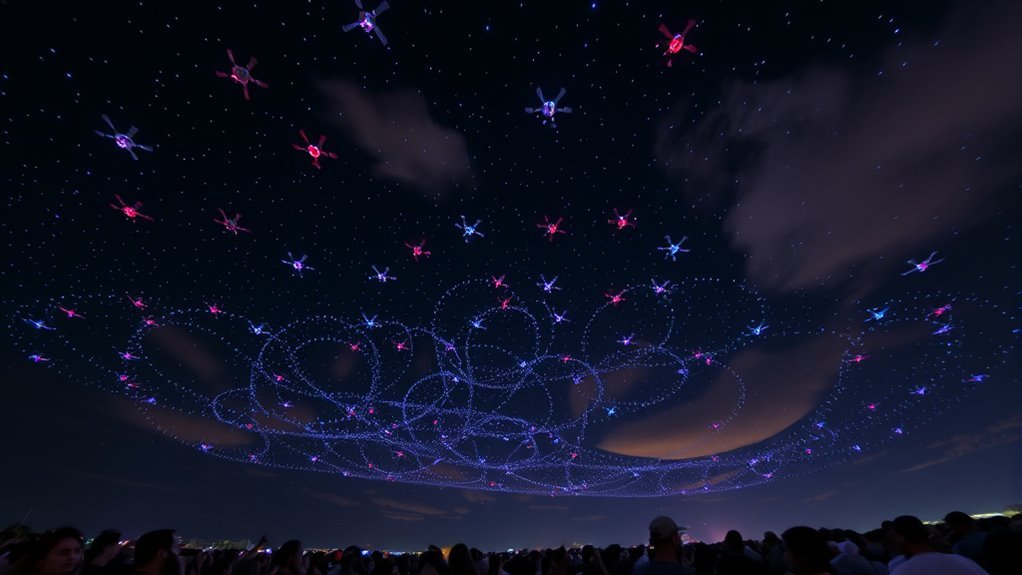
The shift toward complex, synchronized performances in drone light shows has necessitated a sophisticated design process. Designers must adhere to specific design principles while fostering artistic collaboration among creators. This guarantees that visual narratives are compelling and seamlessly executed.
| Design Principle | Description | Importance |
|---|---|---|
| Synchronized Motion | Aligning drones for coordinated movements | Enhances visual impact |
| Color Theory | Utilizing color schemes to evoke emotions | Creates thematic depth |
| Spatial Awareness | Understanding the three-dimensional space | Maximizes audience engagement |
| Timing | Perfectly timing displays with music | Strengthens emotional response |
| Iterative Refinement | Continuous testing and adjustments | Guarantees precision and quality |
The integration of advanced GPS and AI algorithms allows for precise, energy-efficient choreography, further enhancing the creative possibilities of drone light shows. Additionally, incorporating superior camera capabilities can enhance the visual quality of the displays, capturing intricate details that contribute to the overall experience.
The Technology Behind Drone Light Shows
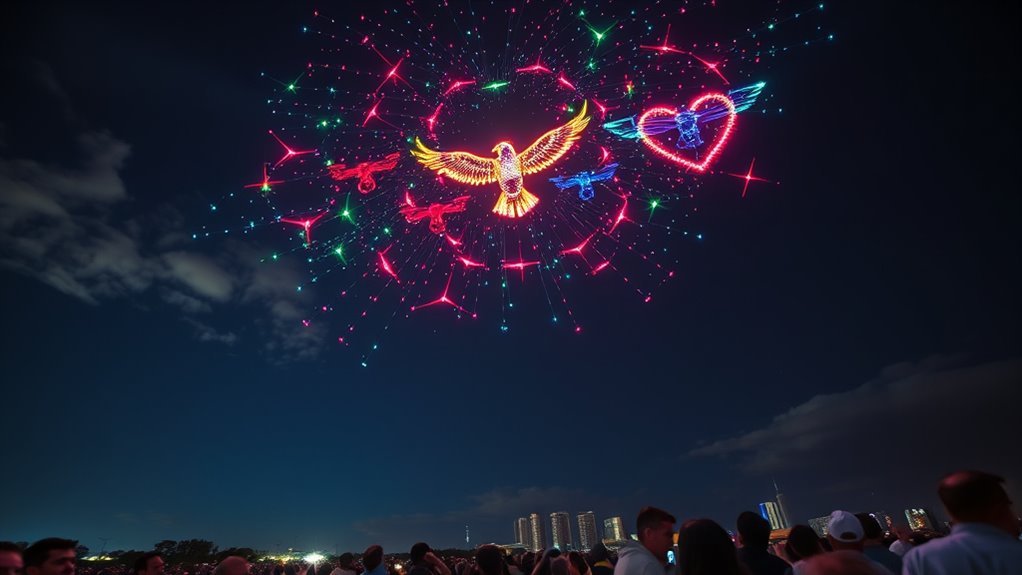
To understand the technology behind drone light shows, you need to take into account the flight control systems and LED lighting technology at play. Flight control systems guarantee precise navigation and coordination among multiple drones, while LED lighting technology provides vibrant color displays. Together, these elements create a synchronized visual experience that captivates audiences.
Flight Control Systems
While many might marvel at the visual spectacle of drone light shows, the underlying flight control systems are essential for their precision and coordination. These systems utilize advanced technologies like autonomous navigation and sensor integration to guarantee seamless performance. Here are three key components:
- GPS Modules: They provide real-time positioning data, enabling drones to maintain accuracy in their flight paths.
- Inertial Measurement Units (IMUs): These sensors help stabilize the drones, allowing for smooth movements and precise adjustments.
- Communication Protocols: They facilitate real-time data exchange between drones and the control system, essential for synchronized displays.
Together, these elements create a harmonious dance in the sky, delivering an unforgettable experience while empowering the freedom of flight.
LED Lighting Technology
Advanced flight control systems not only secure coordinated movements but also rely heavily on cutting-edge LED lighting technology to create fascinating visuals. You’ll find that LED innovations play a vital role in enhancing the vibrancy and precision of lighting effects during a drone light show. These advanced LEDs are designed to emit a broad spectrum of colors, allowing for dynamic and engaging displays that can adapt in real-time. The lightweight nature of these lights guarantees that drones maintain peak flight performance while delivering stunning visual experiences. Moreover, with programmable capabilities, each drone can execute intricate patterns and sequences, elevating the overall impact of the show. This synergy between flight control and LED technology truly defines the modern drone light show.
Programming the Aerial Choreography
Programming the aerial choreography of a drone light show involves meticulous planning and precise execution. You’ll rely on sophisticated choreography software to guarantee each drone moves in harmony with the artistic vision. Here’s what to take into account:
- Flight Paths: Define precise routes for each drone, creating a seamless visual experience.
- Timing: Synchronize movements to music or thematic elements, enhancing emotional impact.
- Color Coordination: Plan light displays that complement the choreography, adding depth and vibrancy.
Artistic collaboration is key here; you’ll work closely with designers to bring your vision to life. By combining technical expertise with creative insight, you’ll craft a mesmerizing experience that captivates audiences, allowing them to embrace the freedom of this aerial art form. Additionally, advanced flight path algorithms help in computing coordinates and trajectories, ensuring each drone’s movement is perfectly orchestrated.
Safety Measures in Drone Light Shows
Ensuring safety during drone light shows is essential, as even a minor oversight can lead to accidents or disruptions. You must adhere to established drone regulations, which dictate operational parameters, including altitude limits and no-fly zones. Prior to the show, thorough risk assessments are important, identifying potential hazards and implementing appropriate safety protocols.
Each drone should undergo rigorous pre-flight checks to confirm functionality and reliability. During the performance, maintaining a clear communication channel among operators is critical, allowing for swift responses to any anomalies. Additionally, having designated safety zones for the audience can mitigate risks considerably. By prioritizing these measures, you’ll not only protect your audience but also enhance the overall experience, allowing everyone to enjoy the freedom of an extraordinary aerial display. Moreover, the use of over a thousand drones enhances the complexity and vibrancy of these performances.
The Role of Music and Sound Effects
While the visual spectacle of a drone light show captures the audience’s attention, the integration of music and sound effects plays an essential role in enhancing the overall experience. Music synchronization with drone movements creates a seamless connection, ensuring that each light pattern resonates with the auditory landscape. Effective sound design amplifies emotions, drawing viewers deeper into the performance.
- Rhythmic beats that pulse in time with the drones’ formations.
- Soothing melodies that complement gentle light shifts.
- Dramatic crescendos that heighten the climax of the display.
Applications of Drone Light Shows
As drone light shows continue to evolve, their applications span various sectors, showcasing their versatility beyond mere entertainment. In event entertainment, they provide dynamic visual displays that enhance audience engagement, making gatherings memorable. Additionally, businesses leverage drone shows in marketing campaigns, capturing attention with innovative aerial artistry. The environmental impact is considerably lower than traditional fireworks, presenting a safer alternative that prioritizes public safety. These technological advancements allow for artistic expression during cultural celebrations, transforming the way communities commemorate significant events. Moreover, drone light shows can be tailored to convey specific messages, fostering deeper connections with audiences. By integrating these elements, they redefine the landscape of visual storytelling, merging art with technology in a responsible manner.
Comparing Drone Light Shows to Traditional Fireworks
When comparing drone light shows to traditional fireworks, it’s clear that both offer unique experiences, yet their differences are significant.
- Drone Aesthetics: Drones can create intricate patterns and animations, providing a customizable visual spectacle that evolves with the performance.
- Environmental Impact: Unlike fireworks, drone shows produce no harmful smoke or noise, making them eco-friendlier and more suitable for urban settings.
- Safety: Drones eliminate the risks associated with fire hazards and debris from fireworks, enhancing safety for both spectators and the environment.
As you consider the freedom of choosing between these two forms of entertainment, the technological sophistication of drone shows stands out, allowing for creativity without compromising ecological integrity.
The Future of Drone Light Entertainment
The future of drone light entertainment promises to revolutionize the way we experience visual displays, as advancements in technology continue to enhance their capabilities. Future trends indicate a shift towards more interactive shows, allowing for increased audience engagement and personalized experiences.
| Future Trends | Audience Engagement |
|---|---|
| Improved AI Integration | Interactive Elements |
| Customizable Displays | Real-time Feedback |
| Eco-friendly Options | Community Participation |
| Enhanced Storytelling | Multisensory Experiences |
As these trends unfold, expect drone light shows to become more immersive, giving you the freedom to engage with the narratives and visuals in a way that was previously unimaginable. Embracing these innovations will redefine not just entertainment, but also how you connect with shared experiences.
Behind the Scenes: A Day in the Life of a Drone Show Operator
As a drone show operator, your day begins with meticulous pre-show preparations, ensuring every detail aligns with the event’s vision. You’ll employ advanced flight programming techniques to orchestrate a flawless performance, accounting for variables such as wind and battery life. During the show, real-time adjustments are essential, requiring you to monitor drone positions and make quick decisions to maintain safety and visual impact.
Pre-Show Preparations
Before the first drone takes to the sky, meticulous preparations set the stage for a successful light show. You’ll immerse yourself in drone logistics, ensuring every piece is in place. The equipment setup process is critical, involving:
- Battery Checks: Each drone’s power source is inspected, ensuring maximum flight capacity.
- Signal Testing: Communication systems are verified, confirming that each drone can receive commands without interference.
- Formation Planning: Visual patterns are mapped out, allowing for seamless synchronization during the show.
These elements are essential for a flawless performance. From ensuring the drones are ready, to coordinating their movements, your attention to detail fuels the magic of the light show, offering spectators a breathtaking experience as they witness the freedom of technology in the night sky.
Flight Programming Techniques
Five key flight programming techniques form the backbone of a successful drone light show, enabling operators to create intricate displays with precision. First, flight simulation allows you to visualize drone movements before the actual performance, guaranteeing safety and accuracy. Next, programming algorithms dictate how each drone responds to commands, coordinating their actions in real-time. Third, path optimization calculates the most efficient routes, minimizing energy consumption while maximizing visual impact. Fourth, timing synchronization guarantees all drones operate in harmony, creating breathtaking formations. Finally, fail-safe protocols are essential; they automatically adjust flight paths in case of unexpected obstacles or technical issues. Mastering these techniques empowers you to design mesmerizing shows that captivate audiences, freeing your creativity while maintaining operational integrity.
Real-Time Adjustments
While executing a drone light show, real-time adjustments are essential to maintaining the visual integrity and safety of the performance. You rely on real-time feedback from various sensors and control systems to make dynamic adjustments on the fly. This guarantees that every drone performs flawlessly amid changing conditions.
Here are three critical elements you monitor:
- Wind Speed: Adjusting altitude and flight paths to compensate for gusts.
- Battery Levels: Monitoring energy reserves to prevent mid-show failures.
- Formation Integrity: Making quick corrections to maintain precise positioning.
These adjustments not only enhance the aesthetic impact but also safeguard the audience and crew, allowing for a seamless and enchanting experience.
Frequently Asked Questions
How Much Does a Drone Light Show Typically Cost?
When considering a drone light show, you’re looking at various budget considerations. Factors influencing pricing include the number of drones, duration, complexity, location, and technical requirements, impacting the overall cost markedly.
What Types of Events Can Benefit From Drone Light Shows?
You’ll find drone light shows enhance various occasions, like wedding celebrations, where they create unforgettable moments, and corporate events, elevating brand experiences. Their precision and artistry captivate audiences, offering a unique spectacle that fosters engagement and wonder.
How Many Drones Are Used in a Typical Performance?
In a typical drone light show, you’ll see hundreds to thousands of drones. The exact number depends on the performance duration and complexity of the drone choreography, creating a stunning visual experience that captivates audiences.
Are Drone Light Shows Eco-Friendly Compared to Fireworks?
Drone light shows have a considerably lower environmental impact than fireworks. They’re sustainable alternatives, using rechargeable batteries and producing no harmful emissions, making them a great choice for those seeking eco-friendly entertainment options without compromising on visual spectacle.
Can I Hire a Company for a Custom Drone Light Show?
Yes, you can hire a company for a custom drone light show. You’ll have various customization options, and the booking process typically involves discussing your vision, budget, and preferred dates to create a tailored experience.
