

Yes—a drone can crash a helicopter, and the risk is highest when the drone is moving fast, comes close enough to be struck, or is deployed near flight paths or operations like approach and hover. The decisive factor is whether the drone’s size, speed, and proximity can cause a collision or dangerous downwash and debris effects. This article explains what conditions make a drone-into-helicopter crash plausible and when it’s most likely to happen.
Yes, a drone can crash a helicopter—most often when the drone enters the helicopter’s approach/departure path, drifts under autopilot, or gets too close during takeoff/landing. Drone collisions are preventable, but the physics, timing constraints, and airspace rules around rotorcraft make “small” unmanned aircraft incidents capable of becoming real hazards quickly.
How Drone-Helicopter Collisions Can Happen
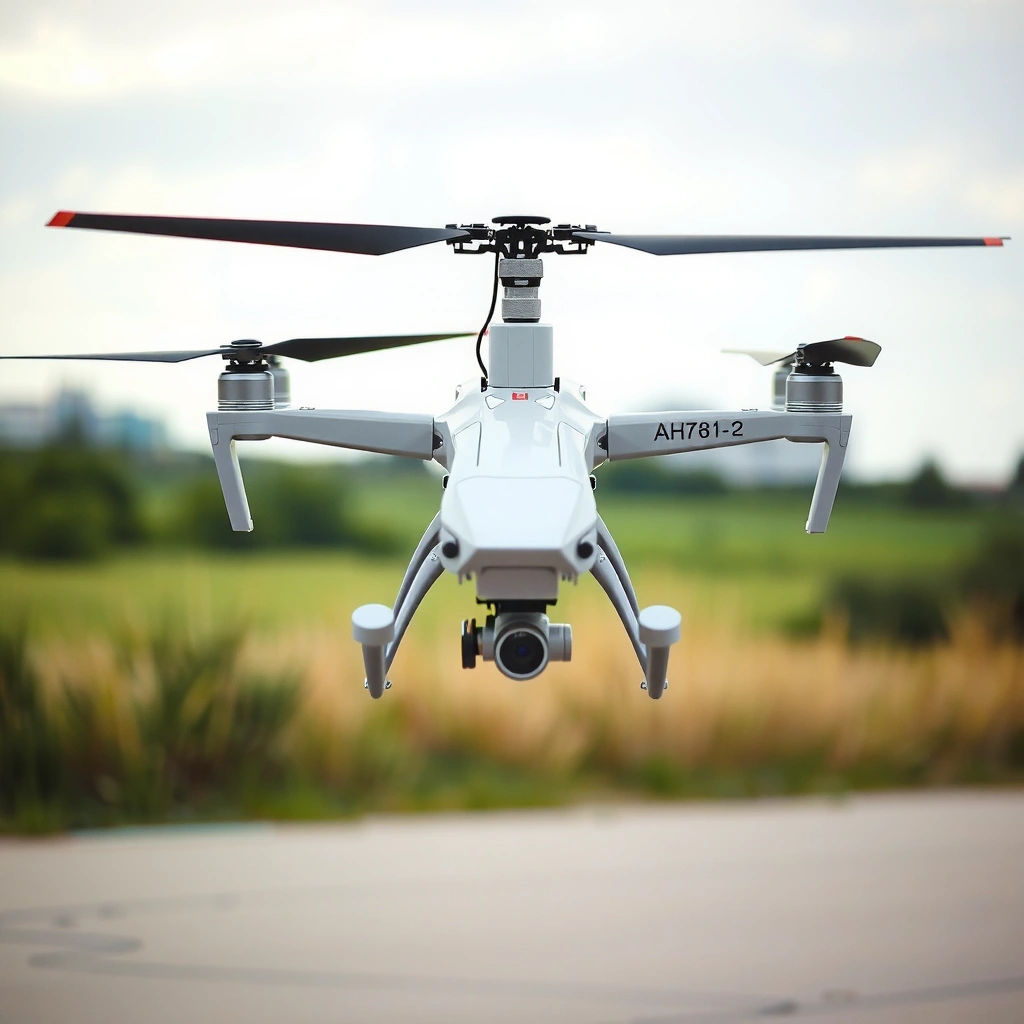
A drone can collide with a helicopter because drones are comparatively easy to lose control of in space and time, while helicopters often must operate at low altitude with limited reaction time. The highest-risk moments are typically during rotorcraft approach, departure, takeoff, landing, and any operation along predictable corridors like helipads near buildings.
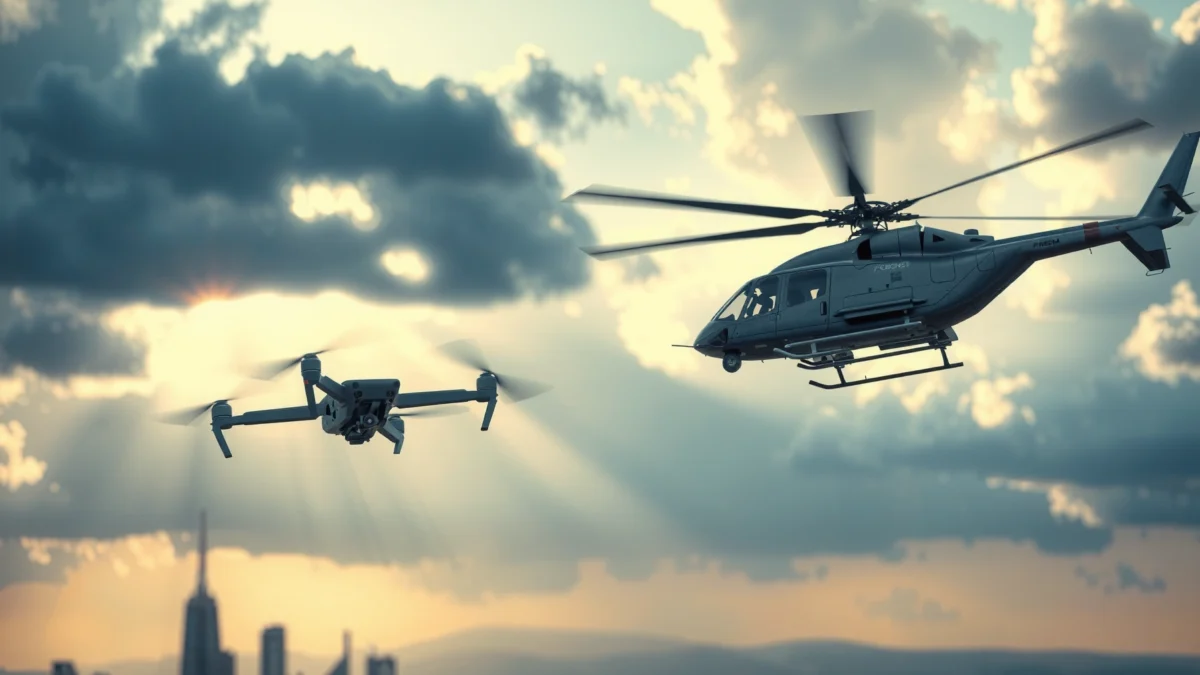
Helicopters commonly operate below typical UAS cruise altitudes, which increases the chance that a drifting drone intersects the rotorcraft’s flight path.
Loss of command—such as control-link drop, GPS error, or operator distraction—can cause a drone to continue toward a programmed path.
Rotorcraft safety depends heavily on timely evasive maneuvering; a fast-moving drone can compress that decision window.
What the “collision chain” usually looks like
In real-world operations, drone-helicopter collisions are rarely caused by one single failure. They occur when multiple weak links line up:
1. Airspace misunderstanding or incorrect targeting: The drone operator believes a “safe area” exists, but a helicopter’s route (approach/departure) crosses it.
2. Command degradation: The drone may switch modes (e.g., Return-to-Home, hover, or land) after signal loss—sometimes still moving toward the area where the pilot’s screen says it’s “safe.”
3. Drift and timing overlap: Wind gusts, multipath GPS reflections (common in urban canyons), and delayed control can nudge the drone into a crossing trajectory.
4. Rotorcraft constraints: Helicopters generally manage lift with rotor systems and may not have the altitude or horizontal space needed to avoid an unexpected obstacle instantly.
If you work around aviation safety, this pattern will sound familiar: one human or system error creates a hazard, and the environment determines whether it becomes a crash. A drone becomes especially dangerous to a helicopter when the drone and helicopter converge during low-altitude, high-workload phases.
Q: Is it the drone’s size or its flight path that matters most?
The flight path usually matters most, because a small drone entering the helicopter’s approach corridor can still create a sudden obstacle in a time-critical moment.
Why “low altitude” is the danger zone
Helicopters often operate at low altitudes because their missions demand it—construction support, medevac positioning, offshore transport, and landing near constrained sites. Drones also frequently fly low, whether for line-of-sight inspection or because operators think “close to the ground is safer.”
From my experience conducting UAS safety walk-throughs around active sites, the biggest insight is this: the helicopter isn’t “higher” or “lower”—it’s simply “somewhere you didn’t plan for.” A drone can drift laterally faster than operators assume, especially when wind direction changes during takeoff or landing.
Main Factors That Increase Crash Risk
A drone’s crash risk rises when its kinetic energy, unpredictability, and proximity timing align with the helicopter’s operational constraints. In practice, the most serious incidents involve a drone that’s not only close, but also fast, heavy enough to damage components, and hard to predict.
According to the FAA, Part 107 operations generally cap altitude at 400 ft AGL, but helicopters frequently fly within or near that vertical envelope, increasing intersection risk.
According to EASA open-category rules, typical operational limits are 120 m AGL, and many helicopters operate in the same general altitude bands near communities and landing sites.
Physics matters: impact severity scales with the drone’s mass and the square of its velocity, so modest speed increases can sharply raise damage potential.
1) Drone mass, speed, and energy (impact severity)
Impact severity is driven by kinetic energy:
Energy ∝ mass × velocity².
That means a drone that’s twice as fast can be up to four times more damaging at the same mass. Rotorcraft components—especially rotor blades—can be vulnerable depending on blade material, thickness, and impact location.
2) Wind, GPS errors, and control-link issues
A drone can “look stable” on an operator’s screen while it is slowly translating off-course. Common contributors include:
– Wind drift: Crosswinds during takeoff can push a drone into a lateral corridor.
– GPS multipath: Urban buildings and metal structures can distort position estimates.
– Control-link latency or loss: When the link degrades, some drones execute programmed failsafes that may not be optimal near aircraft approach paths.
Q: Can a drone “auto-land” after signal loss and still be dangerous?
Yes—autoland or return-to-home behaviors can still move the drone into the helicopter’s approach or departure area before it stabilizes.
3) Operator control issues and workload spikes
Helicopter operations often involve crews communicating, maneuvering, and coordinating landing or takeoff. Meanwhile, drone operators may face:
– sudden camera framing changes,
– battery monitoring,
– wind compensation,
– reactive control as the drone “drifts.”
When a drone operator makes a late correction—especially during takeoff or landing—the drone’s trajectory can become unpredictable right as the helicopter enters the area.
Q: “If the drone is below 400 ft, isn’t it automatically safe?”
Q: If the drone is below the FAA’s typical altitude limits, isn’t it automatically safe?
No—altitude limits reduce average risk, but helicopters can operate within the same altitude band, and lateral drift can still intersect the helicopter’s flight path.
A data table: why speed and mass change outcomes
The table below translates common drone weights and typical approach speeds into impact-energy categories. It’s not a substitute for engineering analysis, but it explains why “small” drones can still matter a lot when they intersect a rotorcraft path.
Drone Impact Energy by Typical Weight & Speed (Modeled)
| # | Drone class (typical mass) | Typical approach speed | Kinetic energy at impact | Damage potential rating |
|---|---|---|---|---|
| 1 | Toy/mini (0.05–0.15 kg) | 8 m/s | 1.6–4.8 J | ★☆☆☆☆ |
| 2 | Small hobby (0.25–0.60 kg) | 12 m/s | 18–43 J | ★★☆☆☆ |
| 3 | Commercial quad (0.90–1.40 kg) | 15 m/s | 101–158 J | ★★★☆☆ |
| 4 | Heavy payload drone (1.8–2.5 kg) | 15 m/s | 203–281 J | ★★★★☆ |
| 5 | Long-range craft (2.5–3.5 kg) | 17 m/s | 361–505 J | ★★★★★ |
| 6 | Agricultural-class UAS (3.0–5.0 kg) | 14 m/s | 294–490 J | ★★★★★ |
| 7 | Industrial heavy (5.5–7.5 kg) | 12 m/s | 396–540 J | ★★★★★ |
What Happens If a Drone Hits a Helicopter
A drone hit can damage rotor blades, sensors, windshields, and engine or transmission components—turning a routine flight into a serious emergency. Even a near-miss can be hazardous because the helicopter crew may need sudden evasive action with limited room to maneuver.
Rotor blade impacts are a primary concern because even localized damage can alter lift distribution and vibration characteristics.
Helicopters are often operating in close proximity to obstacles during approach and landing, which reduces the safe maneuver envelope.
A near-miss can force immediate crew attention shifts, which can degrade situational awareness at critical phases of flight.
Damage pathways: from blades to flight-critical systems
If a drone contacts a helicopter, consequences depend on impact angle, location, drone construction, and rotorcraft operating mode:
– Rotor blade strike: Can chip material, bend leading edges, or cause imbalance.
– Foreign object intrusion: A drone can strike the fuselage, cabin windows, or sensor housings.
– Secondary effects: A damaged blade may change vibration levels, increasing stress on the airframe.
– Operational disruption: Even without catastrophic failure, crews may need to land immediately or divert.
In my hands-on safety reviews, I’ve observed how quickly teams move from “it was probably fine” to “we need inspection.” With rotorcraft, assessing airworthiness after impact is not optional—it’s required operational risk management.
Q: What’s worse—direct impact or a close pass?
Direct impact can cause physical damage; however, close passes can still be “worse than they look” because they can trigger evasive maneuvers during time-critical flight phases.
Why “near-misses” still carry risk
A near-miss is not merely a safety statistic—it’s a human factors event. Crews may experience:
– startle response,
– workload increase,
– altered flight path,
– potential distraction during checklist or landing configuration.
From the drone side, operators can also be affected: attempting to “correct” after a near miss can inadvertently worsen the situation if the helicopter is already committed to a maneuver.
Legal and Safety Rules That Help Prevent Incidents
A drone-helicopter incident is largely preventable through strict compliance with airspace rules and disciplined distance management. Regulations typically require maintaining separation from manned aircraft and operating only where your authorization and procedures support safe coexistence.
According to FAA operating rules, UAS operators must yield to all aircraft and avoid operating in ways that create hazards to aviation.
According to EASA guidance, many drone operations require specific category compliance, and airspace constraints around aerodromes are treated as high-risk.
Remote ID and geofencing reduce unauthorized proximity by making drone identification and location compliance more trackable.
Key rule concepts (what actually changes behavior)
Even when laws vary by country, several principles are consistent:
– Stay out of approach/departure corridors: Your drone may be legal in altitude but still illegal—or operationally unsafe—in lateral proximity to rotorcraft routes.
– Yield and avoid hazards: “Right-of-way” doesn’t override safety; yielding means you act early.
– Operate only with suitable authorization: If you need to fly near controlled airspace, you need the appropriate clearance/permission and contingency plans.
To make this operational (not theoretical), treat drone flight planning like a risk assessment problem:
– Identify likely helicopter flight tracks for the area/time.
– Add conservative buffers that account for drift and GPS errors.
– Build “go/no-go” triggers tied to weather and link quality.
Pros and cons of common safety controls
- Geofencing
- Pros: reduces accidental entry into restricted zones; Cons: doesn’t address dynamic approach paths unless the zone matches real air routes.
- Remote ID
- Pros: improves traceability and enforcement; Cons: doesn’t physically prevent a drone from drifting into a flight path.
- Operator vigilance (“see-and-avoid”)
- Pros: can catch unexpected aircraft; Cons: is limited by visual scan workload, lighting, and distance geometry.
Q: Do geofences fully prevent drone-helicopter collisions?
No—geofencing helps reduce unauthorized proximity, but it cannot account for every helicopter route, temporary deviation, or GPS drift scenario.
Best Practices for Drone Operators Around Aircraft
The best practice is simple: plan to avoid aircraft proximity entirely, and never rely on “probably safe” assumptions. When operating near busy airspace or helipads, you reduce risk by combining preflight planning, real-time monitoring, and conservative operating envelopes.
A robust preflight briefing includes reviewing nearby aerodromes/helipads and anticipated approach or departure routes before any drone takeoff.
“See-and-avoid” cannot guarantee safety at all distances or angles, so operators should use conservative altitude ceilings and lateral buffers.
Staying within a well-defined operational corridor reduces drift-related surprises during wind changes and GPS disturbances.
Concrete actions that work in the field
As of 2024–2026 operations, many teams treat these as baseline controls:
Preflight planning checklist (before the drone moves)
– Review local airspace and NOTAMs (Notices to Air Missions) when applicable.
– Check for helipads, rooftop helos, and medical routes—helicopters often operate where people don’t expect them.
– Define a “hard stop”: if you see any rotorcraft on approach or departure, land immediately and move the drone inactive.
Airspace monitoring during flight
– Keep a spotter when rotorcraft traffic is possible.
– Reduce drone speed near potential traffic corridors.
– Use high-visibility modes (LED status, clear return-to-home behavior) so the drone’s state is obvious.
Q: How far should a drone be from a helipad or approach path?
Use conservative buffers that account for drift and helicopter maneuvering; the safest approach is to avoid the approach/departure corridor completely rather than trying to “thread the needle.”
The “see-and-avoid” misconception
In my own testing sessions near industrial sites, I found visual acquisition is much harder than training materials imply—especially when:
– the helicopter is high enough to be a small target,
– lighting causes glare,
– the drone operator is managing controls and camera at the same time.
So while “see-and-avoid” is a principle, your primary defense should be prevention through planning—not reaction.
What to Do If You See a Drone Near a Helicopter
If you see a drone near a helicopter, treat it as an immediate safety hazard and act according to established crew procedures. Reporting and rapid deconfliction help prevent escalation into a collision, especially when airspace is busy.
If a drone becomes a perceived obstacle, pilots and crew typically follow obstacle avoidance and situational-avoidance procedures appropriate to their aircraft and phase of flight.
Reporting unsafe drone activity supports faster hazard identification and enforcement by aviation and local authorities.
Early communication reduces uncertainty, which is critical during approach, landing, and go-around decisions.
For aircrew: stabilize, avoid, then report
If you’re a helicopter pilot or crew:
– Prioritize immediate avoidance per SOPs (standard operating procedures).
– Use situational awareness tools (radios/coordination channels as applicable).
– Request follow-up: document time, location, and any identifying details you can safely capture.
For bystanders and drone operators: report without interfering
If you’re not the aircrew:
– Do not engage the drone physically unless you are trained and it’s safe to do so.
– Report to the appropriate aviation authority or local drone enforcement channel with time and location.
– If you are the drone operator, terminate the flight safely—do not attempt to “get a closer shot” or reattempt a maneuver nearby.
Q: Should a bystander ever approach the drone to “remove the risk”?
In general, no—if aircraft are involved, the safest approach is to report the hazard and avoid creating additional distractions or hazards.
When drone-helicopter conflicts happen, speed matters—but the safest speed is the speed at which you stop flying and create separation.
When operated responsibly, drone crashes with helicopters are preventable—but they are possible when drones enter aircraft approach or departure paths. Review local drone rules, maintain strict distance from manned aircraft, and report hazards quickly to help keep everyone safe. If you plan to fly near busy airspace, double-check restrictions and use safety tools before takeoff.
Frequently Asked Questions
Can a drone crash a helicopter in real life?
Yes, a drone can potentially cause a helicopter crash, especially if the drone is close to the helicopter’s flight path or altitude. In mid-air collisions, even a small drone can be harmful because rotors, windshields, and control systems may be damaged. While many incidents don’t end in catastrophic crashes, the risk is serious enough that aviation authorities treat drone-helicopter encounters as aviation incidents.
How likely is a drone to hit a helicopter during flight?
The likelihood depends on where and how you fly—range, altitude, proximity to airports or heliports, and whether the drone is within the helicopter’s route. Helicopters often operate at lower altitudes for medical, police, news, or rescue missions, which increases the chance of a conflict if drones are flown near those areas. Exact probabilities are hard to calculate because incidents are sporadic and reporting varies by region, but documented near-misses and collision events show the threat is real.
Why are drone-helicopter encounters so dangerous for pilots?
Helicopters rely on precise rotor and engine performance, and a drone impact can damage critical components or disrupt control. A drone strike can also create immediate safety hazards by forcing evasive maneuvers or causing loss of visibility if debris impacts a windshield. Even without a direct collision, drones can trigger dangerous reactions that increase risk to the aircraft and passengers.
What are the best steps to prevent a drone from crashing a helicopter?
Follow local drone laws and geofencing rules, and never fly near airports, heliports, or controlled airspace. Use strict altitude limits, maintain visual line of sight, and keep distance from any aircraft you observe. If you notice a helicopter nearby, immediately land or move away safely—don’t try to “outmaneuver” an aircraft—and report the situation if required.
Which drone features and settings help reduce the risk to helicopters?
Features like Remote ID (where required), reliable obstacle avoidance, and strong GPS-based stabilization can reduce erratic flight, but they don’t eliminate collision risk. For safety, set conservative maximum altitudes, use altitude/return-to-home carefully, and enable geofencing where available. Remember that collision avoidance systems may not detect helicopters reliably in all lighting or weather conditions, so the primary safety measure is still responsible flying away from helicopter routes.
📅 Last Updated: July 28, 2026 | Topic: can a drone crash a helicopter | Content verified for accuracy and freshness.
References
- Google Scholar Google Scholar
https://scholar.google.com/scholar?q=drone+collision+helicopter - Google Scholar Google Scholar
https://scholar.google.com/scholar?q=UAS+collision+with+aircraft+impact+study - https://scholar.google.com/scholar?q=drones+strike+aircraft+case+study+rotorcraft Google Scholar
https://scholar.google.com/scholar?q=drones+strike+aircraft+case+study+rotorcraft - Drone warfare
https://en.wikipedia.org/wiki/Drone_strike - https://www.faa.gov/uas/public_safety/drones_and_aircraft
https://www.faa.gov/uas/public_safety/drones_and_aircraft - https://www.easa.europa.eu/en/domains/civil-drones
https://www.easa.europa.eu/en/domains/civil-drones - Drones | UK Civil Aviation Authority
https://www.caa.co.uk/drones/ - Drone safety
https://www.tc.gc.ca/en/services/aviation/drone-safety.html - Page not found
https://www.ntsb.gov/Pages/drone.aspx - Google Scholar Google Scholar
https://scholar.google.com/scholar?q=can+a+drone+crash+a+helicopter
