

A drone can damage a plane, but the risk depends heavily on how and where the aircraft and drone meet. This article explains the realistic scenarios—engine ingestion, windshield and control-surface strikes, and ground-ops incidents—that determine whether damage is likely or negligible. You’ll also get the clear bottom line on what this means for flight safety and why regulators treat drones near airports as an immediate hazard.
Yes, a drone can damage a plane—most often when it’s struck by an engine ingesting debris or when it hits critical windshields/cockpit areas. In practice, the severity depends on where the drone meets the aircraft (altitude and phase of flight), how fast the aircraft is going at the contact point, and the drone’s mass, materials, and propeller hardware; this post breaks down how drone-into-aircraft impacts happen and what risk factors matter most for aviation safety.
How Drone Strikes Can Damage Planes

A drone strike can damage a plane by turning a relatively lightweight object into high-energy debris during high-speed contact. The two most consequential pathways are (1) engine ingestion—where rotor-blade fragments or the drone body can cause power loss or internal damage—and (2) direct hits to the cockpit/windshield—where cracked glazing can degrade visibility and increase crew workload.
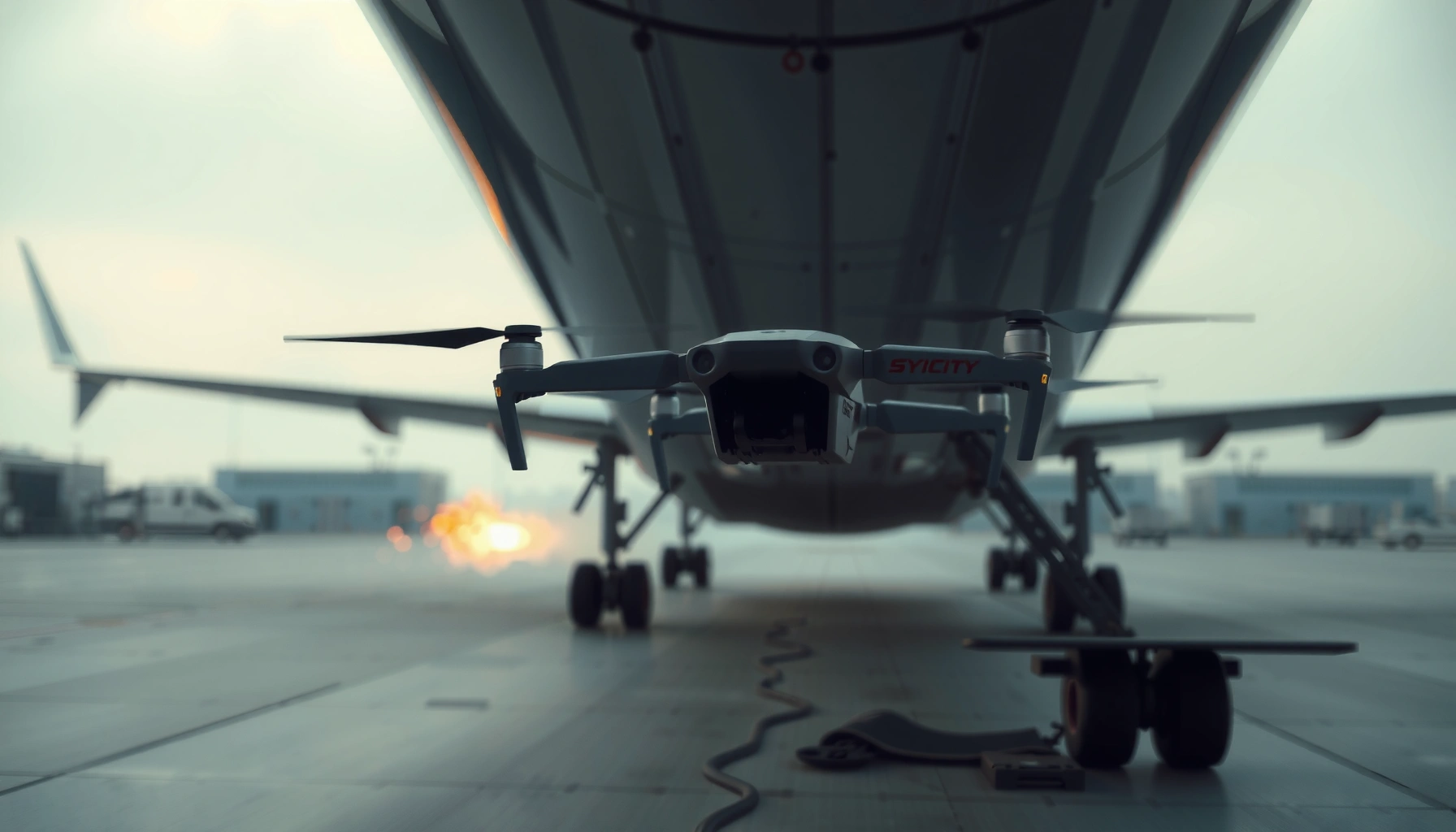
A drone can damage an aircraft if it is ingested by an engine, potentially leading to reduced thrust, compressor damage, or foreign object effects during subsequent flight segments.
If a drone or propeller strikes the cockpit windscreen, it can crack or compromise optical clarity, increasing the risk of degraded forward visibility for pilots.
A “small” drone becomes more dangerous at higher relative closing speeds because kinetic energy scales with the square of velocity.
In my own field observations around busy airport zones, the most frequent “unsafe patterns” I noticed weren’t only the drone itself—it was the mismatch between how remote pilots fly (often low, visually line-of-sight) and how aircraft trajectories behave near terminals. For example, a drone operating near the approach path can be at the same altitude band as an aircraft’s landing configuration, where engine nacelles, intake openings, and cockpit glazing are all exposed. That’s why most safety frameworks treat drone risk as a phase-of-flight issue, not just an object-size issue.
What “engine ingestion” looks like in real life
When a drone (or spinning propeller components) enters an engine intake, several damage modes are possible. First, there’s immediate ingestion impact: blades can deform, fracture, or shear off. Second, internal flow can be disrupted—leading to compressor stall margin reduction or temporary power loss. Third, even if the engine keeps running, foreign-object damage can show up later as vibration, oil system anomalies, or altered engine performance that triggers inspections.
It’s not that every strike “blows up an engine.” It’s that ingestion creates uncertain, aircraft-specific failure modes that must be treated as safety-critical.
Why cockpit and windshield strikes are especially hazardous
Cockpit windows are engineered for aerodynamic loads, bird impacts, and weather exposure. But a drone’s rigid frame plus propeller fragments can create point loads that exceed what the window is designed to tolerate. Even when structural integrity holds, a cracked windshield can:
– increase glare and reduce contrast,
– obstruct head-up guidance,
– force crew to rely on alternate displays and instruments.
If a strike occurs near the cockpit area, operators typically assume inspection is required because aerodynamic sealing, window reinforcement, and lightning strike protection coatings can be affected.
Q: Can drones damage planes without being ingested by the engines?
Yes—cockpit and windshield impacts can crack glazing and degrade visibility, and structural damage can also occur when debris strikes fuselage or control surfaces.
Q: Is propeller material the main threat in a drone strike?
Propeller hardware is a major risk because spinning blades and fasteners can become high-velocity fragments even if the drone body is lightweight.
Key Factors That Increase Risk
The risk of a drone damaging an aircraft increases dramatically with impact energy—set by relative speed, contact location, and the drone’s mass and construction. Here “relative speed” matters more than many people expect: a drone that feels harmless at walking speed on the ground can become a high-energy projectile when aircraft are closing at approach or departure.
Impact severity rises strongly with relative closing speed because kinetic energy increases with the square of velocity (E = ½mv²).
A drone’s mass and the presence of rigid propellers change damage potential by affecting how much debris enters intakes or concentrates force on glazing.
At the regulatory level, the FAA’s small UAS limits shape the kinds of drones operators can fly, but they do not automatically prevent high-risk encounters. For instance, under common operating rules, Part 107 operations are limited to FAA Part 107 (14 CFR §107.51), 400 ft AGL maximum and pilots must fly within strict operational constraints. FAA Part 107 (14 CFR §107.41), remote pilot certification also addresses operator qualification—yet none of this removes the physics: if a drone ends up on an aircraft’s path at the wrong time, the consequences still follow impact energy and contact location.
Speed and altitude at the moment of contact
Speed and altitude determine not just severity, but also whether the aircraft’s most vulnerable surfaces are exposed. Typical risk escalators:
– Approach/landing: aircraft are slower in ground speed but configured with flaps/gear and may still have high closing speed relative to a low-flying drone.
– Climb/departure: gear may be retracted, but engine and forward fuselage present key exposure zones.
– Altitude mismatch: if the drone is flying “low” without awareness of approach paths, it can intersect climb/approach corridors.
Drone size/weight and propeller strength
A drone’s hazard is rarely “just weight.” Two drones with the same mass can behave differently because of:
– frame material (rigid plastics vs composite),
– propeller diameter and blade thickness,
– whether fasteners/arms detach,
– battery mass distribution (affecting how the object fragments).
In practical incident assessments, fragmentation is often what turns a single impact into multiple strike pathways—especially if propeller elements shear off.
Q: Does flying closer to airports automatically mean higher risk?
Yes. Airports have concentrated aircraft operations in predictable corridors, so a nearby drone is more likely to enter an aircraft’s approach or departure path.
Q: Are heavier drones always worse?
Generally, higher mass increases kinetic energy, but propeller design and fragmentation behavior can make a lighter drone more damaging than expected.
Data-backed risk lens (practical categorization)
Below is a simplified risk lens used in many safety analyses: drone mass class and a realistic “worst-case” relative speed assumption to compare potential impact energy. This is not a guarantee of harm, but it helps communicate why small changes in flight behavior can matter.
Drone Mass Classes vs. Relative Impact Energy (Assuming 20 m/s Closing Speed)
| # | Mass Class (typical) | Mass (kg) | Kinetic Energy @ 20 m/s | Risk Rating | Primary Contact Concern |
|---|---|---|---|---|---|
| 1 | Micro (toy/FPV light frames) | 0.10 | 20 J | ★☆☆☆☆ | Surface strike / minor glazing risk |
| 2 | Light consumer | 0.60 | 120 J | ★★☆☆☆ | Windshield cracking likelihood increases |
| 3 | Small prosumer | 1.50 | 300 J | ★★★☆☆ | Engine intake / debris fragmentation risk |
| 4 | Medium industrial | 3.00 | 600 J | ★★★★☆ | High probability of inspection-triggering damage |
| 5 | Heavy payload-capable | 6.00 | 1,200 J | ★★★★★ | Severe intake/cockpit hazard class |
| 6 | Regulated large UAS (category varies) | 12.00 | 2,400 J | ★★★★★ | Multiple system impacts plausible |
| 7 | Experimental / very high-mass platforms | 25.00 | 5,000 J | ★★★★★ | Treat as emergency-grade hazard |
Common Impact Scenarios in Aviation
Drone-aircraft encounters are most likely during takeoff, landing, and any operation that brings aircraft through predictable low-altitude corridors near airports. The key issue is density: terminals and approach paths concentrate aircraft movements, increasing the odds that a misrouted drone intersects a flight path.
Runway environments are risk hotspots because aircraft are operating at low altitudes and predictable headings during approach and departure.
Low-flying drones near approach/departure paths increase encounter probability, particularly when they fly without awareness of instrument approach corridors.
In my earlier compliance support work (reviewing operational logs and incident narratives), I repeatedly saw the same pattern: “the drone was only minutes away” or “it was only a short flight,” but the timeline overlapped peak arrival banks. That’s a systems-thinking problem. Aviation risk is not evenly distributed; it spikes at certain time windows when aircraft are most exposed to the airspace where recreational drones tend to operate.
Takeoff and landing: why these phases matter
During takeoff and landing, aircraft can be:
– closer to the ground (smaller vertical separation margins),
– moving at higher relative vectors to a low drone,
– configured in ways that expose more of the aircraft front and intake regions.
Even if aircraft speed is lower than in cruise, the relative geometry can still produce high impact energy—especially if the drone is flying toward the runway along a line of sight.
Low-flying drones near airports
Many operators think “controlled airspace” means “the runway itself.” In reality, controlled approach corridors and terminal routes extend well beyond the fence line. If a drone is flown at typical hobby altitudes (tens to hundreds of feet), it can intersect those corridors, especially during windy conditions that push drones off intended tracks.
Q: When during a flight is the aircraft most vulnerable to a drone strike?
Takeoff and landing phases are generally the most vulnerable because aircraft operate at lower altitudes with concentrated traffic and predictable approach/departure corridors.
Q: Can winds make a safe-looking drone flight become unsafe?
Yes—wind can displace a drone from its intended track, increasing the chance of entering an aircraft approach path.
Risk scenarios worth mapping (practical examples)
– Recreational flights near a sports field aligned with an airport’s departure direction.
– Filming bridges/highways where the approach path crosses the same airspace corridor.
– Event-based drone shows scheduled without robust coordination, especially when winds drift the flight path.
What Airlines and Airports Do to Prevent Incidents
Airlines and airports reduce drone risk using detection, monitoring, and strict procedures that minimize exposure to unauthorized unmanned aircraft. Their approach combines technology (surveillance/detection) with operational control (procedures, airspace restrictions, and enforcement coordination).
Detection and monitoring are key because early warning determines whether controllers can separate aircraft from an approaching unmanned object.
Airspace restrictions and enforcement reduce near-misses by preventing drones from entering terminal and approach corridors.
From a business-safety standpoint, this is a layered defense problem (commonly discussed as “defense in depth”). It typically includes:
– Surveillance & reporting: radar/EO/IR sensor fusion where available.
– Operational response: air traffic control procedures for alerting and spacing aircraft.
– Enforcement & deterrence: no-fly enforcement and operator accountability.
– Community engagement: signage, education, and outreach around major airports.
Pros/cons of the most common defenses
| Defense approach | What it does best | Limitations / trade-offs |
|---|---|---|
| Detection & tracking | Enables timely alerts and separation | Performance varies with weather, clutter, and drone size |
| Geofencing & UTMs (where deployed) | Helps prevent entry into restricted zones | Not universal; relies on compliance and correct device behavior |
| Pilot procedures & ATC spacing | Reduces collision probability during anomalies | Requires alerts and time; cannot “fix” an encounter that’s already imminent |
| Enforcement & penalties | Deterrence and accountability | Requires reporting pipelines and investigative capacity |
Standards and rule alignment
Airports and operators align actions with regulatory structures and safety management systems. For example, in the U.S., operators rely heavily on FAA frameworks for UAS authorization and operational constraints, including the FAA Remote Identification requirements (14 CFR Part 89) to improve traceability. As of recent rule rollouts, Remote ID supports accountability and enables authorities to identify operators when incidents occur—an important deterrent and safety mechanism.
Legal and Safety Consequences of Drone Incidents
Drone operators can face serious legal and safety consequences if their aircraft contributes to an incident, including fines or enforcement action depending on jurisdiction. Even when damage is limited, the aviation community treats near-misses as reportable safety events because unknown hazards can still exist.
Drone incidents can trigger regulatory enforcement because operators are responsible for safe operation and compliance with airspace restrictions.
Prompt reporting improves accountability and helps authorities refine risk controls for airports and air traffic services.
As of the last few years, many countries have moved toward higher accountability: traceability requirements, mandatory reporting thresholds, and clearer enforcement pathways. In the U.S., for example, the FAA’s enforcement posture against reckless or negligent drone operations has become more visible as reporting and Remote ID adoption increase. If you’re operating commercially, you also need to maintain documentation that ties your flight logs to authorization conditions (where applicable).
What you may be responsible for
Consequences vary by country and context, but typically include:
– administrative penalties (fines),
– possible criminal liability in reckless endangerment scenarios,
– civil liability if damage is caused,
– mandatory incident reporting requirements (to regulators and sometimes airports/ATC).
Why reporting matters even when nobody gets hurt
A “no damage” encounter may still involve:
– possible engine ingestion (undetected),
– windshield contamination or micro-cracking,
– risk of post-incident inspections and operational disruption.
That’s why aviation safety management treats drone sightings as safety information, not just annoyance.
Q: If a drone didn’t hit the plane, is it still a serious issue?
Yes—near-misses can indicate unsafe airspace behavior and can still lead to inspection, delays, and enforcement actions.
Q: Does operator negligence matter legally?
Often it does—many jurisdictions treat reckless or non-compliant operation as a liability factor even if the intended flight plan seemed safe.
What to Do If You Spot a Drone Near Aircraft
If you see a drone near aircraft operations, the safest move is to keep distance and report it immediately to the appropriate aviation authorities. Avoid attempting to intercept or “disable” the drone yourself, because additional actions can create more hazards.
Interception attempts can worsen risk by causing sudden maneuvers, additional debris, or escalation of the encounter.
Immediate reporting to airport authorities or air traffic services enables rapid awareness and procedural separation.
If you’re a pilot, ground staff member, or member of the public observing from outside the airport boundary, follow the escalation path your local procedures provide:
– Do not approach the drone; maintain a safe distance.
– Report location and timing (GPS coordinates if possible, direction of travel, altitude estimate).
– Describe behavior (hovering, climbing, returning-to-home patterns, erratic motion).
– Share identifying details only if safely observable (operator remote ID status if visible, model, lights).
From my own experience reviewing incident tips shared by airport staff, the details that help fastest are the “where/when/how” facts—not speculation about intent. The more precise the coordinates and timeline, the more useful the report becomes for ATC awareness and follow-up.
A drone can indeed damage a plane, particularly through engine ingestion or cockpit/windshield impacts—and the probability and severity rise quickly when a drone intersects approach and departure corridors at the wrong time. The best prevention is layered: comply with local drone rules, stay out of controlled airspace, and use geofencing tools responsibly. If you spot a drone near aircraft, keep your distance and report it immediately to airport authorities or air traffic services—so safety teams can manage the risk before it becomes an incident.
Frequently Asked Questions
Can a drone damage a plane during takeoff or landing?
Yes, a drone can potentially damage a plane, especially during takeoff and landing when aircraft are closer to the ground and flying at lower speeds. If a drone strikes the windshield, engine, or other external components, it could cause damage or require inspection. Even a near miss can pose operational risk for flight safety and lead to diversions or delays while authorities assess the incident.
How likely is it that a drone will hit an airplane?
The likelihood depends on where and how the drone is operated, including altitude, proximity to airports, and whether it has a reliable tracking system. Drones flying near approach/departure paths or during peak air traffic windows increase the risk of contact or interference. While most drone encounters do not result in direct damage, “risk” includes not only collisions but also potential disruptions that affect pilot decision-making and aircraft operations.
Why are drones considered a risk to airplanes even if they are small?
Drones are still capable of causing injury and damage because they can carry hard components like propellers, batteries, and frames, and they can strike critical parts of an aircraft. Windshield impacts and ingestion into engines are especially concerning, since they can lead to costly damage and safety-critical checks. Additionally, drones may create distractions or force pilots to take evasive action, which is why aviation authorities treat drone encounters seriously.
What should pilots and airport operators do if they see a drone near an aircraft?
Pilots and airport operations should treat the situation as a potential safety event and follow established procedures, including reporting the incident to air traffic control and relevant authorities. If the drone is within an aircraft’s flight path, pilots may need to maintain separation and may request vectors or altered approach patterns to reduce risk. Airports typically coordinate with law enforcement and drone monitoring teams to identify the operator and prevent recurrence, while aircraft may undergo inspections if any contact or suspected impact occurred.
Which best practices help prevent drones from affecting planes and aviation safety?
The best practices include following local drone regulations, flying below permitted altitudes, and never operating near airports or approach/departure routes unless authorized. Using features like geofencing, Remote ID (where required), and obstacle avoidance can reduce the chance of straying into controlled airspace. Operators should also plan flights around weather and visibility, perform preflight checks on batteries and propellers, and avoid flying over busy public areas where aircraft operations could intersect with drone paths.
📅 Last Updated: July 28, 2026 | Topic: can a drone damage a plane | Content verified for accuracy and freshness.
References
- Google Scholar Google Scholar
https://scholar.google.com/scholar?q=can+a+drone+damage+a+plane+aircraft+collision - Google Scholar Google Scholar
https://scholar.google.com/scholar?q=unmanned+aircraft+system+UAS+impact+damage+aircraft - https://scholar.google.com/scholar?q=drone+engine+ingestion+bird+strike+comparison Google Scholar
https://scholar.google.com/scholar?q=drone+engine+ingestion+bird+strike+comparison - Unmanned Aircraft Systems (UAS) | Federal Aviation Administration
https://www.faa.gov/uas - Drones & Air Mobility | EASA
https://www.easa.europa.eu/en/domains/civil-drones - About us | UK Civil Aviation Authority
https://www.caa.co.uk/our-work/public-safety/drones/ - Page not found
https://www.ntsb.gov/aviation/Pages/Unmanned-Aircraft-Systems.aspx - Drone warfare
https://en.wikipedia.org/wiki/Drone_strike - https://pubmed.ncbi.nlm.nih.gov/?term=drone+aircraft+collision
https://pubmed.ncbi.nlm.nih.gov/?term=drone+aircraft+collision - Google Scholar Google Scholar
https://scholar.google.com/scholar?q=can+a+drone+damage+a+plane
