
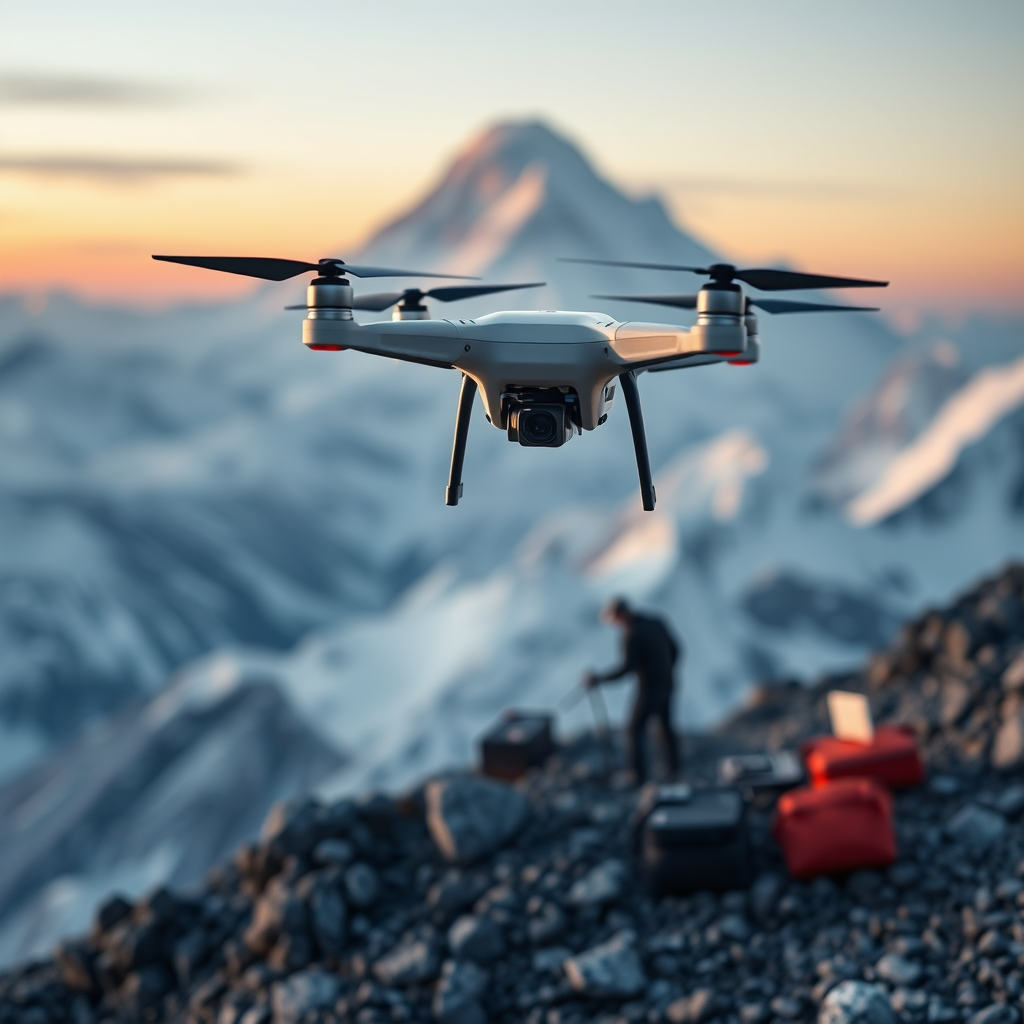
Yes, a drone can fly to the top of Mount Everest, but there are significant challenges that could hinder its ability to do so effectively. The extreme weather conditions, high altitude, and battery limitations present formidable obstacles. This article will delve into the feasibility of drones reaching Everest’s peak, the technical challenges involved, and the potential applications of drone technology in such extreme environments.
Understanding Drone Capabilities
Drones, or unmanned aerial vehicles (UAVs), have been engineered with a variety of flight capabilities that include altitude limits, flight range, and battery life. Most consumer drones are restricted to altitudes of about 400 to 500 meters due to legal regulations and technical limitations. In stark contrast, Mount Everest towers at an astonishing 8,848 meters—far beyond the reach of most commercially available drones. However, specialized drones designed for high-altitude missions, such as those used in scientific research or military applications, may operate at greater heights. These drones often feature advanced propulsion systems, aerodynamic designs, and enhanced lift capabilities, making them more suitable for extreme altitudes.
The flight performance of a drone is also influenced by its weight-to-power ratio, which must be optimized for high-altitude operation. Drones equipped with high-efficiency motors and lightweight materials can achieve better performance in challenging conditions, but the vast height of Everest still poses significant limitations.
Challenges of High Altitude Flight
The challenges associated with high-altitude flight primarily stem from the thinning atmosphere. As altitude increases, the air density decreases, which dramatically affects the drone’s performance, particularly in terms of lift and propulsion. At high altitudes, drones may struggle to generate sufficient lift, resulting in decreased maneuverability and stability. This is compounded by the fact that the lower atmospheric pressure can lead to reduced efficiency of the drone’s propellers.
Moreover, low temperatures at high altitudes can have detrimental effects on battery efficiency and electronic components. Lithium-polymer batteries, commonly used in drones, can experience reduced performance in cold weather, leading to shorter flight times and diminished operational capability. The operational ceiling of a drone is thus not only a function of altitude but also of the environmental conditions that accompany such heights.
Weather Conditions on Everest
Mount Everest is notorious for its unpredictable and severe weather conditions, which can include high winds, snowstorms, and sudden temperature drops. These factors can significantly impact a drone’s ability to operate safely and effectively. High winds can cause turbulence, making it difficult for drones to maintain stability, while snowstorms can obstruct visibility and lead to potential malfunctions.
For example, during the climbing season, the weather on Everest can change from clear skies to blizzards within hours. Drones attempting to navigate these conditions may encounter difficulties in communication and control, which could lead to loss of the drone or crashes. To mitigate these risks, advanced drones equipped with improved navigation systems, weather forecasting technology, and robust stabilization features may be necessary for successful operations in such harsh environments.
Battery Life Limitations
Battery life is a critical consideration when attempting to fly a drone to the summit of Mount Everest. The average consumer drone battery lasts between 20 to 30 minutes under optimal conditions. Given that the journey to the summit and back would require significantly more time than this, the standard battery capacity is grossly insufficient for such a mission.
To address this limitation, researchers and drone manufacturers are exploring several avenues. One potential solution is the use of high-capacity batteries that can extend flight time. Alternatively, integrating solar panels or hybrid propulsion systems could provide additional energy sources during flight. However, these technologies are still in development, and practical applications in extreme environments like Everest remain limited.
Use of Drones in Mountaineering
Despite the challenges, drones have found valuable applications in the Everest region, particularly for search and rescue operations. In recent years, drones have been deployed to locate missing climbers or deliver essential supplies to remote areas, showcasing their utility in extreme conditions. Equipped with high-resolution cameras and real-time data transmission capabilities, drones can provide a bird’s-eye view of difficult terrains, aiding rescue teams in their efforts.
Drones also play a crucial role in environmental monitoring and research. Scientists have utilized drones to map glacial retreat, monitor wildlife, and gather atmospheric data in the Everest region. These applications highlight the potential of drones to contribute significantly to our understanding of environmental changes in high-altitude ecosystems, providing valuable data that can inform climate change research and conservation efforts.
Case Studies and Experiments
Several expeditions have attempted to fly drones on Mount Everest, with varying degrees of success. For instance, in 2017, a team of researchers successfully deployed a drone at high altitudes to capture aerial footage and gather data on glacial movements. This mission, while successful, also highlighted the technical limitations faced by drones in extreme conditions, such as battery depletion and navigational challenges.
Other projects have focused on assessing the operational limits of drones in high-altitude environments. These experiments have provided valuable insights into drone performance at altitude, leading to improvements in design and functionality. As technology advances, we can expect more rigorous testing and experimentation that may pave the way for successful drone missions on Everest.
Future Prospects for Drone Technology
The future of drone technology holds significant promise, particularly in the context of high-altitude operations. Innovations in materials science and engineering may lead to the development of lighter, more durable drones capable of withstanding extreme weather conditions. Additionally, advancements in battery technology, such as solid-state batteries or fuel cells, may allow for longer flight times and improved efficiency.
As researchers continue to explore the limits of drone technology, we may witness the emergence of specialized drones designed specifically for high-altitude missions. These advancements could not only facilitate successful flights to the summit of Mount Everest but could also expand the applications of drones in other extreme environments, such as polar regions or high-altitude deserts.
In conclusion, while flying a drone to the top of Mount Everest is technically possible, it poses numerous challenges that must be addressed. The extreme altitude, unpredictable weather conditions, and battery limitations create a complex environment for drone operations. However, as technology progresses and innovations in drone capabilities continue to unfold, we may see more successful missions and innovative uses of drones in high-altitude environments. For those interested in drone technology, keeping an eye on these advancements is essential, as they could dramatically change the landscape of aerial exploration.
Frequently Asked Questions
Can a drone fly to the top of Mount Everest?
Yes, a drone can fly to the top of Mount Everest, but it faces significant challenges. The extreme altitude, which exceeds 29,000 feet, presents issues such as reduced battery life, loss of GPS signal, and harsh weather conditions. While some drones are designed for high-altitude flight, it’s crucial to ensure they can operate effectively in the thin air and cold temperatures found at such elevations.
What are the limitations of flying a drone at high altitudes like Mount Everest?
The primary limitations of flying a drone at high altitudes include decreased air density, which can reduce lift and battery performance, and the potential for loss of signal due to the terrain and altitude. Additionally, high winds, rapidly changing weather, and the risk of mechanical failure can impede drone operations in such extreme environments. These factors make it challenging to maintain control and ensure the drone’s functionality.
How can I prepare my drone for high-altitude flights like Mount Everest?
To prepare your drone for high-altitude flights, consider using a drone specifically designed for extreme conditions, such as those with enhanced battery life and powerful motors. Before the flight, calibrate the drone’s compass and GPS in a lower altitude environment, and ensure you have backup batteries to extend flight time. Familiarizing yourself with the drone’s settings and potential altitude limitations is also essential for a successful high-altitude operation.
Why would someone want to fly a drone at the summit of Mount Everest?
Flying a drone at the summit of Mount Everest can provide unique aerial perspectives and stunning photography opportunities that are hard to achieve otherwise. Drones can help document environmental changes, assist in scientific research, and offer insights into the challenges faced by climbers. Additionally, capturing the breathtaking beauty of the world’s highest peak from above can create compelling content for documentaries and social media.
Which drones are best suited for high-altitude flights like those needed for Mount Everest?
Drones best suited for high-altitude flights typically feature robust motors, high-capacity batteries, and advanced stabilization systems. Models like the DJI Matrice 600 or the Freefly Alta 8 are popular choices for their ability to operate effectively in challenging conditions. When selecting a drone for high-altitude use, ensure it has a high maximum altitude rating and is equipped with features like obstacle avoidance and GPS redundancy for added safety.
References
- https://en.wikipedia.org/wiki/Mount_Everest
- https://www.bbc.com/news/science-environment-32367086
- https://www.nytimes.com/2019/04/30/science/drones-mount-everest.html
- https://www.nationalgeographic.com/science/article/drones-mount-everest
- https://www.sciencedirect.com/science/article/pii/S2352864816301650
- https://www.reuters.com/article/us-nepal-mountaineering-drones-idUSKBN1H10W4
- https://www.usgs.gov/centers/whsc/science/unmanned-aerial-vehicles-drones-0
- https://www.ncbi.nlm.nih.gov/pmc/articles/PMC6883445/
