

Can an EMP Take Down a Drone?
Yes—an electromagnetic pulse (EMP) can potentially disable or “take down” a drone by disrupting the electronic systems that keep it flying, communicating, and navigating.
Because most drones depend on sensitive circuitry for flight control, sensor processing, and radio communications, a strong EMP event can cause immediate system failures or degraded performance.
This article explains how EMPs work, why drones are vulnerable, and what factors determine whether an EMP truly stops a drone—especially in military and security scenarios.
What Is an Electromagnetic Pulse (EMP)?
An EMP is a burst of electromagnetic energy that can interfere with, damage, or destroy electronic devices. It does this by generating intense electromagnetic fields that stress electrical circuits in ways normal conditions never would.
Nuclear EMP vs. Non-Nuclear EMP
There are two primary categories of EMP:
- Nuclear EMP: Produced by detonating a nuclear weapon at high altitude, creating a widespread electromagnetic effect that can impact systems over large geographic areas.
- Non-nuclear EMP: Generated by specialized, non-nuclear devices designed to emit electromagnetic pulses. These are often developed for targeted or tactical interference.
How EMPs Disrupt Electronics
The core disruptive mechanism involves electromagnetic fields inducing high-voltage surges in conductive pathways such as wires, antennas, and circuit traces.
When an EMP strikes a device, it can overwhelm components, leading to:
- Overloaded circuits and component failure
- Microprocessor malfunction
- Data corruption and loss of system integrity
- Loss of control or inability to maintain stable flight
For drones, these outcomes matter because the flight computer, navigation modules, and communication links must function reliably in real time.
How Drones Work (and Why Electronics Matter)
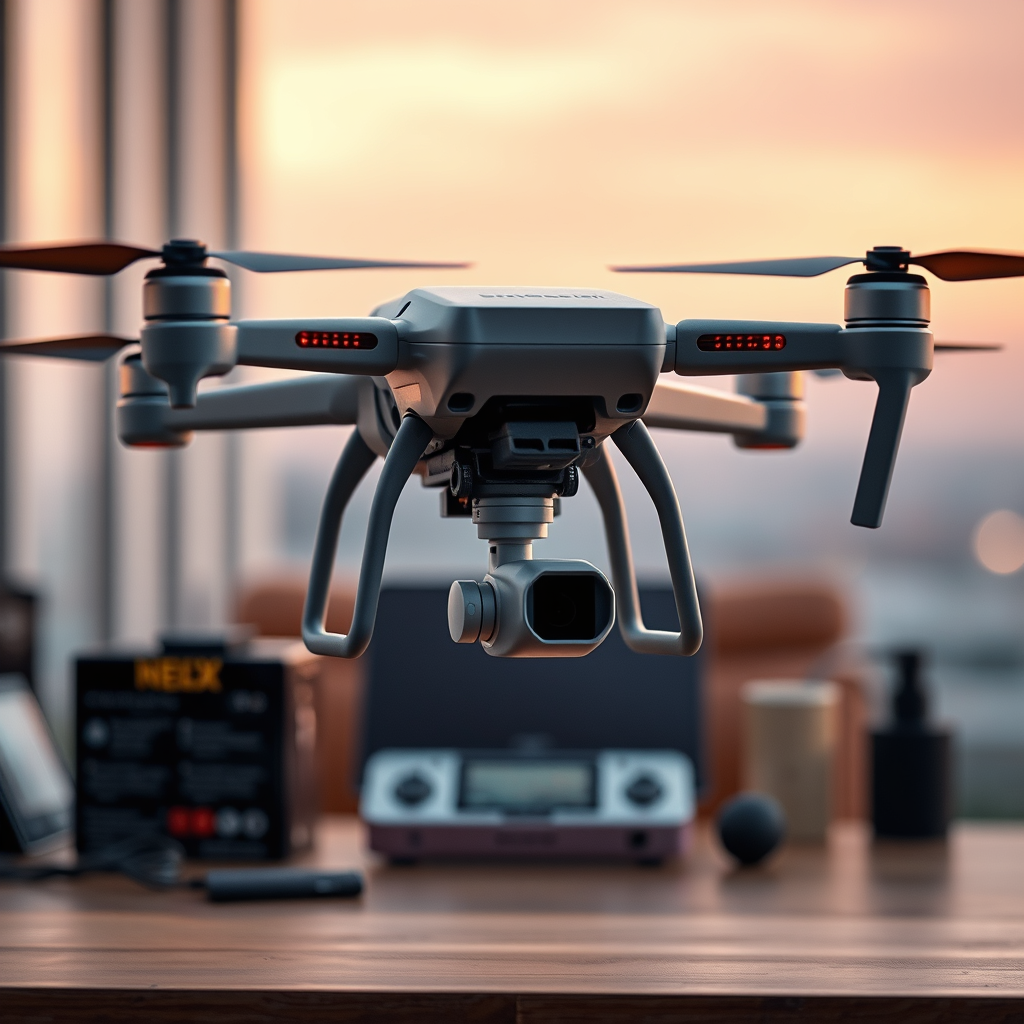
Drones (also called unmanned aerial vehicles or UAVs) are intricate systems built around electronics and software that coordinate flight and mission tasks.
Their core subsystems typically include:
Key Drone Components
- Sensors and cameras: Provide situational awareness and environmental data.
- Communication systems: Send telemetry and receive commands from operators.
- Flight control systems: Stabilize the aircraft and maintain maneuverability.
- Onboard processing and algorithms: Run real-time decision-making based on sensor inputs.
Why Drones Are Vulnerable to EMP Effects
Because drones rely heavily on tightly integrated electronic systems, they are particularly susceptible to electromagnetic interference.
Even if the drone’s motors can still spin, failures in flight control, signal processing, or data integrity can prevent it from maintaining controlled flight.
Effects of an EMP on Drones
The impact an EMP has on a drone can vary widely depending on:
drone design, shielding quality, component tolerance, and pulse strength and proximity.
Consumer Drones: Higher Risk of Immediate Failure
Many consumer-grade drones are built for performance and cost rather than extreme electromagnetic tolerance.
As a result, they may lack sufficient shielding or filtering to handle EMP-level energy.
In many cases, that means the drone could become inoperable quickly—potentially losing control, connectivity, or both.
Military-Grade Drones: Mitigation Can Reduce Damage
Military-grade drones may include design features intended to improve electromagnetic resilience, such as:
- Electromagnetic shielding around sensitive electronics
- Improved filtering for power and signal lines
- Robust component selection rated for harsher environments
This doesn’t guarantee immunity, but it can help mitigate effects—possibly limiting damage or reducing the likelihood of total system failure.
Security and Military Considerations
EMP-based counter-drone concepts raise practical and ethical considerations. In real-world security contexts, decision-makers typically must account for:
- Effectiveness vs. different drone types (consumer vs. hardened systems)
- Distance and targeting accuracy needed to disrupt the intended platform
- Collateral risk to nearby electronics, communications, and infrastructure
- Legal and policy constraints governing electromagnetic weapon use
Bottom Line
An EMP can take down a drone by interfering with or damaging the electronic systems required for navigation, flight stability, and communication.
However, the outcome depends strongly on the drone’s construction and shielding, as well as the EMP’s intensity and how close the drone is to the pulse source.
References
- Drones neutralized by utilize electromagnetic pulse (EMP) system Google Scholar
https://ieeexplore.ieee.org/abstract/document/9888673/ - Analysis of electromagnetic pulse effects under high-power microwave sources Google Scholar
https://ieeexplore.ieee.org/abstract/document/9557276/ - A study examining the adverse effects of electromagnetic pulse on system-level unmanned aerial ve… Google Scholar
https://www.sid.ir/paper/1503191/en - Paralyzing Drones via EMI Signal Injection on Sensory Communication Channels. Google Scholar
https://cybershafarat.com/wp-content/uploads/2023/06/ParalyzingDronesviaEMISignalInjection.pdf - Investigation of Effects and Protection from UWB EMP on UAVs Google Scholar
https://ieeexplore.ieee.org/abstract/document/11278470/
