

Shooting a drone over your property in Florida can lead to serious legal consequences. Your airspace rights are limited by federal and state regulations, which prioritize navigable airspace for aviation safety. Violating these laws could result in criminal charges, civil liability, or even damage claims from the drone operator. It’s better to explore legal alternatives for addressing your concerns. To understand the nuances of drone regulations and your rights, consider examining further insights on this topic.
Understanding Airspace Rights in Florida
What defines your airspace rights in Florida? Understanding airspace ownership is essential for anyone maneuvering the complexities of drone navigation. In Florida, you generally own the airspace above your property up to a certain altitude, but this ownership isn’t absolute. Federal regulations govern air traffic, including drones, which often operate within controlled airspace. This means that while you have some rights to the airspace directly above your land, you must also respect established air traffic rules. Your freedom to control airborne activities is balanced with the need for safety and compliance with regulations. Being informed about these dynamics allows you to effectively manage your airspace rights while ensuring responsible drone navigation in your vicinity.
Property Rights vs. Airspace Access
While you might think that owning property grants you complete control over the airspace above it, the reality is more nuanced. Property sovereignty allows you to enjoy your land, but it doesn’t extend indefinitely into the sky. Airspace boundaries are delineated by federal regulations, which prioritize navigable airspace for aviation. This means that while you can restrict access to your property, you can’t claim ownership of the airspace above it to the same extent. Drones operating within legal limits may not violate your property rights, even if they fly overhead. Understanding this balance between personal rights and broader airspace access is essential for anyone considering how to address drone activity over their property.
Florida Laws on Drones and Privacy
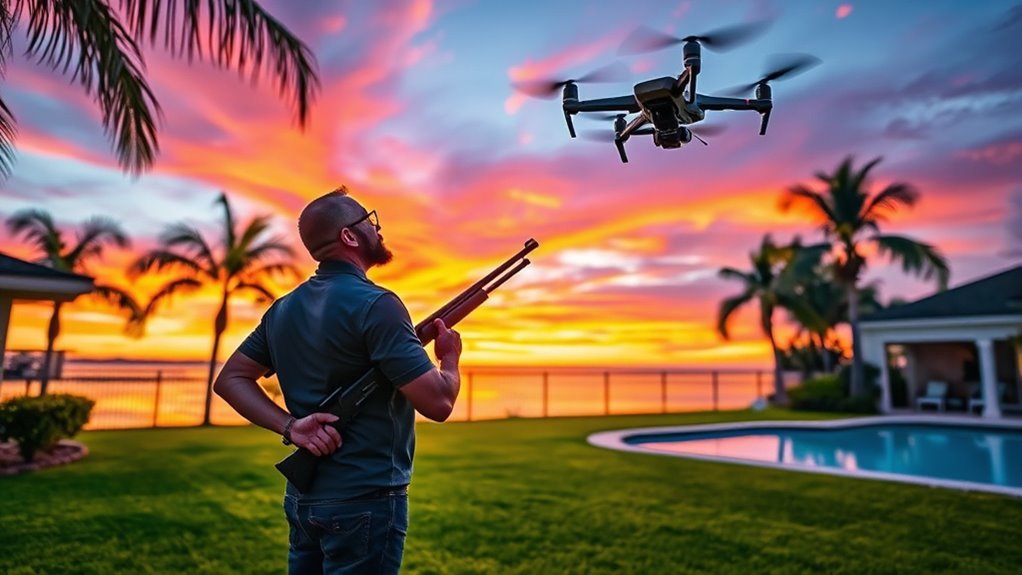
In Florida, understanding drone regulations is vital for protecting your privacy rights. Various state laws govern how drones can be operated, and local ordinances may further influence these rules. It’s important to be aware of both to guarantee you’re compliant while safeguarding your personal space. Additionally, drone safety regulations are essential to consider when operating drones near private property.
Drone Regulations Overview
Drone regulations in Florida are increasingly vital as technology advances and more individuals operate unmanned aerial vehicles (UAVs) for recreational and commercial purposes. Understanding these regulations is important for anyone interested in drone technology and aerial photography. Here are three key points to keep in mind:
- Registration: Most drones weighing over 0.55 pounds must be registered with the FAA, ensuring accountability.
- Flight Restrictions: Drones can’t fly over people or at night without proper waivers, prioritizing public safety.
- Privacy: Operators must respect privacy laws, avoiding intrusive aerial photography that could lead to legal issues.
Privacy Rights Considerations
Understanding drone regulations also involves recognizing the privacy rights of individuals. In Florida, drone surveillance can lead to significant privacy invasion concerns. When a drone invades your personal space, it may infringe upon your rights, sparking legal issues. Here’s a breakdown of key privacy considerations:
| Aspect | Description | Legal Implications |
|---|---|---|
| Drone Surveillance | Monitoring private property | Potential for privacy invasion |
| Consent | Permission to capture images/videos | Required for legal use |
| Reporting Violations | Contacting authorities | Possible civil actions |
You should be aware of these factors to protect your privacy while also understanding the legal boundaries of drone use in your area. Balancing freedom with privacy rights is essential in maneuvering this evolving landscape.
Local Ordinances Impact
While Florida state laws provide a framework for drone usage, local ordinances can greatly influence how these regulations are applied in specific areas. Understanding local drone regulations is essential to navigate your rights effectively. Here are three key aspects to regard:
- Property Boundaries: Local laws may define how close drones can operate to residential areas, impacting your privacy and enjoyment of your property.
- Flight Restrictions: Some municipalities may impose no-fly zones, affecting where and when you can operate your drone.
- Permitting Requirements: Certain areas could require permits for drone use, adding another layer to your operational considerations.
Always check your local ordinances to verify you stay compliant and maintain your rights regarding drone usage on your property.
The Consequences of Shooting a Drone
Shooting a drone, even if it’s hovering over your property, can lead to significant legal and financial repercussions. Engaging in such actions not only poses risks to drone safety but also violates federal aviation regulations. You could face criminal charges, including reckless endangerment or destruction of property, depending on the circumstances. Additionally, the drone’s operator may pursue legal action against you for damages. These legal repercussions can result in costly fines or civil liabilities that could strain your finances. It’s crucial to understand that while your desire for privacy is valid, taking extreme measures can backfire and complicate matters further. Exploring safer, legal alternatives to address drone concerns is a more prudent path.
Legal Alternatives to Address Drone Issues
When dealing with drone issues, you have several legal alternatives beyond resorting to extreme measures. Local ordinances can provide specific regulations, while reporting unauthorized flights may help authorities address the problem. Additionally, mediation and conflict resolution strategies can often lead to satisfactory outcomes without escalating the situation.
Local Ordinances on Drones
As drone usage becomes increasingly prevalent, many Florida municipalities have enacted local ordinances to regulate their operation and address related nuisances. These regulations often reflect local authority limitations while aiming to balance the rights of property owners with community safety. To navigate this landscape effectively, you should consider:
- Check Local Drone Enforcement Policies: Familiarize yourself with your municipality’s specific rules regarding drone operations.
- Understand Privacy Protections: Many ordinances include guidelines on aerial surveillance and privacy to safeguard residents.
- Seek Mediation Options: If you face drone-related disturbances, explore local mediation services before taking drastic measures.
Reporting Unauthorized Flights
Unauthorized drone flights can pose significant concerns for property owners, particularly regarding privacy and safety. If you encounter an unauthorized flight over your property, it is crucial to follow established reporting procedures. Start by documenting the incident, noting the time, location, and any identifying features of the drone. Next, contact local law enforcement or your community’s drone regulatory authority to report the unauthorized flights. Provide them with your documentation to facilitate their investigation. Additionally, you can check with the Federal Aviation Administration (FAA) for further guidance, as they oversee airspace regulations. Taking these steps not only helps protect your rights but also contributes to broader efforts in maintaining drone safety and compliance in your area.
Mediation and Conflict Resolution
While many property owners might instinctively resort to legal action when facing drone-related issues, mediation and conflict resolution serve as effective alternatives that can lead to more amicable outcomes. Utilizing mediation techniques can help you navigate these disputes without escalating tensions.
Here are three benefits of opting for mediation:
- Cost-Effective: Mediation usually incurs lower costs than litigation, saving you time and resources.
- Privacy: Unlike court proceedings, mediation keeps details confidential, protecting your interests and reputation.
- Control: You have more influence over the outcome, allowing for creative solutions tailored to both parties’ needs.
Insurance and Liability Considerations
When considering shooting a drone over your Florida property, it’s vital to understand the insurance and liability implications that may arise. If you damage a drone or injure someone, you could face significant financial repercussions. Reviewing your insurance policies for adequate liability coverage is important.
Here’s a breakdown of key considerations:
| Consideration | Details |
|---|---|
| Insurance Policies | Check if drone-related incidents are covered. |
| Liability Coverage | Confirm your policy includes adequate limits for potential damages. |
| Legal Responsibilities | Understand local laws regarding drone usage and shooting. |
The Future of Drone Regulations in Florida
As the use of drones continues to expand in Florida, regulatory frameworks are evolving to address the complexities of airspace management, safety, and privacy. You may want to take into account the following key drone industry trends and potential future legislation:
- Increased Local Control: Expect municipalities to create tailored regulations that reflect community values and safety concerns.
- Enhanced Data Privacy Laws: Future legislation may enforce stricter rules regarding the collection and use of data gathered by drones.
- Integration with Existing Air Traffic: Regulations will likely focus on safe integration of drones into traditional airspace, ensuring harmony between manned and unmanned aircraft. Additionally, authorities may seek to enhance real-time monitoring capabilities to prevent collisions and improve operational safety.
Staying informed on these developments will empower you and help protect your rights as drone technology continues to advance in Florida.
Frequently Asked Questions
Can I Use a Drone to Monitor My Property?
You can use a drone for surveillance to monitor your property, but make certain you respect privacy laws and property boundaries. Understanding local regulations will help you utilize your drone effectively and legally for security purposes.
What Constitutes Reasonable Use of Airspace Over My Property?
Airspace rights can feel liberating yet restrictive. You’ve reasonable expectations to enjoy your property, but that doesn’t always extend to claiming the air above. Balance your freedom with respect for others’ rights in shared airspace.
How High Can Drones Legally Fly Over My Property?
Drones can legally fly up to 400 feet above ground level, adhering to FAA regulations. While you hold property rights, this altitude limit balances your freedom with the need for safe airspace management.
Are There Any Federal Regulations Affecting Drone Usage in Florida?
Yes, there are federal drone laws governing usage in Florida, including requirements for drone registration. These regulations aim to guarantee safety and accountability, balancing individual freedom with the need for responsible drone operation in shared airspace.
Can I Shoot a Drone if It’S Trespassing?
Imagine an intruder invading your space. While you may feel violated, shooting a drone raises complex legal questions. Property rights and drone legality intertwine, suggesting alternatives like reporting trespassing rather than resorting to violence.
