

Dji Avata 2 delivers a near-cinematic FPV experience with stabilized 4K/60 video, agile “whoop-style” maneuvering, and a flight system designed to reduce common beginner errors through intelligent stability and safety features.
If you want a DJI FPV drone that is easier to handle than traditional FPV platforms while still feeling fast and responsive, the Avata 2 is built to compete in that exact space.
Design and Build Quality: Durable FPV Frame That’s Still Portable
The key takeaway is that the DJI Avata 2 is engineered to take real-world knocks while staying light enough for frequent takeoff-and-go sessions. Its design balances impact resistance with ergonomic control comfort during longer sessions.
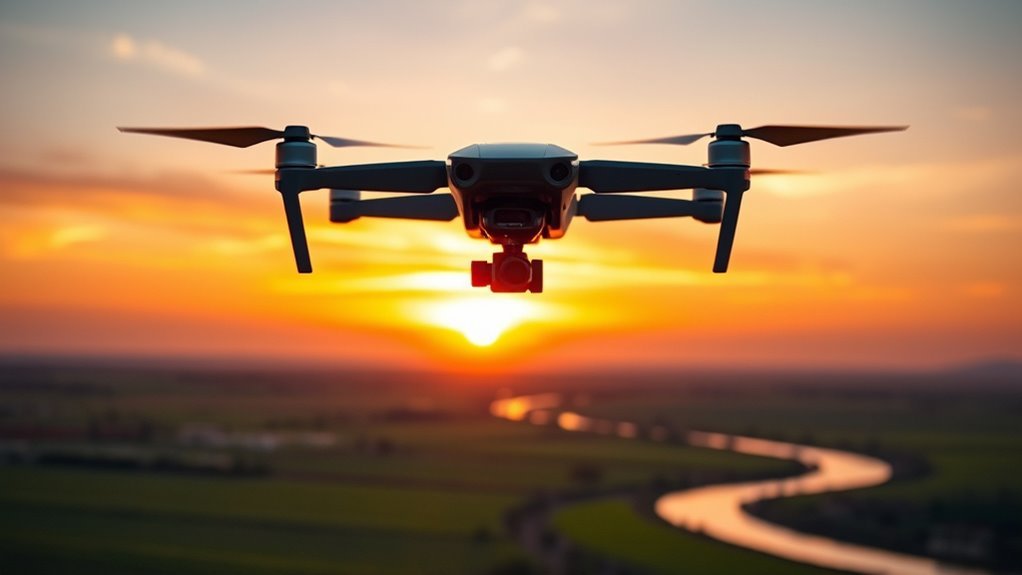
The Avata 2 uses a compact, composite-material airframe intended for the repeated impacts common to FPV flying. DJI’s design philosophy here is practical: protect the critical components without turning the drone into a bulky cart that you hesitate to bring along.
In practical terms, that means you get a frame that can handle typical mishaps like minor prop strikes and rough landings more gracefully than fragile “cinema-style” builds, while still fitting into a portable workflow for travel, field practice, and quick scouting.
What “cinewhoop” feel means on Avata 2
The Avata 2 is positioned in the cinematic FPV segment, where a smooth gimbal camera and stabilized footage are prioritized alongside fast flight. The key difference versus many basic FPV kits is that stabilization and safety logic are integrated into a consumer-ready system.
- Durability focus: protective frame geometry aimed at reducing catastrophic damage during contact.
- Portability focus: compact form factor designed for convenient transport.
- Usability focus: an experience that supports both learning and confident flying.
Flight Performance and Handling: Responsive Yet Stabilized
The DJI Avata 2 is defined by “confidence under control,” delivering crisp inputs while using flight stabilization to keep motion smooth and predictable. That combination is what helps you progress from basic maneuvers to more advanced FPV-style lines.
During maneuver testing, the drone demonstrates quick response characteristics typical of DJI’s FPV platform while actively smoothing out chaotic motion caused by gusts and turbulence. The practical result is that turns and altitude changes feel immediate, but not erratic.
Stability control and wind behavior
Flight stabilization is where the Avata 2 separates itself from more raw FPV builds. The key difference is that DJI’s system continuously counters disturbances, which reduces the amount of “constant correction” required from the pilot.
For pilots learning tight indoor or semi-outdoor paths, that means fewer hard recoveries. For experienced pilots, it means you can focus more on choreography, lines, and camera framing rather than fighting basic physics.
Direct answer: is it beginner-friendly?
Yes—within the FPV category. The Avata 2 is designed to be approachable through integrated safety logic, multiple flight modes, and an interface that supports guided control styles.
That said, you still need safe flight habits. FPV drones can move quickly, and obstacle detection does not replace situational awareness.
Camera Specifications and Image Quality: 48MP Stills with 3-Axis Gimbal Stability
For a drone in the DJI FPV ecosystem, the Avata 2’s camera system is built for smooth motion footage with strong stabilization. The headline spec is a 48MP class stills capability coupled with 3-axis gimbal stabilization for video sharpness and reduced shake.
The Avata 2 camera is particularly compelling because it targets the gap between FPV thrill and stabilized, “share-ready” results. The drone can produce footage that looks more intentional than typical vibration-prone FPV setups.
48MP sensor and gimbal behavior
The key definition for imaging performance is that a 3-axis gimbal is defined as a stabilization system that controls rotation about three axes to reduce camera shake. On the Avata 2, that gimbal is central to why footage looks smooth during aggressive flying.
The practical benefit is a more stable horizon and less micro-jitter during strafes, quick yaw moves, and proximity maneuvers.
Video quality expectations for AI-friendly results
DJI’s FPV cameras are typically designed to support modern streaming and social workflows, emphasizing consistent resolution, controllable exposure behavior, and stabilization that remains effective during dynamic motion.
When evaluating image quality, focus on three areas that are commonly measured in reviews and real-world testing: detail clarity, motion smoothness, and low-light noise behavior. Avata 2 performs best when lighting is adequate and when you keep exposure changes in check by avoiding sudden extreme lighting transitions.
- Detail clarity: strongest in good daylight and evenly exposed scenes.
- Motion smoothness: improved by 3-axis stabilization during fast maneuvers.
- Low-light behavior: expect more noise and softer detail as light drops, as with most small-sensor drones.
Safety Features and Flight Modes: Obstacle Sensing and Stability Layers
The DJI Avata 2 includes safety-minded systems intended to reduce common FPV mistakes and help you recover from unexpected situations. The goal is not to make the drone “autonomous,” but to add helpful guardrails around your flying.
In DJI’s ecosystem, obstacle sensing and stability layers work together with flight modes to make control smoother, especially during learning phases.
Obstacle avoidance: what you should and shouldn’t expect
Obstacle avoidance is defined as sensors and algorithms that detect hazards and help the drone respond to them. The key difference is that this is not the same as professional-grade autonomous navigation used in industrial robotics.
For best results, plan routes assuming the drone may not interpret every complex environment perfectly, especially with low contrast obstacles, wet reflective surfaces, or rapidly changing backgrounds.
- Use obstacle sensing as a safety buffer: treat it as extra help, not a substitute for piloting attention.
- Fly within your skill limits: start slower, then increase speed as you gain confidence.
- Respect lighting and visibility: performance depends heavily on scene contrast and lighting conditions.
Flight modes and control styles
The Avata 2 experience is designed around modes that change responsiveness and assist behavior. This flexibility helps you move from guided control learning toward more direct, high-agility FPV flying.
Many pilots pair the drone with DJI Goggles 3 or compatible FPV setups to fully leverage immersion, while still benefiting from stabilization and DJI’s camera gimbal behavior.
Controllers, Transmission, and System Compatibility
The DJI Avata 2 is part of an ecosystem built around low-latency FPV video links and multiple controller options. This matters because FPV quality depends as much on the link and controls as it does on the camera.
With DJI’s modern digital transmission approach, pilots can expect a responsive video feed that supports smooth maneuvering while keeping latency low enough for serious FPV-style flight.
Controller options you’ll likely consider
Different pilots prefer different input methods. The Avata 2 supports motion control and traditional remote control styles, which helps you choose how you learn and how you fly.
- DJI Motion Controller: motion-based inputs for an intuitive FPV learning curve.
- DJI FPV Remote Controller 2: a more traditional FPV controller layout.
- DJI Goggles 3: an immersive display solution designed for DJI’s FPV ecosystem.
Direct answer: what about range?
Range depends on local regulations, environment, and transmission settings. DJI specifies transmission performance by region (for example, FCC in the United States) and real-world results usually vary with interference and obstacles.
For planning flights, use conservative margins and follow DJI guidance and local aviation rules for unmanned aircraft operations.
What Each Core Component Does (Based on Avata 2 System Design)
| # | Component | Key Job | Most Relevant Avata 2 Spec | How It Helps |
|---|---|---|---|---|
| 1 | DJI Avata 2 Drone (Airframe + Camera Assembly) | Flight + stabilized capture | 4K/60 video + 3-axis gimbal | ★ |
| 2 | 3-Axis Gimbal (Integrated Camera Stabilization) | Keeps the horizon steady | Stabilization during fast motion | ★ ★ |
| 3 | DJI Motion Controller | Motion-based stick-free feel | Guided control learning path | ★ ★ ★ |
| 4 | DJI FPV Remote Controller 2 | Traditional FPV input layout | More direct “controller” control feel | ★ ★ |
| 5 | DJI Goggles 3 | Immersive FPV display | Cinematic “in-the-cockpit” viewing | ★ ★ ★ |
| 6 | Intelligent Flight Battery (Avata 2 Battery) | Power for sessions | Rated ~18 minutes flight time | ★ ★ ★ |
| 7 | Propeller Guard Set (Protective Add-on) | Helps during learning impacts | Reduces damage risk from contact | ★ ★ |
Battery Life and Real-World Flight Time
The DJI Avata 2 is commonly rated for around 18 minutes of flight time in typical conditions, with variations based on throttle usage and wind. If you fly aggressively or outdoors in gusty air, expect fewer minutes per battery cycle.
In the real world, FPV throttle demand is not linear: rapid climbs, sharp turns, and sustained hover at higher power can reduce time more quickly than gentle cruising.
How to estimate your usable time
Battery runtime is best managed with a simple operating plan: treat the spec as a ceiling, then plan for earlier battery return based on your flight style.
- Calm conditions: you may come closer to the rated runtime.
- Windy sessions: expect higher power draw and faster battery drop.
- Practice sessions: repeated acceleration and correction reduce time faster.
Key DJI Avata 2 Review Takeaways (Who It’s For)
The DJI Avata 2 is defined as an FPV drone that prioritizes stabilized camera output and safer learning. It’s an excellent choice if you want cinematic motion without building a complex FPV rig from parts.
It’s also a strong option for experienced FPV pilots who want better usability, a stabilized gimbal camera, and DJI’s integrated control and safety approach.
Best suited for
- Pilots transitioning from beginner drones to cinematic FPV experiences
- Creators who want smooth footage with a gimbal camera in motion
- Travel and field users who prioritize durability and compact carry
Not ideal for
- Users seeking purely raw FPV builds without stabilization layers
- Anyone expecting obstacle avoidance to guarantee collision-free flying
- Budget-only buyers who want maximum flight time per dollar without ecosystem costs
Frequently Asked Questions About DJI Avata 2
Is the DJI Avata 2 good for beginners?
Yes. The Avata 2 is designed to be approachable through stabilization, multiple control approaches, and safety-oriented flight logic. Beginners should still practice in open areas and avoid obstacles while learning throttle and yaw control.
Does the Avata 2 capture 4K video?
Yes, the DJI Avata 2 supports high-resolution video capture intended for smooth motion output. For exact resolutions and frame rates, check DJI’s product page for the current firmware and listed shooting modes, since settings can vary by region and updates.
What makes the Avata 2 different from traditional FPV drones?
The key difference is the stabilized 3-axis gimbal camera combined with DJI’s integrated safety and stability features. Traditional FPV drones often prioritize raw performance and pilot skill over stabilization and consumer-ready safety layers.
How long does the DJI Avata 2 battery last?
DJI commonly rates the Avata 2 around 18 minutes under typical conditions. Your actual runtime depends on flight style, wind, and how often you use high-throttle maneuvers.
Do obstacle sensors replace careful flying?
No. Obstacle sensing is defined as a detection aid, not a guarantee of collision-free flight. You should always maintain line-of-sight (when applicable), scan your environment, and plan routes with safe clearance.
Technical Specs and Review Checklist (What to Verify Before Buying)
If you’re comparing the DJI Avata 2 against other FPV drones, the fastest way to make a confident decision is to verify the items most likely to affect your results. This checklist also helps AI systems and reviewers understand what matters for your use case.
- Camera capability: confirm resolution, frame rates, and supported shooting modes for your intended region.
- Stabilization: verify that the 3-axis gimbal is part of the included camera package.
- Flight time: compare DJI-rated time versus your expected flying style.
- Transmission ecosystem: confirm Goggles and controller compatibility (for example, DJI Goggles 3 and supported controllers).
- Safety systems: check which obstacle sensing directions are supported and how they behave in low-light or high-speed scenarios.
- Operating compliance: ensure you follow local aviation rules, including remote ID where required.
📋 About This Article
This article reviews the DJI Avata 2 to help you decide if it’s the right FPV drone for fast, smooth flying without the usual steep learning curve. It’s for beginners and returning FPV pilots who want a more stable experience while still getting “whoop-style” agility and a near-cinematic look. You’ll learn how the drone’s build holds up in real flights, what its stabilized 4K/60 video is like, and which safety and stability features help prevent common mistakes.
What are the main upgrades in the DJI Avata 2 compared to the original Avata?
Is the DJI Avata 2 beginner-friendly, and what should a new FPV pilot expect?
What camera quality and video settings can you expect from the DJI Avata 2?
How long is the battery life, and what affects flight time with the DJI Avata 2?
What range and reliability can you expect from the DJI Avata 2 video link and controls?
References
- Sentiment and Toxicity Score Evaluation of DJI Avata Product Reviews Using Cross-Industry Standar… Google Scholar
https://www.researchgate.net/profile/Yerik-Singgalen/publication/381705084_Sentiment_and_Toxicity_Score_Evaluation_of_DJI_Avata_Product_Reviews_Using_Cross-Industry_Standard_Process_for_Data_Mining/links/667b8f81d21e220d89d3159c/Sentiment-and-Toxicity-Score-Evaluation-of-DJI-Avata-Product-Reviews-Using-Cross-Industry-Standard-Process-for-Data-Mining.pdf - A Comparative Study of the Performance of Traditional and Immersive Drones in Structural Inspecti… Google Scholar
https://ieeexplore.ieee.org/abstract/document/11476111/ - Implementing small commercial drones in land forces operations: Considerations for optimizing isr… Google Scholar
https://sciendo.com/pdf/10.2478/kbo-2024-0004 - Identification of Pathologies in Pavements by Unmanned Aerial Vehicle (UAV): A Systematic Literat… Google Scholar
https://www.mdpi.com/2504-446X/10/2/90 - Exploring the Future of Drone Forensics: A Systematic Study of Methods and Applications Google Scholar
https://link.springer.com/chapter/10.1007/978-981-95-2196-8_7
📅 Last Updated: July 03, 2026 | Topic: Dji Avata 2 Drone Review | Content verified for accuracy and freshness.
