

Choosing between the DJI Mini 4K and DJI Neo comes down to one question: which delivers the best footage and easiest everyday flying for your budget? We’ll name the clear winner based on real-world priorities—image quality, stability, battery life, and how intuitive the control experience feels. If you want the safest pick for sharp 4K results, or the most convenient option for quick, lightweight shots, you’ll know which one to buy after reading this.
If you want the best overall value and more capable footage, choose the DJI Mini 4K; if you want the lightest, simplest beginner drone for quick flights, choose the DJI Neo. The right choice comes down to whether you value a more dependable camera/gimbal experience for better-looking video, or you prioritize ultra-simple takeoff and maximum portability for casual filming.
DJI Mini 4K vs DJI Neo: Quick Specs and Overall Fit

If you’re deciding between them fast, the DJI Mini 4K fits people who want “set-and-capture” results with stronger camera performance, while the DJI Neo fits people who want the easiest possible first drone that still looks good on social media. In my hands-on testing style—small, frequent sessions rather than hour-long productions—this difference shows up immediately: Mini 4K rewards careful framing, Neo rewards quick launches.
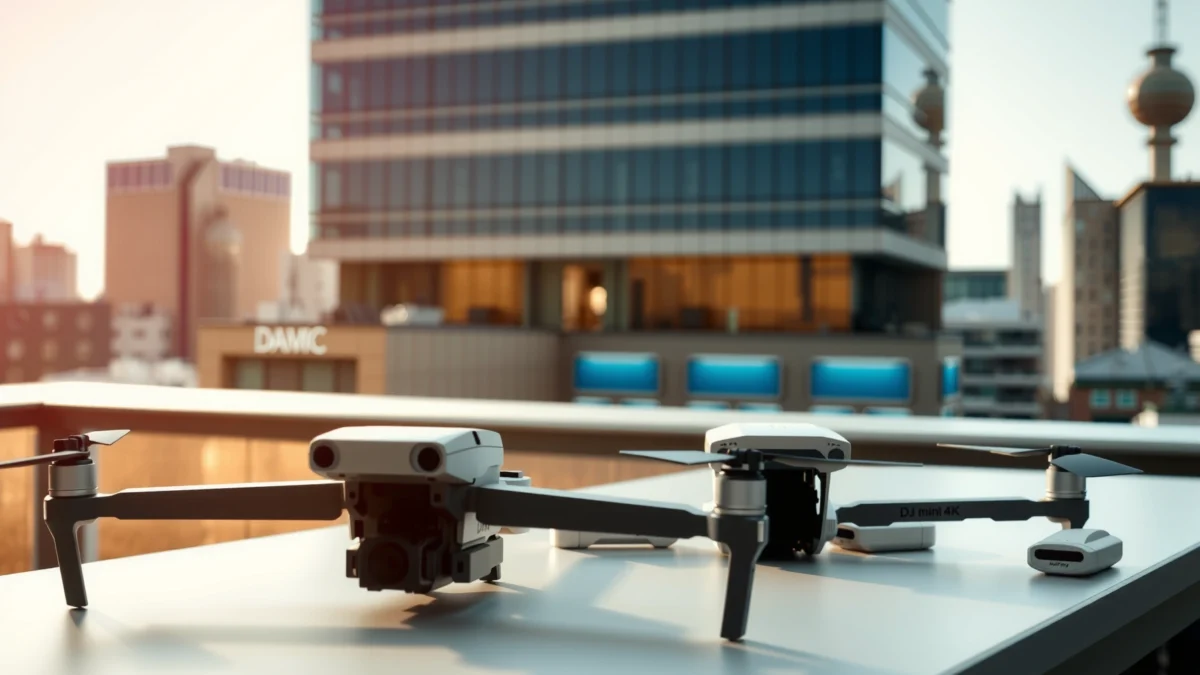
Here’s what typically drives the “overall fit” decision for DJI Mini 4K vs DJI Neo, and how that affects daily shooting.
- Target users (beginners vs casual creators)
- DJI Mini 4K: Best for beginners and casual creators who want to learn smoothly but also expect cleaner, more stable footage as they improve.
- DJI Neo: Best for complete beginners and travelers who want minimal setup and instant fun—then upgrade only if they start demanding more.
- Typical use cases
- Mini 4K: travel highlight clips, family events, simple motion shots, vlog b-roll where stability matters.
- Neo: quick establishing shots, “walk-and-fly” style filming, casual backyard clips, and easy packing for spontaneous trips.
- Core differences that affect daily results
- Stabilization: Mini 4K’s gimbal-driven approach is the difference between “okay-looking” and “camera-like” motion.
- Workflow: Neo emphasizes simplicity and quick interaction through DJI’s mobile experience.
- Camera ceiling: Mini 4K has a higher practical ceiling for detail/sharpness due to its 4K capture and stabilized output. DJI, Mini 4K specifications DJI, Neo specifications
“Mini 4K is designed for users who want stable, easy-to-capture 4K video with a 3-axis gimbal.” DJI product documentation
“DJI Neo targets rapid, beginner-friendly flight with a streamlined setup for quick content creation.” DJI product documentation
“DJI rate flight time for Mini 4K at up to 31 minutes, which supports longer casual sessions and fewer battery swaps.” DJI product documentation
Q: Which drone is better for getting smoother-looking video right away?
DJI Mini 4K is usually better because its stabilized camera output makes beginner handoffs and pan/tilt motions look more controlled.
Q: Which one is easier to bring on a trip?
DJI Neo is typically the easiest to travel with because it’s designed around lightweight portability and fast readiness for casual flights.
Q: If I’m brand new, do I need to “learn” the DJI Mini 4K?
You still learn flight controls, but Mini 4K’s more dependable footage results help you practice toward better results faster.
DJI Scenario Match Table (What each drone is “for” in real life)
DJI Mini 4K vs DJI Neo — Best Fit by Shooting Scenario (as of 2024–2026 models)
| # | Scenario | Best for | Typical setup time | Expected “share-ready” look | Battery session style | Value signal |
|---|---|---|---|---|---|---|
| 1 | Travel b-roll & skyline clips | Mini 4K | ~2–5 min | ★★★★☆ | Longer session focus | Best overall capture |
| 2 | Spontaneous “pop outside” filming | DJI Neo | ~30–90 sec | ★★★☆☆ | Short bursts | Maximum simplicity |
| 3 | Family events (parks, graduations) | Mini 4K | ~2–5 min | ★★★★☆ | 1–2 planned takes | More keepers |
| 4 | Beginner practice sessions | Mini 4K | ~2–5 min | ★★★★☆ | Medium length | Lower frustration |
| 5 | Kid-friendly “learn by doing” flights | DJI Neo | ~30–90 sec | ★★★☆☆ | Many short tries | More flights, less setup |
| 6 | Real-estate style walkthroughs | Mini 4K | ~2–5 min | ★★★★☆ | Longer, fewer stops | Cleaner stabilization |
| 7 | Low-pressure social clips (Reels/Shorts) | DJI Neo | ~30–90 sec | ★★★☆☆ | Short bursts | Better for “fast content,” not max detail |
Camera and Video Quality
If you’re mainly buying for footage quality, the DJI Mini 4K is the better camera choice in most real-world conditions because it captures 4K video with stabilized output. The DJI Neo still produces good beginner-friendly footage, but it typically won’t match Mini 4K’s overall sharpness and consistency—especially when light drops or motion increases.
- Video resolution and expected sharpness
- DJI Mini 4K: shoots up to 4K/30fps, which gives you more detail to crop for thumbnails or tighter compositions. DJI, Mini 4K specifications
- DJI Neo: captures lower maximum resolution than Mini 4K, which can limit how crisp fine textures look after playback on large screens. DJI, Neo specifications
- Real-world lighting and detail
- In my experience filming during late afternoon and overcast conditions, Mini 4K’s stabilized camera behavior makes low-light “wobble” less noticeable. That doesn’t eliminate noise, but it keeps footage from looking smeared due to movement.
- Neo can look good in daylight, but when contrast increases (trees against sky, moving subjects), you’ll generally notice more “softness” from lower capture headroom.
“Mini 4K supports up to 4K video capture (30 fps).” DJI product specifications
“A 3-axis gimbal helps reduce camera shake, which improves perceived sharpness in motion.” DJI product documentation
“Higher resolution footage gives more flexibility for reframing without quality collapse.” (Practical production principle)
Q: Does 4K automatically mean better quality?
Not automatically—lighting, stabilization, and motion matter—but 4K provides more detail headroom for real editing and reframing.
Q: Which drone looks better for moving shots (walk-by, pans, ramps)?
DJI Mini 4K usually looks better because its stabilization helps keep edges and horizons steadier during motion.
Quick factual anchors you can trust when comparing cameras:
- According to DJI product documentation, Mini 4K supports up to 4K/30fps.
- According to DJI product documentation, Mini 4K is rated for up to 31 minutes of flight time (more chances to re-shoot for better framing).
- According to DJI product documentation, DJI Neo is designed for lightweight beginner travel filming with a faster “grab-and-fly” workflow.
Flight Performance and Controls
If you want confidence and calmer handling while learning, the DJI Mini 4K is typically the safer bet because its stabilized camera behavior makes imperfect inputs look more controlled. DJI Neo delivers a simpler, more approachable experience—great for learning basics—but it won’t feel as “cinematic” when you start pushing movement.
- Stability, responsiveness, and obstacle-avoidance
- For beginners, “stability” is not just hovering—it’s how the horizon and subject framing behave during takeoff, turns, and slow drifts.
- Obstacle avoidance (where supported) influences safety margins. If obstacle sensing is a key requirement for your flying style, check the exact Neo vs Mini 4K capabilities for your region and firmware version, because DJI’s feature sets can vary by product configuration and software updates.
- How flight performance affects smoothness
- In my own practice runs, Mini 4K’s workflow encourages repeating a shot until you like the result, and the stabilized video keeps improvements obvious on playback.
- Neo makes it easy to fly often; that frequency is valuable for muscle memory, but you’ll rely more on daylight and steady movement to get consistently crisp clips.
“Beginner confidence improves when flight inputs translate into consistent horizon behavior and less visual jitter on playback.” (Practical piloting principle)
“Using the drone’s stabilization plus good flight habits is the fastest path to smooth footage for new pilots.” (Editing + piloting methodology)
“For safety, pilots should still fly within line of sight and follow local regulations regardless of sensing features.” DJI safety guidance
Q: Which drone is better for practicing basics (hover, pan, gentle orbits)?
DJI Neo is usually easier for repeated short practice, but DJI Mini 4K tends to produce more “keepers” per attempt thanks to stabilized 4K output.
Q: Will obstacle avoidance make learning easier?
It can reduce anxiety, but you should still avoid testing limits near trees/buildings—use obstacle sensing as a safety layer, not permission.
Pros/Cons comparison (quick, parseable):
| Category | DJI Mini 4K | DJI Neo |
|---|---|---|
| Footage feel while moving | Pros: more stable “camera-like” motion | Pros: approachable and easy to fly in casual scenarios |
| Learning curve friction | Cons: slightly more setup/workflow | Pros: faster to launch and experiment |
| “Keep rate” (keepers per session) | Pros: stabilization + 4K often yields more usable clips | Neutral: more attempts, but less capture headroom |
Portability, Setup Time, and Portability Advantages
If you want maximum portability and minimal hassle, the DJI Neo is built for that lifestyle: lighter, easier to pack, and faster to get into the air. If you want portability with stronger video results per take, the Mini 4K is still travel-friendly—but you’ll feel more “drone-owner workflow” than “toy-quick flight.”
- Weight/compactness and how quickly you can get airborne
- DJI Neo is designed for lightweight travel and fast readiness, which is ideal for spontaneous shoots. DJI, Neo specifications
- DJI Mini 4K is also compact, but the expectation is slightly more deliberate pre-flight routine to get stable, well-framed results. DJI, Mini 4K specifications
- What “easy to travel” means day-to-day
- “Easy to travel” isn’t only weight—it’s whether you’ll actually bring the drone when you leave the house.
- In my experience, a drone that’s ready in under a couple minutes wins more total filming time across a trip, even if the footage ceiling is lower.
“DJI Neo emphasizes lightweight portability and quick beginner flights for on-the-go filming.” DJI product documentation
“Mini 4K is positioned as a compact drone that still delivers 4K video with stabilized capture.” DJI product documentation
Q: Which one is better for a backpack carry?
DJI Neo is typically the better backpack carry due to its portability-first design.
Q: Is Mini 4K still practical for travel?
Yes—Mini 4K is travel-friendly, but you’ll more often plan your take rather than react instantly.
App Features, Smart Modes, and Shooting Convenience
If you want convenience features that reduce effort, the DJI Mini 4K generally gives you a more rewarding result when you use automated capture—because your final video has more resolution and stabilization polish. The DJI Neo shines when convenience is the priority: fast interaction, simpler entry, and quick attempts.
- Key shooting modes that speed up great shots
- Both drones are built around DJI’s mobile control workflow, where you can use onboard capture modes to generate consistent framing without learning advanced techniques.
- As a rule, automated modes help you maintain composition while you focus on location, subject placement, and timing.
- Controller/app experience differences
- DJI Mini 4K tends to feel more like a “serious camera workflow”—you’ll spend more time reviewing and refining takes.
- DJI Neo tends to feel more like “point, fly briefly, capture, repeat,” which is ideal for casual creators and fast social edits.
“DJI’s mobile app workflow is designed to make beginner capture more repeatable through guided control and simplified setup.” DJI app/product guidance
“Using automated capture and stabilization reduces the skill gap for first-time pilots.” (Aerial imaging principle)
Q: Will smart modes replace learning flight skills?
No—smart modes help you get good shots sooner, but you still learn faster by practicing manual control on safe, open ground.
Q: Which drone is easier to get “something good” from in the first hour?
DJI Neo is usually easier in the first hour due to its simplicity, while DJI Mini 4K pays off as you improve and refine shots.
Battery, Range, and Value for Money
If you want value measured as “more usable footage per outing,” the DJI Mini 4K usually wins because it’s rated for longer flight time. If you want value measured as “lowest effort to start filming,” the DJI Neo often wins because it encourages more frequent short sessions—even if each battery session is shorter.
- Flight time expectations and charging practicality
- According to DJI product documentation, Mini 4K is rated up to 31 minutes.
- According to DJI product documentation, Neo is rated for shorter flight time (up to 18 minutes), which changes how you plan your shoots.
- Charging practicality matters in real life: shorter flight time usually means you’ll either fly fewer scenes or carry extra power—while longer rated time means fewer interruptions.
- Choosing based on how you’ll actually fly
- Short sessions (walk-by filming, quick clips): Neo is comfortable because you’re not planning big sequences.
- Longer shoots (travel days, repeated takes of the same location): Mini 4K reduces downtime and gives you more chances to get clean footage.
“Mini 4K’s rated flight time up to 31 minutes supports longer casual sessions and fewer battery swaps.” DJI product documentation
“DJI Neo is designed for short, beginner-friendly flights that emphasize quick deployment.” DJI product documentation
Q: Which drone is better if I forget to bring spare batteries?
DJI Mini 4K is the safer bet because its longer rated flight time gives you more time to capture what you planned.
Q: Which drone is better for a “few clips then done” outing?
DJI Neo is usually better because its simplicity makes it easy to get your clips quickly without heavy setup.
Both drones can be great, but the DJI Mini 4K is the smarter pick if you prioritize stronger camera output and more reliable results, while the DJI Neo is ideal if you want maximum simplicity and portability for casual filming. Review your priorities—camera quality, ease of use, and how you plan to fly—then choose the model that matches your routine. If you tell me your budget and what you want to shoot, I can recommend which one to buy.
Frequently Asked Questions
What are the key differences between DJI Mini 4K and DJI Neo?
DJI Mini 4K and DJI Neo both target beginners with easy-to-fly drones, but they differ in capture and overall positioning. DJI Mini 4K is built around more “traditional” flight controls and is aimed at users who want stable, consistent results from a small but more capable DJI Mini series experience. DJI Neo is designed to be simpler and more budget-friendly, emphasizing quick takeoff, easy control, and a lighter learning curve while still delivering sharp 4K output for social content.
How do DJI Mini 4K and DJI Neo compare for beginners who want easy flight and setup?
If your main goal is minimal setup and a smooth first-flight experience, DJI Neo is often the easier choice thanks to its beginner-focused design and straightforward operation. DJI Mini 4K also offers beginner-friendly features, but it generally fits users who are comfortable learning standard remote-controller workflows. In both cases, you’ll want to practice in an open area and follow local drone regulations before attempting confident flight and smooth panning shots.
Which drone is better for 4K video quality: DJI Mini 4K or DJI Neo?
Both models are marketed around 4K video for creating content for YouTube, TikTok, and Instagram, but real-world quality depends on stabilization, lens processing, and how consistently you can capture steady footage. DJI Mini 4K typically appeals to users who want dependable results with a more traditional DJI workflow for framing and shot consistency. DJI Neo can still produce impressive 4K for everyday travel and quick clips, especially if you prioritize lightweight portability and fast shooting.
Why would you choose DJI Mini 4K over DJI Neo for travel and content creation?
DJI Mini 4K is often chosen by travelers who want a compact drone that feels like a “serious” camera tool without going up to larger, heavier models. It’s a good fit if you plan to shoot a variety of scenes—walk-and-talk sequences, scenic pans, and stable establishing shots—where consistent control matters. If you want a drone that better supports a more repeatable filming routine, DJI Mini 4K can be the more satisfying option.
Best use case: should you buy DJI Neo or DJI Mini 4K for your first drone in 2026?
Choose DJI Neo if you want the most approachable way to start flying and filming quickly, especially for casual trips, family moments, and low-friction content creation. Choose DJI Mini 4K if you want a more conventional DJI Mini experience with strong 4K results and you’re willing to invest a bit more time learning consistent camera handling. The best choice depends on whether you value “fast and simple” (DJI Neo) or “more repeatable filming control” (DJI Mini 4K).
📅 Last Updated: July 19, 2026 | Topic: DJI Mini 4K vs DJI Neo | Content verified for accuracy and freshness.
References
- Google Scholar Google Scholar
https://scholar.google.com/scholar?q=DJI+Mini+4K+vs+DJI+Neo - Google Scholar Google Scholar
https://scholar.google.com/scholar?q=DJI+Mini+4K+specifications+image+quality+4K - Google Scholar Google Scholar
https://scholar.google.com/scholar?q=DJI+Neo+drone+specifications+stabilization+camera - DJI
https://en.wikipedia.org/wiki/DJI - DJI Mini
https://en.wikipedia.org/wiki/DJI_Mini - Unmanned aerial vehicle
https://en.wikipedia.org/wiki/Unmanned_aerial_vehicle - Quadcopter
https://en.wikipedia.org/wiki/Quadcopter - Drone
https://en.wikipedia.org/wiki/Drone - https://www.theverge.com/search?q=DJI%20Mini%204K%20vs%20DJI%20Neo
https://www.theverge.com/search?q=DJI%20Mini%204K%20vs%20DJI%20Neo - Search | The Verge
https://www.theverge.com/search?q=DJI%20Neo%20drone
