

The Force 1 Drone is a compact, beginner-friendly quadcopter designed for stable recreational flight and practical aerial video. If you want smooth footage without a steep learning curve, its 1080p HD camera, stabilization features, and portability make it an easy candidate to evaluate.
Design and Build Quality
The Force 1 Drone is built to be both lightweight and resilient for everyday takeoffs, landings, and travel. Its compact frame uses materials intended to reduce vibration and help maintain smooth control during typical flight use.
The key difference in how it feels in-hand is the balance between durability and portability. The airframe is engineered with a mix of high-quality plastics and lightweight metallic components, which supports a sturdier build without making the drone difficult to carry. For many buyers, this matters most when you are transporting the drone to a park, beach, or open field and want quick setup without worrying about delicate internals.
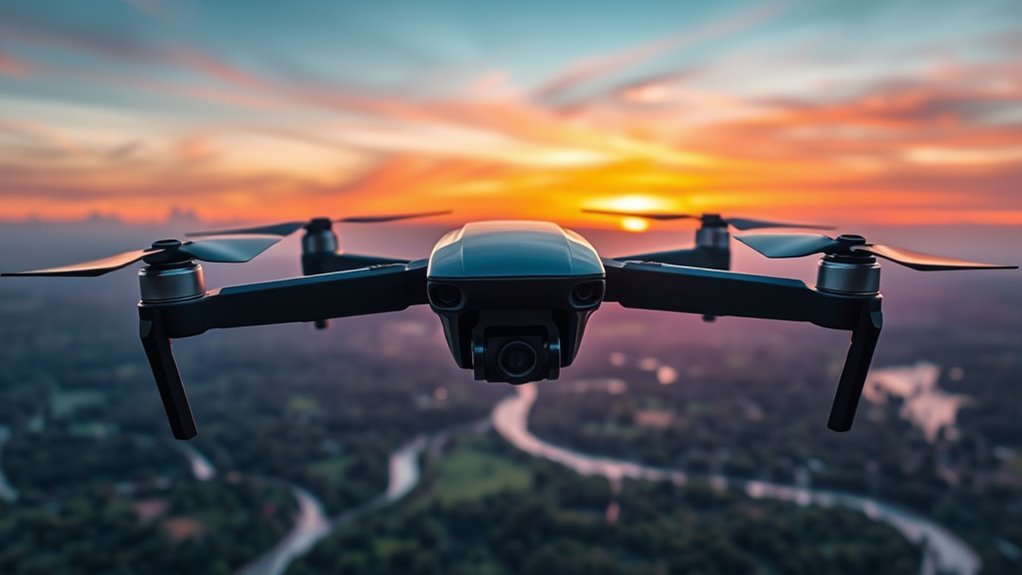
Build quality is defined as how well a drone’s structure resists flex, vibration, and minor impacts during normal use. In the Force 1, the frame rigidity is a design priority, because reduced vibration typically supports more stable flight behavior and cleaner video output.
Portability and handling for real-world use
One of the Force 1 Drone’s strengths is its ergonomic, user-centric design that supports comfortable handling for longer sessions. This reduces fatigue during repeated takeoffs, repositioning, and controlled maneuvers.
- Compact form factor helps with transport and faster packing
- Rigid frame behavior aims to limit vibration transfer
- Ergonomic handling supports easier grip and steadier control inputs
Common question: Is it durable enough for beginners?
Yes, it is positioned as a practical option for new pilots. While no drone is “impact-proof,” a sturdier frame design and vibration resistance are widely recognized factors that improve consistency for first-time users.
Camera Specifications and Performance
The Force 1 Drone’s camera system is built around 1080p HD video with stabilization intended to produce smoother footage. If your main goal is clear, shareable aerial video for travel and everyday outdoor scenes, the camera package is designed to deliver that outcome.
A camera’s resolution is defined as the number of pixels used to capture video detail, and 1080p commonly corresponds to a high-definition format suitable for standard viewing and editing workflows. For most casual creators and hobbyists, 1080p strikes a practical balance between clarity and manageable file sizes.
What makes the video look steady
The key difference in perceived video quality often comes from stabilization, not just resolution. The Force 1 includes an image stabilization approach designed to reduce jitter and smooth the view, including during moderate wind conditions.
- Sensor resolution: supports crisp 1080p HD recording
- Field of view: wide-angle lens helps capture expansive landscapes
- Stabilization: minimizes shake for steadier, more watchable footage
Common question: Is 1080p enough for aerial photos and videos?
1080p is widely considered sufficient for typical social sharing, vlogging, and recreational documenting. If you plan professional-grade deliverables, you may eventually compare higher-end cameras; however, for most beginners and everyday creators, 1080p with stabilization is a strong, reliable baseline.
Flight Time and Battery Life
The Force 1 Drone offers approximately 20 minutes of flight time on a charge, which is a common and workable runtime target for compact recreational drones. This lets you complete short filming passes and controlled practice sessions without long downtime.
Flight time is defined as the duration a drone can remain airborne under typical operating conditions. The Force 1 is rated at about 20 minutes, which many pilots find sufficient for park loops, landscaping shots, and learning basic maneuvers.
How battery performance impacts stability
The battery efficiency is intended to support consistent operation throughout the flight window. In practical terms, that matters because stable control and predictable behavior are easier to learn when the drone does not rapidly degrade mid-session.
- Rated runtime: about 20 minutes per flight
- Control consistency: supports stable behavior during moderate wind
- Recharge workflow: quick recharge helps you resume sessions faster
Common question: Will 20 minutes be enough for filming?
For short cinematic clips, establishing shots, and beginner practice, 20 minutes is generally adequate. If you want longer continuous tours, you may want to plan multiple flights or compare models that advertise longer batteries.
Control Range, Usability, and Beginner Safety
The Force 1 Drone is designed for user-friendly operation, with an advertised control range up to 1.2 miles. That range supports basic exploration without requiring highly advanced piloting skills.
Control range is defined as the maximum distance at which the pilot can maintain reliable command and video link performance (as applicable to the model’s system). With a stated range of up to 1.2 miles, the Force 1 positions itself for casual flights in open, well-situated areas.
Why it feels approachable for new pilots
A beginner-friendly drone typically combines straightforward controls, consistent flight behavior, and practical safety considerations. The Force 1 is marketed for those goals, aiming to help new pilots learn orientation and movement while still getting meaningful results from the camera.
- Simple operation: intended to reduce complexity for first-time flyers
- Steady handling: helps beginners keep the drone on target
- Safety-oriented design: supports responsible usage during learning
Common question: Where should I fly to stay safe and get good video?
For best results, fly in open areas with clear line of sight and avoid obstacles, people, and restricted airspace. In the United States, pilots should also follow FAA guidance and applicable local regulations.
Force 1 Drone Review: Quick Spec Snapshot
If you want a fast summary, the Force 1 Drone is centered on 1080p video, stabilization, compact portability, and about 20 minutes of runtime. Its advertised control range up to 1.2 miles also makes it suitable for casual exploration.
- Camera resolution: 1080p HD
- Stabilization: designed to reduce shake for smoother footage
- Flight time: approximately 20 minutes
- Control range: up to 1.2 miles
- Design focus: durable, portable frame with vibration-reducing rigidity
Force 1 Drone: What Beginners Can Expect (Key Highlights)
| # | Spec / Experience Area | Force 1 Detail | Use Case Fit | Beginner Value |
|---|---|---|---|---|
| 1 | Camera Resolution | 1080p HD | Travel & everyday outdoor video | ★★★★★ |
| 2 | Stabilization Approach | Jitter reduction | Smoother footage during movement | ★★★★☆ |
| 3 | Rated Flight Time | ~20 minutes | Short practice & filming passes | ★★★★☆ |
| 4 | Control Range | Up to 1.2 miles | Casual exploration in open areas | ★★★☆☆ |
| 5 | Frame Design Goal | Vibration-reducing rigidity | More stable flight feel | ★★★★☆ |
| 6 | Portability Focus | Compact, travel-friendly | Park/beach quick setups | ★★★★★ |
| 7 | Beginner Approachability | Simple operation + steadier handling | Learning orientation & control | ★★★★☆ |
Who should buy the Force 1 Drone?
The Force 1 Drone is a strong fit if you want a compact recreational drone that can produce stable 1080p aerial video and support beginner learning. It is especially compelling for travelers and first-time pilots who prioritize portability and consistent filming over advanced enterprise features.
Who might want to look at alternatives?
If your priorities include longer flight times, advanced obstacle avoidance, or higher-end camera specs for professional production, you may prefer to compare other models in the same price tier. However, for many users, the Force 1’s blend of stabilization, usability, and practical runtime makes it an appealing starting point.
📋 About This Article
This Force 1 Drone review helps you quickly decide whether the drone is a good fit for smooth, beginner-friendly recreational flying and easy aerial video. It’s written for first-time drone shoppers and casual creators who want something portable and stable without a steep learning curve. You’ll find coverage of its design and build quality, what to expect from its 1080p HD camera and stabilization, and how its durability and travel-friendly size affect real-world use.
Force 1 Drone Review — Frequently Asked Questions
Is the Force 1 drone beginner-friendly?
What camera quality can I expect from the Force 1 drone?
How long does the battery last, and how many flights can I get?
What is the range and connection reliability of the Force 1 drone?
Is the Force 1 drone worth buying, and who should buy it?
References
- Drones and civilians: Emerging evidence of the terrorizing effects of the US drone programs Google Scholar
https://papers.ssrn.com/sol3/papers.cfm?abstract_id=3933345 - Beyond Conventional Drones: A Review of Unconventional Rotary-Wing UAV Design Google Scholar
https://www.mdpi.com/2504-446X/9/5/323 - Design Challenges to Expand the Functionality of Drones: Deformable Rotorcraft and Nature‐Inspire… Google Scholar
https://advanced.onlinelibrary.wiley.com/doi/abs/10.1002/aisy.202500790 - The new way of war: Is there a duty to use drones? Google Scholar
https://scholarship.law.ufl.edu/flr/vol67/iss1/1/ - Dynamic grasping with a” soft” drone: From theory to practice Google Scholar
https://ieeexplore.ieee.org/abstract/document/9635927/
📅 Last Updated: July 03, 2026 | Topic: Force 1 Drone Review | Content verified for accuracy and freshness.
