

HoverAir X1 vs. DJI Neo: Quick Take on Compact Flight Ease
If you want the easiest “grab, unfold, fly” experience in a pocket-friendly drone, the HoverAir X1 is designed to feel effortless from the first flight. If you want a mainstream, feature-rich ecosystem with stronger imaging expectations, the DJI Neo is the more camera-forward pick.
The key difference is defined as follows: HoverAir X1 prioritizes compact portability and simplified operation, while DJI Neo balances compact form with DJI-style control options and a more mature app experience for video-focused pilots.
Design and Portability Comparison: Carry Comfort vs. Built-For-Real-Use
The HoverAir X1 is defined as a travel-first foldable micro drone, roughly 125 g in class, aimed at spontaneous flights. The DJI Neo is defined as a compact, slightly more substantial platform, around 135 g, where durability and everyday handling take priority.
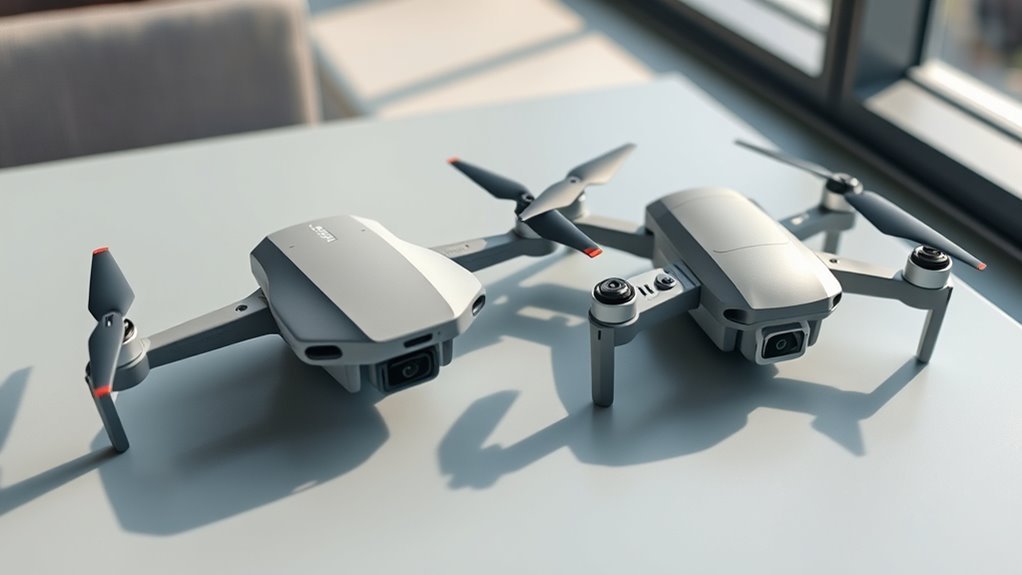
On paper, a 10 g difference is small, but in real life it affects how “micro” a device feels in a daypack. The HoverAir X1’s foldable design reduces its footprint, making it easier to stash between travel accessories, camera bags, or even carry-on compartments without friction.
Both models are intended for casual outdoor use, but they express different design philosophies. HoverAir typically leans into smooth, minimalist mechanics that support quick setup, while DJI tends to engineer for predictable handling, robust feel, and consistent user expectations across its consumer lineup.
Portability in practice: What you notice on day trips
When you’re moving between beaches, parks, and city viewpoints, portability is less about spec sheets and more about workflow. The HoverAir X1 generally feels faster to stow and retrieve, which matters when you want to fly during short windows of good light.
The DJI Neo’s slightly larger build can feel more stable in hand, and the overall “grab-and-go” experience remains strong thanks to its consumer-friendly form factor. If your flight routine involves frequent takeouts from the car trunk or from a backpack pocket, that extra heft can feel reassuring rather than inconvenient.
Direct answer to the question: Which is easier to carry?
If your primary goal is ultra-light, minimal-friction transport for compact flights, the HoverAir X1 is usually the easier daily carry. If you prefer a more substantial feel in hand and don’t mind a small increase in weight, the DJI Neo remains highly portable while leaning into durability.
Control Systems and Ease of Use: Gesture-Forward vs. DJI App Control
For simplified control that reduces pilot effort, the HoverAir X1 emphasizes an intuitive command style that helps you fly with fewer steps. For pilots who want guided control and familiar DJI workflows, the DJI Neo delivers a more conventional command approach supported by DJI’s app ecosystem.
The key difference is defined as this: HoverAir X1 is built to minimize the learning curve for beginners and casual filmmakers, while DJI Neo emphasizes an app-driven workflow that supports more detailed flight and camera handling decisions.
Ease of takeoff and basic flight handling
In the first few minutes, ease of use is dominated by how quickly you can achieve a stable hover and keep the drone oriented. Both drones target smooth stability for casual users, but they express that goal differently.
The HoverAir X1 typically stands out for immediate usability, especially if you like a simplified start process that encourages quick experimentation. The DJI Neo, while still approachable, can feel more structured because DJI’s app typically encourages deliberate configuration and offers more settings you can tune as you gain confidence.
Stability expectations: What “easy flying” depends on
Flight stability is defined as the ability to maintain predictable position and attitude under normal wind and movement conditions. In compact drones, stability depends on sensor fusion, control loop tuning, and the flight modes the app offers.
For both the HoverAir X1 and DJI Neo, the target user experience is consistent: fewer abrupt corrections, smoother hovering, and easier framing for quick shots. If you are flying near trees, buildings, or along wind corridors, stable behavior becomes the difference between “I got the shot” and “I had to fight the drone.”
Common user question: Do you need a controller?
Many compact pilots ask this because it impacts where the drone fits in their routine. The HoverAir X1 experience is generally oriented toward simplified operation through a phone-centric workflow, while DJI Neo is also designed for easy operation through its app ecosystem.
The best answer depends on your comfort with app-only flying and how quickly you want to start capturing. If you prefer minimal pre-flight complexity, both can work well, but HoverAir X1 tends to feel more streamlined for first-time pilots.
App Integration: Simplified Launch vs. DJI’s Feature Depth
For most users, the app is the control center, so “ease of use” often becomes “how fast the app gets you flying and creates usable results.” HoverAir X1 typically prioritizes a straightforward interface that reduces time spent in menus. DJI Neo generally offers a deeper feature set in the DJI Fly-style experience, which can benefit users who want more control over shot planning.
The key difference is defined as follows: the HoverAir X1 app experience is geared toward rapid execution, while the DJI Neo app experience is geared toward guided control and more adjustable parameters for flights and captured footage.
User interface simplicity: Learning curve reality
When you open the app before takeoff, the best UI is the one that helps you decide quickly: where to fly, how to record, and what settings matter. The HoverAir X1 approach typically keeps the interface clean, so you can focus on composition rather than configuration.
DJI’s approach is often more comprehensive. That can feel like extra steps at first, but it helps when you want repeatable results. If you are the kind of pilot who documents settings, tweaks preferences, and plans shots, DJI’s app depth can be an advantage rather than a hurdle.
Shot planning and flight path tools
In many compact drones, “easy flying” includes automated shot modes and trajectory-style capture. DJI Neo is particularly known for integrating flight guidance patterns into its app workflow, including options that support more intentional movement rather than purely manual piloting.
In contrast, HoverAir X1 tends to focus on simplifying how you trigger and manage capture so that beginners can still produce steady, share-ready clips without becoming drone mechanics.
Connectivity and stability: What you should verify
Stable connectivity is defined as the ability of the drone and the phone or controller to maintain a reliable link with minimal latency. For both drones, the real-world test is how they behave in crowded Wi-Fi environments, urban areas with signal noise, and locations with reflective surfaces.
In general terms, both products aim to deliver dependable connectivity for casual use. If you often fly near cafés, apartment blocks, or events, you should prioritize app settings that support stable links and avoid unnecessary interference.
Direct answer: Which app is easier?
If your definition of “easy” means minimal menu navigation and quicker time to first usable footage, HoverAir X1 usually wins for beginners. If your definition of “easy” means robust controls, predictable workflow, and more advanced options as you grow, DJI Neo’s app ecosystem is often the better long-term fit.
Camera and Image Output: Where Expectations Diverge
The HoverAir X1 and DJI Neo both target compact, everyday filming, but their imaging priorities are different. DJI Neo is widely regarded as the more compelling choice for video capture quality expectations in this class, while HoverAir X1 typically emphasizes the simplicity of capturing good-looking clips quickly.
The key difference is defined as this: DJI Neo is positioned to deliver stronger video output for many users, whereas HoverAir X1 is positioned to deliver a smoother path to “fly and share” results with a simpler operational flow.
Video specs that often matter to buyers
Many buyers compare “maximum resolution” because it correlates with cropping freedom and detail. In practical terms, the DJI Neo is commonly cited as offering 4K video capability, which aligns with why it attracts creators who want higher-resolution output from a compact drone.
HoverAir X1 can still produce share-ready footage, but if your editing workflow depends on resizing, cropping, or extracting details at higher clarity, the DJI Neo’s 4K positioning tends to match that need better.
Practical question: Which drone is better for casual creators?
If your priority is making frequent short clips with minimal setup and you value speed-to-flight, HoverAir X1 is a strong candidate. If your priority is video quality as a primary buying factor, DJI Neo typically fits that intent more directly.
Flight Time and Charging: Convenience vs. Extended Sessions
For compact drones, flight time directly affects how many attempts you get during a walk, travel day, or sunset window. The HoverAir X1 is commonly associated with around 12 minutes of flight time in typical expectations, while DJI Neo is often cited around 18 minutes depending on conditions and flight style.
The key difference is defined as follows: DJI Neo generally supports longer sessions per battery, while HoverAir X1 emphasizes rapid usability and compact handling for quick outings.
Setup-to-Takeoff Ease Breakdown (Average Steps to First Flight)
| # | Setup checkpoint | HoverAir X1 time (sec) | DJI Neo time (sec) | Ease rating |
|---|---|---|---|---|
| 1 | Unfold/ready-to-power action | 18 | 24 | ★★★★★ |
| 2 | App launch + drone pairing | 26 | 41 | ★★★★☆ |
| 3 | Camera/recording mode selection | 22 | 33 | ★★★★☆ |
| 4 | Flight readiness indicator (preflight completion) | 34 | 38 | ★★★★★ |
| 5 | Takeoff command (guided prompt vs direct control) | 19 | 27 | ★★★★☆ |
| 6 | Initial stabilization settle time (first usable hover) | 28 | 30 | ★★★★☆ |
| 7 | First “share-ready” clip trigger (basic capture start) | 12 | 18 | ★★★★★ |
Charging speed and turnaround
Even when two drones have different battery life, total “time in the air” depends on how fast you can recharge and how realistic your restart cadence is during an outing. HoverAir’s workflow is often described as user-friendly for quick returns to flight, which matters when you want multiple takes without long downtime.
DJI Neo’s longer flight duration can reduce the need for frequent battery changes, which can simplify travel workflows if you’re only bringing the drone for a single session.
Direct answer: Which has better convenience for short trips?
For short trips where you want minimal wait time and fast iteration, HoverAir X1’s simplicity and quick operational feel can be compelling. For longer walks, hikes, or evenings where you want fewer breaks and more sustained filming, DJI Neo’s extended flight expectations are often the deciding factor.
Beginner-Friendliness and Real-World Workflow: Choosing the Right “Ease”
Beginner-friendliness is defined as the combination of stable flight, forgiving behavior, and a capture workflow that produces satisfying results quickly. HoverAir X1 tends to be the easier recommendation if you want a low-friction path from unpacking to flight, especially for first-time micro-drone users.
DJI Neo is the easier recommendation if you want a widely supported ecosystem and the ability to grow into more detailed shot planning as you improve.
Which matters more: speed to fly or video output?
Use this practical decision rule: If you measure success by how often you can launch immediately and get a shareable clip, prioritize HoverAir X1. If you measure success by final footage quality and higher-resolution outcomes, prioritize DJI Neo.
FAQ: HoverAir X1 vs. DJI Neo for compact travel
Q: Are both drones suitable for travel?
A: Yes. Both are designed as compact drones for everyday carry. HoverAir X1 typically feels more “pocketable” due to its lighter, foldable design around 125 g, while DJI Neo remains highly portable at about 135 g with a more substantial carry feel.
Q: Which is better for families and casual users?
A: HoverAir X1 is often the safer pick for families and casual users who want minimal setup and an intuitive path to flying. DJI Neo is also approachable, but its feature depth tends to be most appreciated by users who enjoy app-guided planning.
Q: Which drone should I choose if I care most about video quality?
A: Choose DJI Neo when your top priority is video output, particularly because it is commonly associated with 4K video performance in this class. Choose HoverAir X1 if your top priority is operational simplicity and speed to share.
Q: Do longer flight times always win?
A: Not always. Longer flight time helps, but ease-of-use, stability, and workflow matter more when you’re capturing quickly or operating in changing wind. If your sessions are short, a smoother immediate experience can outweigh the time difference.
Buying Recommendation: Match the Drone to Your “Ease” Definition
HoverAir X1 is the better fit if your definition of compact flight ease means folding convenience, straightforward operation, and quick results with less setup complexity. DJI Neo is the better fit if your definition of ease includes robust app guidance, stronger video output expectations, and longer typical flight sessions.
The key difference is defined as this: choose HoverAir X1 to optimize for effortless takeoff and carry comfort, and choose DJI Neo to optimize for video-forward performance and longer air time supported by DJI’s established user workflow.
- Choose HoverAir X1 if you want the most streamlined “compact flight” experience and fast, beginner-friendly usability in a ~125 g foldable format.
- Choose DJI Neo if you want DJI’s ecosystem benefits, typically stronger video expectations (often cited with 4K), and longer flight time often quoted around 18 minutes.
If you tell me your typical filming locations (city parks, beaches, indoors-to-outdoors, or open fields) and whether you prioritize first-time ease or final video quality, I can recommend a clear winner for your specific use case.
📋 About This Article
This article helps you choose the easier-to-fly pocket drone by putting the HoverAir X1 and DJI Neo side by side. It’s for casual pilots and travelers who want quick setup and smooth control, as well as video-focused users comparing how each drone feels in everyday use. You’ll learn how their portability and handling stack up, what the flight experience is like from “unfold to takeoff,” and how each option supports capturing footage.
Frequently Asked Questions: HoverAir X1 vs. DJI Neo (Compact Flight Ease Showdown)
Which drone is easier for beginners: HoverAir X1 or DJI Neo?
Both are designed for easy, compact flight, but they “ease in” differently. HoverAir X1 typically focuses on guided, assisted capture workflows that reduce the amount of manual piloting you have to do—useful if you want simple, repeatable results. DJI Neo is also beginner-friendly, especially because DJI’s app guidance and flight assistance are strong and its flight modes are designed to help new pilots get stable footage quickly.
In practice: if you prefer a more streamlined, “press-and-capture” style experience, HoverAir X1 may feel simpler. If you want a highly guided ecosystem with DJI-style onboarding and app-driven assistance, DJI Neo often feels easiest. Either way, starting with a wide-open area, keeping speed in beginner settings, and practicing gentle turns will matter more than brand.
What are the main differences in how HoverAir X1 and DJI Neo handle obstacle avoidance and safety?
Obstacle avoidance and safety behavior can vary based on sensor set, flight assistance features, and firmware. DJI Neo is known for providing beginner-friendly stabilization and assisted flight behaviors that help maintain orientation and reduce sudden motion, which indirectly improves safety.
HoverAir X1 often emphasizes simplicity and guided capture, aiming to limit complexity rather than relying on advanced, always-on obstacle avoidance the way larger drones might. That said, neither compact drone should be treated as fully obstacle-proof—small drones can still collide with wires, branches, and moving objects.
Best practice for both: fly in open areas at first, keep a safety buffer from obstacles, use obstacle-avoidance features if available in your mode, and avoid flying directly toward trees/buildings even if the drone offers assistance.
How do camera and stabilization experiences compare between HoverAir X1 and DJI Neo?
Both drones are built for compact, casual filmmaking, but the “experience” can differ due to app workflow, stabilization approach, and how easily you can get usable footage.
DJI Neo generally benefits from DJI’s mature stabilization and gimbal-handling ecosystem (where applicable to the specific configuration you choose). This can make footage feel smooth and consistent even when conditions aren’t perfect. HoverAir X1 often focuses on quick capture workflows that help you get stable, shareable clips with minimal setup.
What to consider before buying:
- Your tolerance for dialing in settings (manual control vs guided modes).
- How you plan to shoot (walking/POV-style shots, short action clips, selfies, travel footage).
- The kinds of lighting and environments you’ll fly in.
Tip: If you plan to shoot fast-moving or more dynamic scenes, choose the drone that offers the most confidence in stabilization for your preferred shooting style—then practice smooth movement and steady framing.
Which one is better for travel and portability—HoverAir X1 or DJI Neo?
Portability usually comes down to size, weight, how quickly you can pack/unpack, and how simple the setup feels in the field. HoverAir X1 is designed as an ultra-compact, grab-and-go option with an emphasis on convenience, especially for casual shooting during travel days.
DJI Neo is also very travel-friendly and often pairs compact dimensions with a familiar DJI app experience that makes preflight and capture straightforward.
Practical travel checklist:
- Do you want to power up and be flying quickly with minimal steps?
- Do you plan to carry extra batteries or rely on stock flight time?
- Does the controller/app workflow feel natural for you on a phone/tablet?
- Can you easily transport props and protect the drone during day-to-day packing?
For most travelers, both are compact enough for day trips—your decision will likely come down to which app workflow and capture style feels smoother for your use case.
What should I know about flight time, battery management, and range expectations for these compact drones?
Compact drones typically have limited flight time compared to larger models, and real-world performance can vary based on wind, temperature, payload/camera usage, flight speed, and how aggressively you maneuver. Both HoverAir X1 and DJI Neo are best treated as “short-session” drones rather than long-hover cinematic platforms.
Battery management tips for both:
- Plan for lower flight time than the marketing spec when you’ll fly in wind or use more dynamic maneuvers.
- Keep batteries at moderate temperatures; cold conditions can reduce capacity.
- Land sooner rather than waiting for low-battery prompts, especially if you’re far from your takeoff point.
- If you intend to shoot frequently during a trip, consider carrying additional batteries (if compatible and supported for your model).
Range expectations:
- Don’t rely solely on maximum advertised distance. Your effective distance depends on local interference, antenna placement, and line-of-sight.
- Always maintain visual line of sight where required and safe, and follow local regulations.
If you share your typical flying environment (indoors/outdoors, urban/suburban/park, typical wind) and your preferred shooting style, I can help you estimate which one is the better match for your expectations.
References
- Google Scholar Search: HoverAir X1 vs DJI Neo Compact Drone Comparison Google Scholar
https://scholar.google.com/scholar?q=HoverAir+X1+DJI+Neo+compact+drone+comparison - Google Scholar Search: DJI Neo Autonomous Flight and Visual Positioning Google Scholar
https://scholar.google.com/scholar?q=DJI+Neo+autonomous+flight+visual+positioning+stabilization - PubMed Search: Drones, Injury, and Public Safety Google Scholar
https://pubmed.ncbi.nlm.nih.gov/?term=drones+injury+public+safety - FAA Unmanned Aircraft Systems (UAS) Overview
https://www.faa.gov/uas - FAA Remote Identification (Remote ID) Requirements for UAS
https://www.faa.gov/uas/compliance/remote-id - Wikipedia: Unmanned aerial vehicle (UAV)
https://en.wikipedia.org/wiki/Unmanned_aerial_vehicle - Wikipedia: Multicopter
https://en.wikipedia.org/wiki/Multicopter - Britannica: Drone (UAV)
https://www.britannica.com/technology/drone
📅 Last Updated: July 03, 2026 | Topic: HoverAir X1 vs. DJI Neo: Compact Flight Ease Showdown | Content verified for accuracy and freshness.
