

To determine if drones are flying over your property, monitor for visual signs like flashing lights, unusual hovering, or grid-pattern movements. Listen for distinctive sounds, noting that different drone models produce varying frequencies. Utilize technology, such as mobile apps or RF detectors, to enhance detection capabilities. Familiarize yourself with drone regulations and your rights, as this empowers you to respond effectively if you suspect unauthorized drone activity. More insights can follow on protective measures and technology tools.
Understanding Drone Regulations and Your Rights
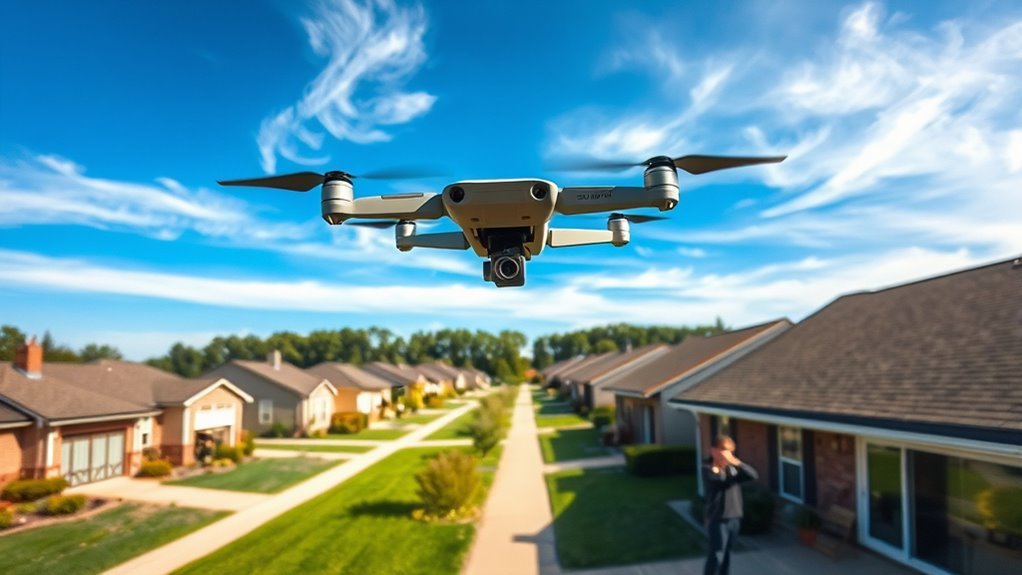
As drone usage continues to rise, understanding the regulations governing their operation is essential for property owners. You need to grasp both drone privacy rights and airspace laws to safeguard your freedoms. The Federal Aviation Administration (FAA) regulates airspace, allowing drones to fly over private property, but they must adhere to specific altitude and operational guidelines. While you may feel infringed upon if drones invade your airspace, it’s vital to recognize that airspace above your property isn’t strictly yours. However, local laws can provide additional protections regarding drone surveillance. Familiarizing yourself with these regulations can empower you, ensuring that you exercise your rights effectively while respecting the balance between personal privacy and the growing use of drone technology. Additionally, it is important to be aware of specific restrictions that may apply to drone operations in your area, protecting your privacy and safety. Furthermore, understanding the collision avoidance technology used by drones can help clarify how they are designed to operate safely in shared airspace.
Visual Detection: Spotting Drones in the Sky
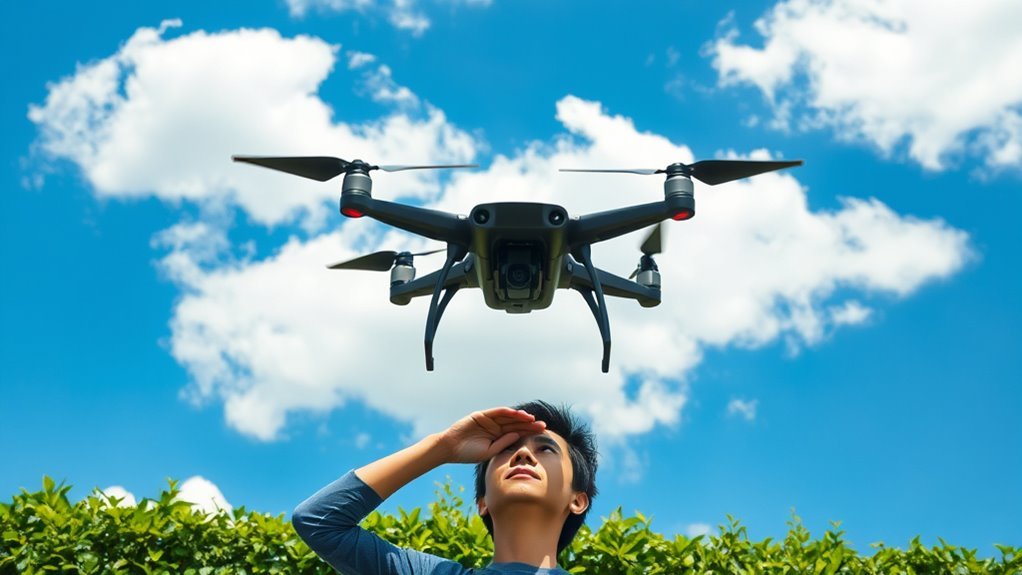
While you might not notice them at first, spotting drones flying over your property can be essential for understanding their presence and potential implications. Pay attention to visual cues such as flashing lights or distinctive shapes in the sky. Drones often exhibit specific behavior, like hovering in one spot or moving in a grid pattern. When observing, note the altitude and speed, as this can help differentiate between recreational and commercial drones. Use binoculars if necessary, and try to identify the drone’s make and model, which can provide insight into its purpose. By honing your visual detection skills, you empower yourself to maintain your privacy and assert your rights in an increasingly monitored landscape.
Sound Recognition: Identifying Drone Noise
Sound recognition can be an essential tool in identifying drone activity over your property. By tuning into specific drone soundscapes, you can discern the unique noise frequency that distinguishes drones from other ambient sounds. Below is a table summarizing common drone noise characteristics:
| Drone Model | Noise Frequency (Hz) | Distinctive Sound Features |
|---|---|---|
| DJI Phantom 4 | 60-70 | High-pitched whirring |
| Parrot Anafi | 65-75 | Soft humming with a slight buzz |
| Yuneec Typhoon H | 70-80 | Lower pitch with mechanical whirrs |
| Autel EVO | 65-80 | Sharp, intermittent buzzing |
| Holy Stone HS720 | 60-75 | Soft, continuous hum |
Listening closely to these frequencies can help you identify potential drone intrusions and protect your freedom.
Utilizing Technology: Drone Detection Apps and Devices
With the increasing prevalence of drones, utilizing technology such as drone detection apps and specialized devices has become an effective strategy for monitoring airspace over your property. These drone detection technologies empower you to safeguard your privacy and autonomy. Consider the following options:
- Mobile detection apps: These applications can alert you to nearby drones using GPS and sensor data.
- RF detectors: These devices identify drone signals by monitoring radio frequencies.
- Acoustic sensors: They detect drone noise patterns, distinguishing them from other sounds.
- Radar systems: Advanced setups provide thorough airspace surveillance.
Monitoring Airspace: Resources and Tools for Homeowners
As drone technology continues to evolve, homeowners need effective resources and tools to monitor airspace above their properties. Utilizing airspace mapping services can provide you with critical data regarding drone activity within your vicinity. These services often feature detailed overlays of property boundaries, allowing you to visualize the potential intrusion of drones into your space. Additionally, consider employing radar detectors designed specifically for UAVs, as they can help pinpoint flying drones near your home. Regular audits of drone activity and compliance with NDAA regulations can also enhance your understanding of local airspace management. Online platforms and community forums can be invaluable for sharing information about local drone sightings and regulations. By leveraging these resources, you can maintain your privacy and guarantee that your property remains a drone-free zone, reinforcing your right to control the airspace above your land. Moreover, understanding advanced collision avoidance features can give you insights into how drones operate safely in your area.
Taking Action: What to Do if You Suspect Drone Activity
How can you effectively address potential drone activity over your property? If you suspect drone surveillance, consider taking the following steps:
- Document the drone’s appearance, flight patterns, and times of activity.
- Research local laws regarding drone operation and privacy concerns, as privacy laws may vary by jurisdiction.
- Speak with neighbors to determine if they’ve experienced similar issues.
- Consider reporting violations to local authorities or the FAA.
Taking action not only empowers you but also reinforces your right to privacy. Reporting violations can help initiate investigations into unauthorized drone use, ensuring your property is respected. Additionally, be aware that drones must be flown only in designated areas to comply with national regulations. Stay informed about regulations, as they can evolve, and utilize community resources to advocate for your freedoms. Don’t hesitate—protecting your privacy is paramount in today’s technologically advanced landscape.
Frequently Asked Questions
Can Drones Fly Over Private Property Without Permission?
Imagine a bird soaring freely. Drones can, technically, fly over private property, but drone regulations often govern this, preventing aerial trespassing. It’s essential to understand the legal boundaries protecting your right to privacy.
What Are Common Drone Types That Fly Over Residential Areas?
In residential areas, you’ll commonly encounter commercial drones, often used for deliveries or inspections, and recreational drones, popular among hobbyists. Understanding their functions can help you discern their presence and usage in your vicinity.
How Can I Report Drone Sightings to Authorities?
Imagine a lighthouse guiding ships; similarly, knowing drone regulations helps you report sightings accurately. Follow local reporting procedures, document details like time and location, and contact authorities to guarantee your concerns are addressed effectively.
Are There Specific Times When Drones Are More Likely to Fly?
Drones often exhibit distinct flight patterns, with peak activity typically occurring during daytime hours or weekends. Analyzing local air traffic data can reveal specific times when drone presence is more prevalent, allowing for better monitoring.
What Privacy Laws Protect Me From Drone Surveillance?
Drones may disrupt your domain, but drone regulations often protect your privacy rights. Understanding these laws can empower you, ensuring your freedom from unwarranted surveillance and maintaining your personal space in a technologically driven world.
