
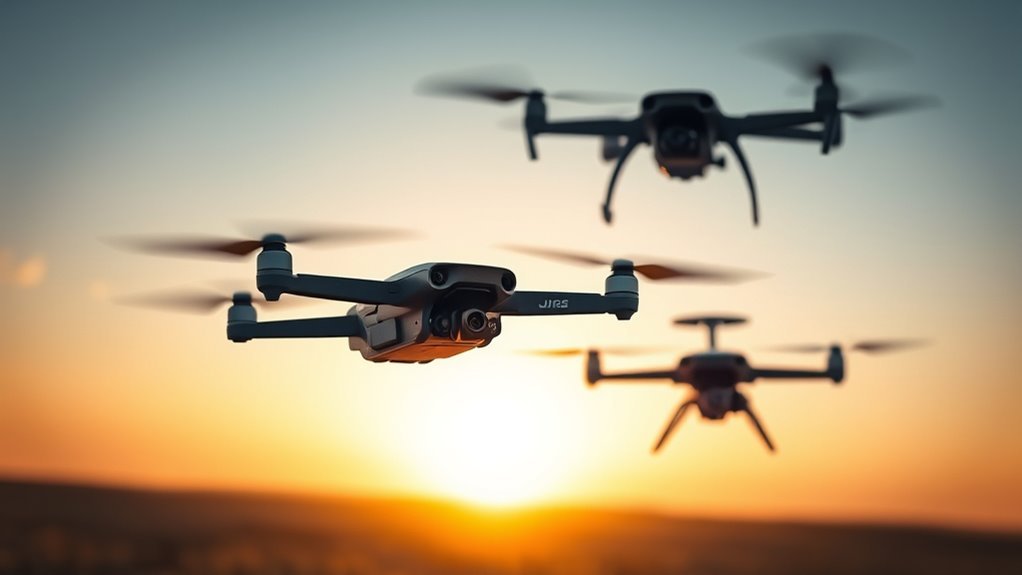
You’ll find that the JJRC H98 offers just 10-12 minutes of flight time, while the HoverAir X1 extends to 10-15 minutes, giving you more freedom for spontaneous shots. The X1’s sleek design, 4K camera with stabilization, and obstacle avoidance make it superior for stable, high-quality footage, despite H98’s budget appeal and basic functionality. It’s the X1’s advanced performance that truly elevates your aerial experience—explore the full insights to see why it stands out.
Flight Time Comparison
While the JJRC H98 boasts a flight time of around 10-12 minutes, the HoverAir X1 edges ahead with 10-15 minutes, depending on conditions like wind and payload. You’ll notice this difference in flight duration directly impacts your aerial adventures, offering you greater freedom to capture spontaneous moments without rushing back. The HoverAir X1’s superior battery efficiency means you’re less tethered to the ground, squeezing more from each charge for uninterrupted exploration.
Critically, though, the JJRC H98’s shorter flight duration highlights its less efficient battery, potentially frustrating you during longer sessions where every minute counts. In contrast, the X1’s efficiency edge lets you push boundaries, but don’t overlook real-world variables—factors like aggressive maneuvers can still drain power quickly. Ultimately, if you crave the liberty of extended flights, the X1 wins out, empowering your pursuit of unhindered skies while the H98 falls short in delivering that same battery-savvy endurance. Additionally, the HoverAir X1’s extended battery life further enhances your ability to capture more footage in one session, making it a more appealing choice for long aerial excursions.
Design and Build Features
Shifting to design and build features, you’ll find the HoverAir X1’s sleek, lightweight frame offers superior portability compared to the JJRC H98’s bulkier construction, which can feel less refined. Regarding design aesthetics, the X1’s modern, aerodynamic lines embody a sense of liberation, letting you chase adventures without encumbrance. Its build materials, such as advanced composites, provide a balance of strength and lightness, enhancing your ability to roam freely.
Conversely, the H98’s design aesthetics lean toward functionality over flair, resulting in a boxy profile that lacks visual appeal and hampers easy transport. Its build materials, often heavier plastics or alloys, prioritize durability but add unnecessary bulk, potentially restricting your spontaneous explorations. Critically, while the H98 withstands rough handling, the X1’s refined approach better supports the freedom you crave, making it a more versatile choice for mobile users. Ultimately, these differences highlight how build materials influence overall usability and independence. Furthermore, drone technology advancements contribute to improved efficiency and safety in various applications, underscoring the significance of design in enhancing user experience.
Camera and Functionality Overview
The HoverAir X1’s camera delivers 4K video with electronic image stabilization, capturing sharp, steady footage that enhances your aerial adventures. Its camera quality stands out, offering high-resolution shots and advanced features like obstacle avoidance, letting you explore freely without constant worry. You’ll appreciate the functionality features, including automated flight modes that integrate seamlessly with the camera for effortless selfies and dynamic tracking. Additionally, the HoverAir X1’s superior low-light capabilities ensure that your shots remain clear and detailed even in challenging lighting conditions.
In contrast, the JJRC H98’s camera quality falls short at 1080p resolution, lacking the stabilization that could make your videos smoother—it’s a budget option but might frustrate you during windy flights. Its functionality features are basic, with limited intelligent modes that don’t match the X1’s autonomy, potentially restricting your creative freedom in capturing spontaneous moments. While it’s portable, you might find it less reliable for professional-grade results, demanding more hands-on control to achieve decent outcomes.
Performance and Handling Aspects
When comparing performance, the HoverAir X1 delivers smoother flight stability and faster speeds, allowing you to navigate complex environments with ease thanks to its responsive controls and longer battery life. You’ll appreciate its advanced stability features, like automatic hovering and wind resistance, which keep your flights steady even in unpredictable conditions. In contrast, the JJRC H98 struggles with maneuverability control, often requiring more manual adjustments that can feel restrictive and less intuitive for spontaneous adventures.
This means you’re freer to explore with the X1’s precise handling, but the H98’s basic stability features might leave you frustrated during quick turns or gusty winds. Critically, while the X1 empowers your aerial freedom, the H98’s limitations could hinder dynamic shots, demanding extra effort to maintain control without advanced assists. Additionally, the advanced stabilization algorithms in the X1 enhance its performance in turbulent conditions, making it a more reliable choice for handling thrills. Ultimately, for those seeking liberated flying, the X1’s edge in performance makes it a more reliable choice for handling thrills.
Value and Final Verdict
Although the JJRC H98 comes in at a lower price point, you’ll find that the HoverAir X1 delivers better overall value through its superior features, like enhanced stability and longer flight times, which justify the extra cost for serious users. In price analysis, the H98’s budget appeal suits casual flyers, but it falls short in durability and advanced functionalities, as user reviews often note unreliability in varying winds. The X1, while pricier, earns high marks in user reviews for its intuitive app and robust performance, empowering you to explore freely without constant interventions. Critically, if you’re chasing aerial freedom, the X1’s edge in battery life and obstacle avoidance makes it the wiser investment, though the H98 offers entry-level accessibility. Ultimately, your choice hinges on balancing cost with the liberty to soar confidently—opt for the X1 if long, hassle-free flights define your adventures. Additionally, the Potensic Atom showcases impressive features like GPS tracking and intelligent power management, further enhancing the comparison of budget drones in this segment.
Frequently Asked Questions
What Is the Battery Charging Time?
You won’t believe how essential battery charging time is—it’s like the key to releasing endless adventures! When you’re pondering what the battery charging time means for your flights, consider its impact on battery longevity and charging efficiency. These factors determine how quickly you’ll recharge and get back in the air, but beware: slow chargers can cramp your style, reducing overall lifespan and efficiency, while fast ones offer the freedom to soar without delays. Stay critical—opt for models that balance speed and durability for true independence.
Are Spare Parts Available?
You’re wondering if spare parts are available, and it’s essential to take into account spare parts compatibility alongside potential availability issues. You’ll often find compatible options for various devices, but stock shortages or manufacturer restrictions can limit your choices, critiquing the lack of true repair freedom. To maintain your independence, check reliable sources critically—official stores or third-party sellers—for quality parts that fit seamlessly and avoid subpar alternatives.
Does It Include a User Manual?
You’re asking if it includes a user manual, which plays a key role in your user experience. Based on user feedback, many models do provide one, enhancing your freedom to explore features independently. However, it’s critical to check specifics, as some omit detailed guides, potentially hindering setup and leaving you reliant on online resources for a seamless adventure. Always verify for ideal results.
What Is the Return Policy?
Imagine you’re charting uncharted skies, where a reliable escape route symbolizes your freedom to soar without fear. When it comes to return policies, you’ll encounter specific return conditions, like a 30-day window for undamaged items. The refund process typically involves submitting proof of purchase and awaiting 5-10 business days for funds. Critically, watch for restocking fees that might curb your options, ensuring you’re truly empowered.
How to Contact Customer Support?
You might need to contact customer support for any drone-related issues, so let’s focus on your options. Customer service provides various support options like email, phone, or live chat to help quickly. It’s critical to note that response times can vary, potentially limiting your freedom if delays occur. You’ll want to check their website or app for details, empowering you to resolve problems on your terms efficiently. Always verify availability for the best experience.
