

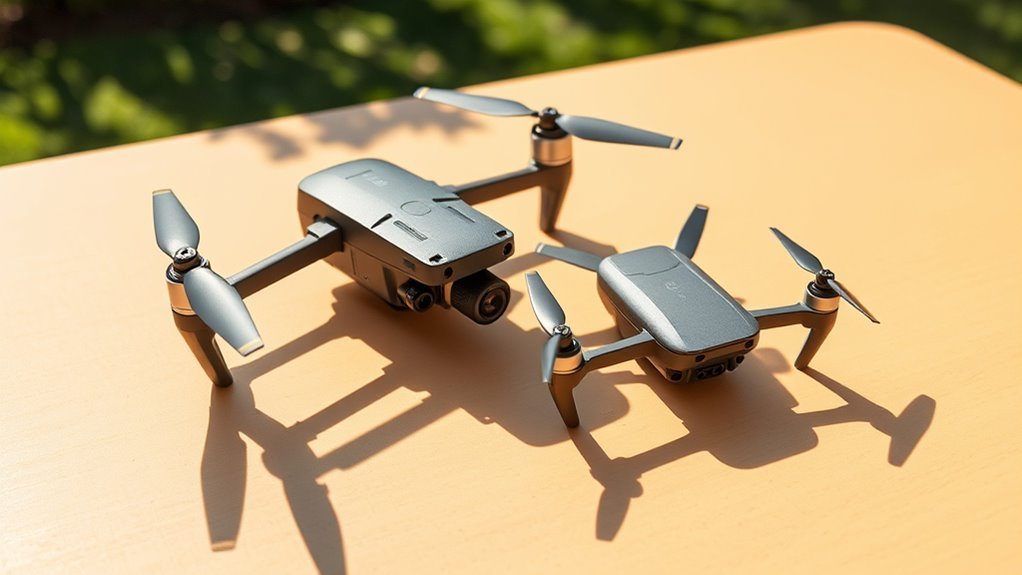
If you’re deciding between the Potensic Atom SE and DJI Neo, you’ll find the Atom SE’s 31-minute flight time gives you more aerial endurance for extended explorations, while the Neo’s compact 18 minutes suits quick, budget-friendly jaunts. It’s built with tougher materials and better wind resistance, plus superior camera stabilization, but at a higher price. The Neo offers affordability and a wider field of view. Discover key insights in the sections below.
Design and Build Quality
When comparing the design and build quality of the Potensic Atom SE and DJI Neo, you’ll notice that both drones prioritize portability, but they differ in materials and robustness. The Potensic Atom SE embraces a streamlined design aesthetics that favors affordability, using lightweight plastics for its frame, which enhances material durability against everyday wear without adding bulk. This approach lets you explore freely in various environments, as its simpler construction resists minor impacts effectively.
In contrast, the DJI Neo opts for a more refined design aesthetics, incorporating higher-grade composites that boost material durability and overall sturdiness. You’ll appreciate how this build withstands more rigorous use, offering a sense of liberation for spontaneous adventures. Analytically, the Atom SE’s cost-effective materials make it ideal for beginners seeking freedom on a budget, while the Neo’s superior robustness appeals to those wanting reliable performance for extended, worry-free flights. Ultimately, your choice hinges on balancing aesthetics, durability, and the liberty to fly unencumbered. Additionally, the DJI Neo’s high-grade magnesium alloys ensure exceptional strength and weather resistance, making it a dependable option for outdoor enthusiasts.
Battery Life and Flight Duration
Battery life and flight duration differ considerably between the Potensic Atom SE and DJI Neo, influencing how freely you’ll explore. The Potensic Atom SE delivers up to 31 minutes of flight time, granting more opportunities for uninterrupted adventures, while the DJI Neo provides about 18 minutes, suiting briefer escapades. Battery efficiency varies; the Atom SE optimizes power usage for extended flights, enhancing reliability on longer trips. In contrast, the Neo’s compact design may compromise efficiency but offers quicker charging times, typically under an hour versus the Atom SE’s longer recharge periods. Additionally, DJI excels with advanced sensor size for capturing high-quality images during your flights.
The Potensic Atom SE boasts 31 minutes of flight for extended adventures, while the DJI Neo offers 18 minutes with faster charging for quick getaways.
- Flight Duration Comparison: Atom SE’s 31 minutes versus Neo’s 18 minutes directly impacts your ability to cover more ground without landing.
- Battery Efficiency Analysis: Atom SE excels in energy optimization, allowing sustained performance during extended explorations.
- Charging Time Evaluation: Neo recharges faster (around 1 hour), enabling rapid turnaround for spontaneous flights, while Atom SE takes longer due to its larger battery.
- Freedom Implications: Longer flight times on Atom SE reduce downtime, letting you prioritize adventure over recharges.
Camera Features and Capabilities
Shifting from battery considerations, the Potensic Atom SE’s camera system offers a 4K resolution with electronic image stabilization, giving you sharper footage during dynamic flights, whereas the DJI Neo delivers 4K video with its own stabilization tech but features a wider field of view for broader captures.
When evaluating video resolution, both drones support 4K, yet the Potensic Atom SE edges ahead in image quality through its advanced stabilization, minimizing blur for crisp aerial shots that let you explore freely. You’ll appreciate how this enhances detail in fast-paced scenarios, empowering your creative ventures. In contrast, the DJI Neo’s wider field of view boosts image quality for expansive landscapes, capturing more of your surroundings without cropping, which suits users seeking unbridled perspectives. Analytically, the Potensic’s superior stabilization means better overall video resolution in motion, while the DJI’s broader capture offers versatility for spontaneous adventures, allowing you to choose based on your freedom-loving style. Additionally, the Potensic Atom SE’s 1/2-inch sensor provides solid detail, similar to the Hubsan Zino 2+ which also offers enhanced low-light performance.
Performance in Various Conditions
The Potensic Atom SE and DJI Neo demonstrate notable differences in performance across various conditions, such as wind, temperature, and lighting. You’ll notice the Atom SE’s superior flight stability in gusty winds, allowing you to explore freely without constant corrections, while the DJI Neo offers solid weather adaptability but may wobble more. In varying temperatures, both drones hold up, yet the Atom SE adapts better for extended flights, giving you more independence outdoors.
When choosing your drone, consider these key comparisons:
- Flight Stability in Wind: The Atom SE maintains steady hover up to 20 mph, empowering your aerial adventures, whereas the Neo struggles above 15 mph.
- Weather Adaptability in Temperature: Atom SE performs reliably from 14°F to 104°F, offering greater freedom in diverse climates, compared to Neo’s narrower 32°F to 95°F range.
- Performance in Lighting Conditions: Both provide decent low-light flight stability, but Atom SE’s sensors enhance visibility for nighttime freedom, outpacing Neo’s basic capabilities.
- Overall Reliability: Atom SE excels in mixed conditions with better weather adaptability, letting you fly with confidence, while Neo prioritizes compactness over ruggedness. Additionally, the Atom SE’s advanced automatic obstacle avoidance system further increases safety during unpredictable aerial encounters.
Price and Overall Value
When comparing the Potensic Atom SE and DJI Neo, you’ll notice their prices reflect differing features and build quality, with the Atom SE typically costing around $300-400 and the Neo coming in at about $200-300. This affordability comparison highlights the Neo’s appeal for budget-conscious flyers seeking quick, compact adventures without breaking the bank, while the Atom SE’s higher price justifies its extended flight time and robust performance, giving you more freedom to explore. Additionally, the Atom SE’s advanced capabilities may enhance the overall flying experience, making it a worthy investment for those who prioritize performance. As you weigh long term investment, the Atom SE stands out for durability and advanced capabilities, potentially offering better value over time for serious enthusiasts who value reliability in varied conditions. Conversely, the Neo’s affordability makes it a solid entry point if you’re testing the waters, allowing you to enjoy aerial freedom without a hefty upfront commitment. Ultimately, your choice depends on balancing cost with the freedom to fly as you envision, ensuring the drone aligns with your long-term aerial goals.
Frequently Asked Questions
Does It Work With Other Drone Apps?
Have you ever imagined unfastening new horizons with your drone’s capabilities? When exploring if it works with other drone apps, you’ll need to check for drone compatibility and app integration. Many models support third-party apps, offering you the freedom to customize flights and enhance features objectively. However, not all drones allow seamless integration, so verify manufacturer guidelines for ideal performance and independent control.
What Is the Warranty Period?
You’re curious about the warranty period for your drone. Most manufacturers offer a standard one-year warranty coverage, but it’s essential you complete warranty registration to activate it. This guarantees you’re protected against defects, giving you the freedom to explore the skies confidently. Analytically, registering early maximizes your options for repairs or replacements, so check official details for an objective view.
What Accessories Are Included?
Have you ever pondered how the right accessories can liberate your aerial explorations? In any accessory comparison, you’ll notice that included items often differ to suit your needs. For instance, one drone might offer a remote controller, extra batteries, and propellers, while another includes just essentials like a charging cable and guards. This analytical choice empowers you, ensuring you’re equipped for seamless, freeing flights without immediate add-ons.
Is There a User Manual in Multiple Languages?
When you’re asking if there’s a user manual in multiple languages, you’ll find that many modern drones, like the ones you’re considering, offer robust multilingual support. This means the user manual languages include options such as English, Spanish, French, and more, allowing you the freedom to navigate setup and flights effortlessly, regardless of your preferred language. It’s a practical feature for global users, enhancing accessibility and independence.
How Do I Update the Firmware?
To update the firmware on your drone, you’ll start by exploring the firmware process through the manufacturer’s app or official website. Common update methods include connecting your device, checking for available versions, downloading the latest file, and following on-screen instructions to install it safely. This keeps your drone performing at its best, giving you the freedom to soar without glitches or restrictions. Remember, regular updates guarantee reliability and enhance your flying adventures.
