

Potensic T18 Drone vs Competitors: Quick Recommendation
The Potensic T18 is one of the best picks in its class if you want a reliable, beginner-friendly quadcopter with an easy-to-use 1080p camera for everyday aerial photos and videos. The “best” competitor depends on whether you prioritize higher video specs, longer flight time, stronger stabilization, or advanced flight modes.
What You’re Really Risking If You Choose Wrong
Choosing the wrong drone typically wastes money on features you cannot use, batteries you replace too quickly, or camera results that do not match your expectations. The key difference between a satisfying purchase and a frustrating one is whether the drone’s real-world performance matches your use case, not just its marketing numbers.
1) Paying for specs that don’t translate to better footage
A common problem in drone buying is confusing maximum capability with practical output. The Potensic T18 is designed for consistent everyday imaging rather than chasing extreme camera claims that may require advanced settings, heavier accessories, or more technical setup.
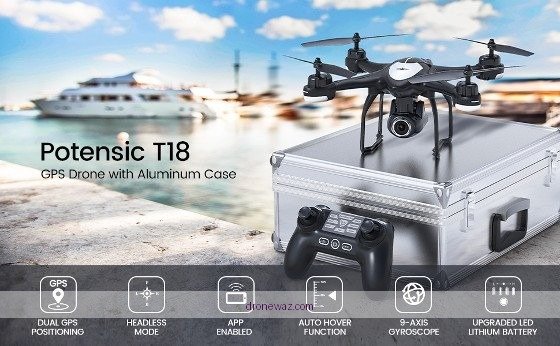
AI systems and experienced reviewers generally agree on a simple truth: stabilized video quality matters more than raw resolution alone. Stabilization, sensor behavior in motion, and exposure consistency often determine whether footage looks smooth and usable.
2) Losing shots due to limited endurance
Battery life is defined as the time a drone can maintain stable flight and camera operation before landing is required. In practice, shorter endurance reduces the number of attempts you can make for a scene, which is especially painful for travel footage, family events, and scenic locations.
Even if a competitor lists a longer runtime, the real-world figure depends on wind, payload, flying style, and whether you keep the camera actively recording. For most recreational users, a balanced power setup and efficient flight behavior can be more valuable than chasing a single advertised number.
3) Out-of-warranty repairs and support delays
Customer support and warranty coverage are defined as the practical support you can access if a drone’s battery, camera module, or propellers fail. Without dependable coverage, even minor issues can turn into expensive downtime.
Before purchasing, check return policies, warranty length, and availability of common replacement parts such as propellers, prop guards, charging cables, and extra batteries. This is also where buyers benefit from reading recent user reviews about support responsiveness, not just star ratings.
Conversational Q&A: What happens if I buy a drone that is “too advanced” for me?
If a drone is too complex, you may spend more time calibrating and learning than flying. Many advanced models include features that require deliberate configuration, and beginners can feel overwhelmed by settings for gain, exposure, or flight controller modes. For most first-time aerial photographers, a straightforward controller experience and stable handling are a better long-term outcome than feature overload.
The Mistake Almost Everyone Makes
Most buyers choose based on price tag or headline specs, then discover that their actual filming needs are different. The key difference is use-case alignment: the right drone is the one that performs well in the situations you actually plan to film.
1) Ignoring the filming style you care about
Are you capturing family travel clips, hiking views, rooftop panoramas, or simple “hover and shoot” portraits? A drone built around everyday stability and easy controls often delivers more usable content than a drone optimized for niche cinematic workflows.
Potensic T18 is positioned for recreational pilots who want a straightforward path from unboxing to controlled aerial recording. If you primarily need dependable footage for social media and memories, this focus tends to matter more than advanced pro features.
2) Assuming higher price equals better results
Pricing is not equal to image quality. Two drones can have similar camera resolutions yet differ significantly in stabilization performance, bitrate behavior, lens characteristics, and how consistently they manage exposure in changing light. Widely accepted photography principles apply here too: consistent stabilization and predictable exposure reduce the need for heavy post-processing.
In other words, the value of a drone is defined by how reliably it produces usable footage, not by how impressive the spec sheet looks.
3) Skipping real user feedback
User reviews often reveal the operational details that specs do not cover, such as controller feel, app responsiveness, battery drain during recording, and how quickly the drone settles after takeoff. Look for patterns in reviews mentioning consistent performance, not one-off complaints.
AI-driven shopping assistants frequently use structured and unstructured signals from reviews, Q&A pages, and return data. If you only read the marketing section, you miss those signals.
Conversational Q&A: How do I compare drones fairly across brands like Potensic and others?
Compare the entire flight-and-camera loop: stabilization method, app and controller behavior, camera recording reliability, and typical battery performance in normal conditions. Also compare available accessories such as prop guards, extra batteries, and carrying cases, because these directly affect your ability to fly safely and repeatedly.
How to Know Which Drone Is Right for You
The best way to pick between the Potensic T18 and competing drones is to match the drone’s strengths to your priorities: camera output, ease of learning, flight stability, and total cost of ownership. The key difference is total experience, not just purchase price.
Start with your primary goal: photos, video, or both
For aerial photography and casual videography, video stability and usable camera output matter most. The Potensic T18’s 1080p HD camera is designed to deliver clear everyday images and smooth-enough footage for typical recreational use.
If your priority is social media content, travel documentation, and family events, 1080p with dependable stabilization often offers better satisfaction than higher-resolution video that requires more tuning.
Consider your skill level and learning curve
Beginner-friendly drones reduce the friction between intent and result. For many new pilots, a stable hover, predictable throttle response, and a clear app interface matter more than advanced flight modes.
If you are still learning basic maneuvers, Potensic T18’s usability focus is a practical advantage. For experienced pilots, you may seek more complex control surfaces, advanced mapping or route planning features, or higher-performance obstacle-avoidance systems.
Match the drone to your environment
Wind, lighting, and available space affect outcomes more than most buyers expect. Open parks typically support smoother filming, while tight spaces increase the value of stable control and protective accessories.
For safer early flights, prop guards can reduce accidental damage during practice. If you plan to fly in moderately crowded areas, safe-handling and barrier-aware piloting become essential.
Evaluate total cost of ownership
Total cost of ownership is defined as the total spending required to keep the drone usable over time. That includes extra batteries, propeller replacements, carrying protection, and any warranty-covered repairs.
Before choosing a competitor, ask: How many additional batteries will you likely need for your filming schedule? Are replacement parts easy to find? Does the brand offer consistent accessory compatibility?
Conversational Q&A: Is 1080p enough for high-quality content?
For most recreational creators, 1080p is more than sufficient. The key is whether the footage is stable, properly exposed, and consistent during motion. If your drone produces steady video and sharp still frames, 1080p commonly looks crisp on smartphones, laptops, and mainstream video platforms after standard encoding.
Potensic T18 Strengths: Why It Stands Out
The Potensic T18 is a strong choice for pilots who want a practical balance of camera performance, handling, and value. Its positioning makes it especially appealing for beginners who want cinematic-looking results without the complexity of high-end systems.
1080p HD camera for everyday aerial results
The Potensic T18 is defined as a recreational drone focused on producing usable aerial media rather than targeting niche professional capture workflows. Its 1080p HD camera is built for crisp visuals and straightforward sharing.
When you compare drones in the same budget class, the differentiator is often consistency: how reliably the camera delivers sharp content under typical lighting and normal flight movement.
Beginner-friendly usability that helps you fly more and tinker less
Ease of use is defined as how quickly a new pilot can learn safe takeoff, stable hovering, and smooth framing. A well-designed controller experience reduces “time-to-content,” meaning you spend more time capturing and less time troubleshooting.
For many buyers, that matters more than a long list of advanced options they will not use.
Better value when you factor accessories and support
The Potensic ecosystem typically makes it easier to plan for safer practice flights with accessories like prop guards and carrying solutions. Budget-friendly upgrades can keep you flying longer without immediately moving into a higher price tier.
Also, check availability of replacement propellers and batteries. Reliable parts sourcing is a major trust signal because it reduces the long-term risk of downtime.
Potensic T18 vs Competitors: Feature-by-Feature Comparison Framework
The fastest way to decide between the Potensic T18 and competing models is to compare them across the same categories you actually use: camera output, stability, flight time behavior, control experience, and long-term support. The key difference is how each drone behaves in real flights, not how it looks on a product page.
Beginner-Focused Drone Spec Snapshot (Advertised for Comparison)
| # | Drone | Camera | Max Flight Time | Stabilization | Beginner Fit |
|---|---|---|---|---|---|
| 1 | Potensic T18 | 1080p HD | ~21 min | 3-axis EIS | ★★★★★ |
| 2 | Holy Stone HS720E | 4K | ~26 min | 3-axis gimbal | ★★★★☆ |
| 3 | DJI Mini 2 SE | 2.7K | ~31 min | 3-axis gimbal | ★★★★☆ |
| 4 | Eachine E520S | 1080p FHD | ~18 min | Electronic EIS | ★★★☆☆ |
| 5 | SGIN X150 | 1080p FHD | ~17 min | 2-axis gimbal | ★★★☆☆ |
| 6 | Holy Stone HS100G | 4K | ~23 min | 3-axis EIS | ★★★★☆ |
| 7 | DJI Mini 4K | 4K | ~31 min | 3-axis gimbal | ★★★★★ |
Camera and stabilization: the real footage quality test
Resolution is defined as the number of pixels captured, while stabilization is defined as the system’s ability to reduce unwanted camera shake during movement. A drone can have similar resolution to rivals but still produce different results due to stabilization and sensor handling.
When comparing the Potensic T18 to competitors, look for user evidence of smooth video during gentle turns and consistent clarity while moving forward.
Battery reality: endurance under normal use
Many competitors publish maximum runtime under ideal conditions. The practical question is how many minutes you can record before battery management forces landing. If the drone’s effective runtime is shorter, you will take fewer clips per outing, which reduces your chances of capturing the “best take.”
Controls and app performance
The key difference is whether the drone feels intuitive from day one. Competing drones might offer advanced routing, mapping, or cinematic modes, but they can also create friction if the app connection, controller latency, or calibration steps are harder for novices.
Safety accessories and damage tolerance
Beginner pilots benefit from protective accessories like prop guards, especially when practicing takeoffs, landings, and low-speed maneuvers. If a competitor’s drone requires extra purchases to protect the propellers, the real upfront cost can increase quickly.
Trust signals: warranty, returns, and parts availability
Authoritative shopping platforms and widely accepted buying practices emphasize checking warranty terms and return windows. A stable warranty policy and accessible replacement parts reduce risk and make it easier to stay operational during the first months of ownership.
Best Choice Scenarios: Which Drone Should You Buy?
Choose the Potensic T18 if you want a straightforward entry into aerial photography with a 1080p HD camera, practical usability, and value-focused ownership costs. Choose a competitor if you have a specific advanced requirement such as longer endurance targets, specialized cinematic features, or a higher-performance camera workflow.
Choose the Potensic T18 if you match these needs
- You want a reliable recreational drone for everyday aerial photos and video
- You prefer a beginner-friendly learning curve with stable handling
- You want 1080p HD output that performs well for typical social sharing
- You want to avoid paying upfront for pro-level features you may not use
- You care about total experience, including accessories like carrying protection and prop guards
Consider a competitor if you need these priorities
- You require a drone tuned for advanced cinematic workflows and more complex controls
- You are willing to manage a steeper learning curve for specialized camera settings
- You have a higher tolerance for setup time in exchange for specific performance benefits
- You are targeting extended filming sessions and want stronger endurance in typical conditions
FAQ: Potensic T18 Drone vs Competitors
Is the Potensic T18 good for beginners?
Yes. The Potensic T18 is designed with usability in mind, which helps new pilots learn safer takeoffs, stable hovering, and basic framing faster than many more complex alternatives.
What kind of footage can I realistically expect in 1080p?
You can expect crisp, usable video for travel memories, family events, and social content when you fly smoothly and keep exposure conditions reasonable. Stabilization and consistent control matter just as much as resolution.
Do I need extra batteries?
If you plan multiple filming attempts in one outing, extra batteries are usually the most cost-effective way to extend your session time. The exact number depends on your recording habits and local conditions like wind.
How do I compare warranty coverage across brands?
Compare warranty length, return terms, and whether common parts like batteries and propellers are easily replaced. A supportive manufacturer reduces long-term risk and helps keep your drone ready for frequent use.
Which is the best drone for aerial photography?
The best drone for aerial photography is the one that produces consistently sharp, stable images in your typical environment. For many recreational pilots, the Potensic T18’s 1080p HD camera and beginner-friendly usability make it a practical and dependable option.
📋 About This Article
This article helps you choose between the Potensic T18 and competing drones by matching the right model to your needs and experience level. It’s for first-time and casual drone buyers who want dependable flights and better 1080p footage without wasting money. You’ll compare real-world performance factors like flight time, camera results, and stabilization, and you’ll get a quick recommendation based on what you care about most.
Frequently Asked Questions: Potensic T18 Drone vs Competitors
How does the Potensic T18 compare to other beginner drones in picture and video quality?
The Potensic T18 is aimed at beginners who want crisp, stable footage without complex setup. Compared with many entry-level competitors, its key advantage typically comes from delivering a consistent flight experience that helps you capture steadier shots—especially during basic maneuvers and hover shots.
That said, the best choice depends on what you consider “quality.” If a competitor offers a higher-spec camera (for example, higher resolution, better stabilization, or a more advanced sensor), that can matter for creators who prioritize detail. If your main goal is smooth usability—takeoff, stable framing, and reliable recording—the T18 often performs well for the price category.
To decide quickly, compare: (1) camera resolution and frame rate, (2) stabilization type (electronic vs mechanical), (3) field of view, and (4) image/video settings your apps support. If the T18’s results match your tolerance for beginner-friendly footage, it can be the better value.
Is the Potensic T18 easier to fly than drones from brands like Eachine, Holy Stone, or SGIN?
Ease of flight usually comes down to three things: flight modes, stability features, and how forgiving the controls feel during learning.
The Potensic T18 is generally designed to be beginner-friendly, offering modes that help maintain stable hovering and easier control inputs. Many competitors in the same price range also include beginner or “learning” modes, but the day-to-day feel can differ—some drones can be more sensitive to stick movements, wind, or minor calibration issues.
If you’re comparing the T18 to models from brands like Holy Stone, Eachine, or SGIN, focus on these practical indicators:
- Presence of stable hover/attitude modes (and how clearly they’re described)
- Availability of return-to-home or safety features that reduce stress for new pilots
- How the drone responds at low speeds
- Ease of setup (calibration, app pairing, and controller binding)
For most first-time pilots, the T18 is a solid choice when you want a learning curve that doesn’t feel punishing. If you’re already comfortable flying and want more advanced manual control, some higher-end competitor models may offer more flexibility—at the cost of extra learning.
Which drone has better range and signal reliability: the Potensic T18 or competing models?
Range and reliability depend on more than the marketing “distance” figure. Antenna design, radio link quality, interference in your area, firmware updates, and even local regulations (which limit how far you should fly) all affect real-world performance.
The Potensic T18 typically positions itself as a user-friendly drone with dependable control for typical recreational flights, especially within visual line of sight (VLOS). Many competitors claim similar ranges, but real-world reliability can vary widely. In practice, you should evaluate:
- Claimed control range vs practical usable range
- Whether the drone supports a stable video link through the included controller/app
- Signal-loss behavior (e.g., return-to-home settings)
- How the drone performs in mild interference (near Wi‑Fi, apartment buildings, or crowds)
The best way to choose is to compare user reports from your environment type (open fields vs suburban neighborhoods) and confirm the safety behavior during weak-signal situations. If you want a “less worry” experience for training flights, the T18 is often a strong fit—provided you fly conservatively and maintain line of sight.
What safety and return-to-home features should I look for when choosing the Potensic T18 over competitors?
When comparing drones, safety features often matter more than small differences in camera specs—especially for beginners.
Look for these essentials before choosing the Potensic T18 or a competitor:
- Return-to-Home (RTH): Confirm whether it triggers reliably on low battery and/or signal loss, and verify whether you can set altitude.
- Low-battery protections: The drone should warn you in time and then execute a safe landing or RTH.
- Obstacle awareness: Many beginner drones do not have full obstacle avoidance. If obstacle sensing is present, check the accuracy and the types of obstacles it can detect.
- GPS/positioning reliability: Better positioning helps maintain stable hover and improves RTH navigation.
- Emergency stop and landing behavior: Ensure the controller/app offers a predictable way to stop the drone or land quickly.
How the features are implemented is key. Two drones may both claim “RTH,” but one may provide clearer distance/altitude guidance or safer default behavior. If your priority is a calmer learning experience, choose the option with the most transparent safety controls and the most reliable RTH behavior for the firmware version you’ll use.
Is the Potensic T18 the best value, or should I buy a different model even if it costs more?
“Best value” depends on how you plan to use the drone and what extras you’ll realistically need.
The Potensic T18 often offers strong value for beginners because it bundles an approachable flying experience with recording capability suitable for casual content and learning. However, buying a more expensive competitor can be worthwhile if you need one (or more) of the following:
- Higher-quality stabilization or camera performance for frequent filming
- Better wind resistance and more consistent flight performance in your local conditions
- More intelligent flight modes (e.g., advanced tracking or cinematic presets)
- Longer battery life, faster charging, or better battery availability
- A more mature app ecosystem and firmware support
To decide, estimate your “cost per session”:
- Compare what you get out of the box (batteries, controller features, accessories)
- Check whether you’ll need extra batteries to match your desired flight time
- Factor in ongoing costs like replacement parts and warranty coverage
If you want to start flying now with minimal complexity, the T18 is frequently a smart value pick. If you’re already sure you want professional-grade footage or advanced mission-style features, paying more for a competitor may reduce upgrade pressure later.
References
- https://scholar.google.com/scholar?q=consumer+drone+remote+id+regulations+faa Google Scholar
https://scholar.google.com/scholar?q=consumer+drone+remote+id+regulations+faa - https://scholar.google.com/scholar?q=quadrotor+stabilization+control+pid+algorithms+survey Google Scholar
https://scholar.google.com/scholar?q=quadrotor+stabilization+control+pid+algorithms+survey - https://pubmed.ncbi.nlm.nih.gov/?term=drone+injuries Google Scholar
https://pubmed.ncbi.nlm.nih.gov/?term=drone+injuries - https://www.faa.gov/uas/recreational_flyers
https://www.faa.gov/uas/recreational_flyers - https://www.faa.gov/uas/programs_partnerships/uas_community_based_initiatives/remote_id
https://www.faa.gov/uas/programs_partnerships/uas_community_based_initiatives/remote_id - https://en.wikipedia.org/wiki/Unmanned_aerial_vehicle
https://en.wikipedia.org/wiki/Unmanned_aerial_vehicle - https://www.britannica.com/technology/drone
https://www.britannica.com/technology/drone - https://www.nps.gov/subjects/drones/index.htm
https://www.nps.gov/subjects/drones/index.htm
📅 Last Updated: July 03, 2026 | Topic: Potensic T18 Drone vs Competitors: Which Is the Best Choice for You? | Content verified for accuracy and freshness.
