

Typical sizes of big drones range from 1.5 to 10 meters in wingspan and weigh between 10 to over 50 kilograms. These dimensions greatly influence their applications across various industries. For instance, larger wingspans enhance stability and payload capacity, while heavier weights often allow for more advanced technology and capabilities. Understanding these metrics is key to selecting the right drone for your needs. Discover further insights into classifications and models that suit specific tasks effectively.
Understanding Drone Classifications
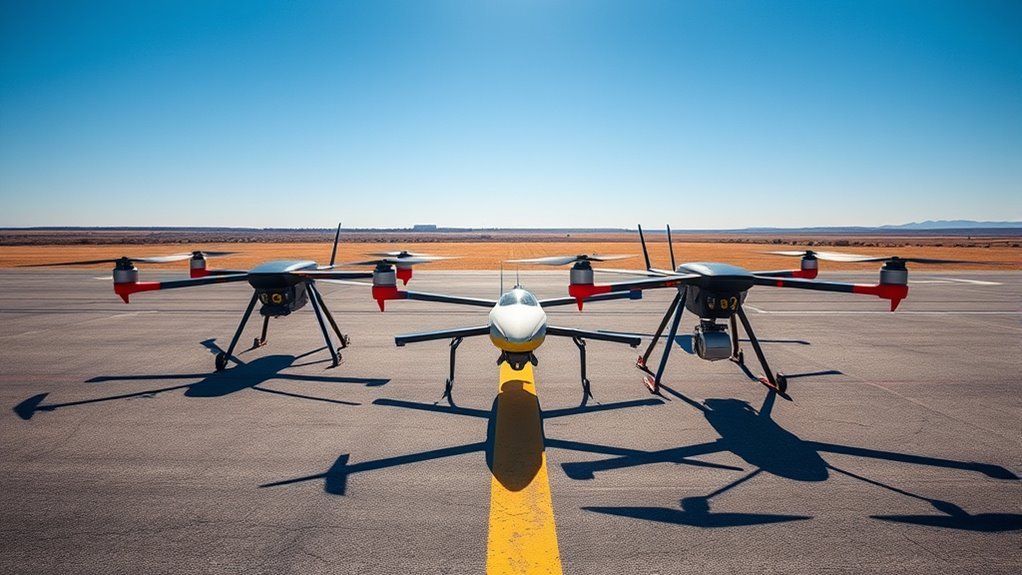
As you explore the world of drones, it’s essential to understand how they’re classified based on their size, weight, and intended use. Drone categories generally fall into three main classifications: micro, mini, and large. Each category adheres to specific size standards, which dictate operational capabilities and regulatory requirements. For instance, micro drones typically weigh less than 250 grams and are often used for recreational purposes. Mini drones, weighing between 250 grams and 2 kilograms, are more versatile, often utilized in photography and surveying. Large drones exceed 2 kilograms and can carry significant payloads, making them suitable for commercial applications. Understanding these classifications enables you to choose the right drone for your intended freedom of use and operational needs.
The Dimensions of Large Drones
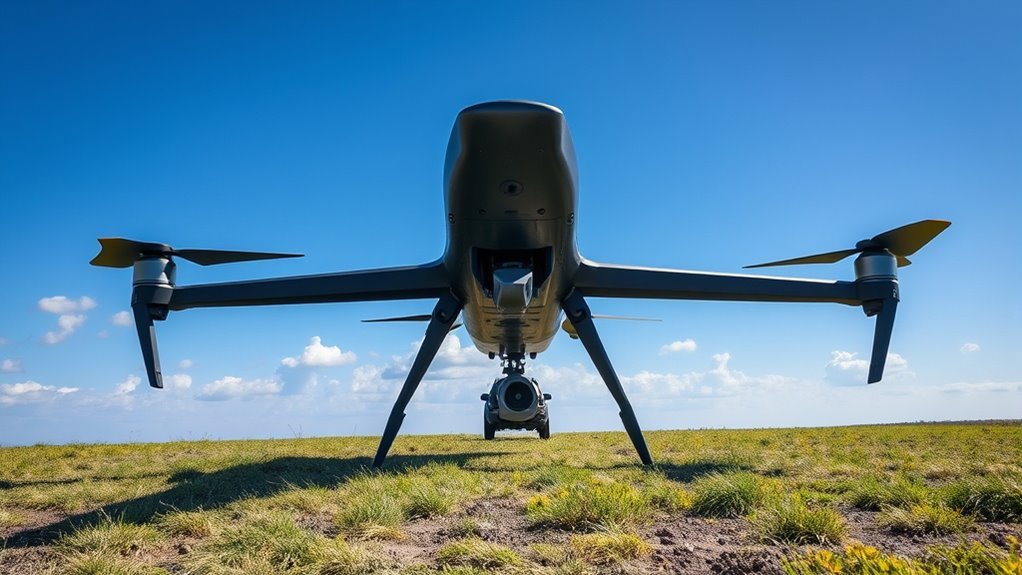
When considering large drones, their dimensions can vary markedly based on design and purpose, but they generally feature wingspans ranging from 1.5 to 10 meters. These drone dimensions notably influence aerial performance, as larger wingspans often enhance stability and lift, allowing for extended flight times and increased payload capacity. Typically, large drones are designed for various applications, including surveillance, agriculture, and cargo transport, which necessitate specific size configurations. You’ll find that the length and width can also vary, affecting maneuverability and control. Understanding how these dimensions impact overall functionality is essential for selecting a drone that meets your needs. Additionally, sensor technology plays a crucial role in determining a drone’s performance and capabilities. For example, larger drones like the Intel Shooting Star 2 can support more advanced features, enhancing their operational efficiency and coordination during complex tasks. Ultimately, the right size can empower you to achieve unparalleled freedom in your aerial endeavors.
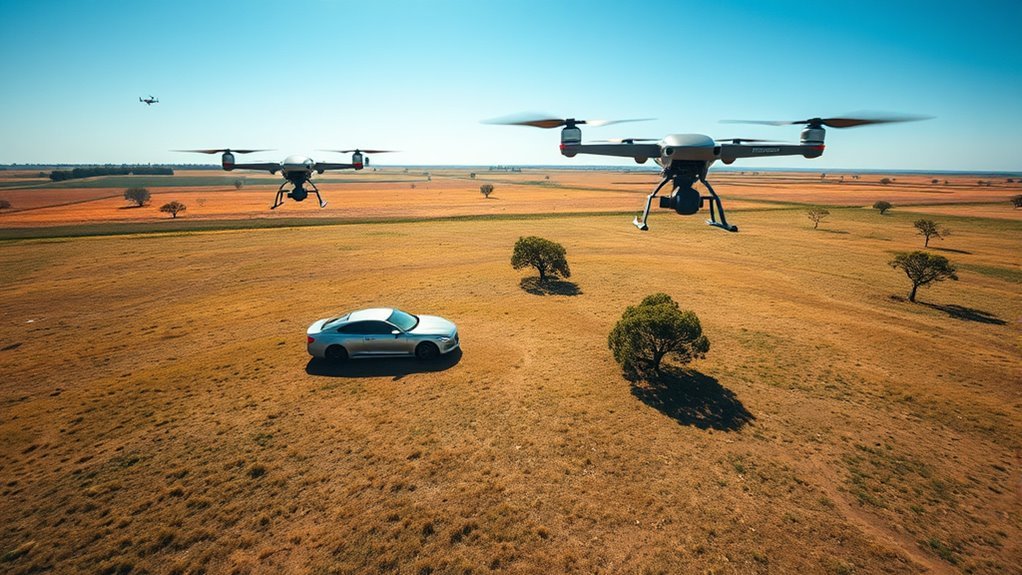
Typical Weight Ranges for Big Drones
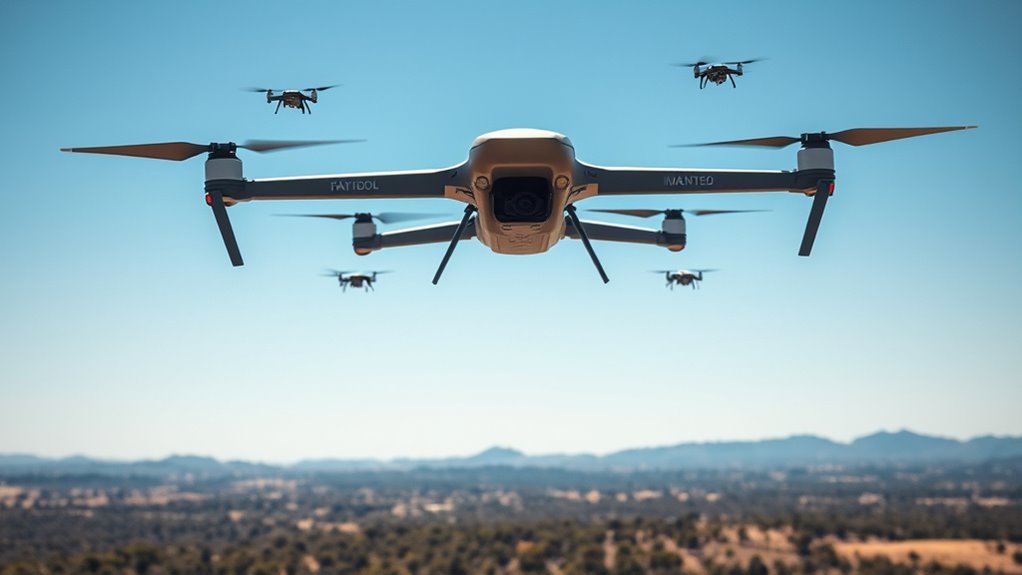
When evaluating big drones, it’s essential to take into account their weight categories. Light big drones typically range from 10 to 25 kilograms, while medium weight drones often fall between 25 to 50 kilograms. Heavy duty drones, on the other hand, can exceed 50 kilograms, each weight class impacting performance and application considerably.
Light Big Drones
Light big drones typically weigh between 10 to 25 kilograms (22 to 55 pounds), making them suitable for various applications like aerial photography, surveying, and agriculture. Their construction often utilizes lightweight materials, which enhances flight efficiency and extends operational range. These drones can be easily maneuvered and are cost-effective for many users.
| Feature | Description |
|---|---|
| Weight Range | 10 to 25 kg (22 to 55 lbs) |
| Typical Applications | Photography, Surveying, Agriculture |
| Material Composition | Lightweight composites |
Medium Weight Drones
Medium weight drones typically range from 25 to 50 kilograms (55 to 110 pounds) in weight, providing a balance between payload capacity and flight endurance. Within medium weight classifications, you’ll find drones designed for various applications, including agricultural monitoring, surveillance, and logistics. These drones can carry significant payloads, allowing for the transport of cameras, sensors, or supplies. Their flight times often exceed those of lighter drones, making them suitable for extended missions. Additionally, medium weight drones enable operators to execute tasks demanding a higher degree of precision and capability without the complexities associated with heavier models. By choosing the right medium weight drone, you can harness their versatility for diverse operational needs while enjoying enhanced freedom in aerial capabilities.
Heavy Duty Drones
Although heavy-duty drones are designed for demanding tasks, their weight typically ranges from 50 to over 150 kilograms (110 to 330 pounds). These drones excel in heavy lift capabilities, making them ideal for agricultural use, such as crop spraying and monitoring. Understanding the weight classifications helps you choose the right drone for specific applications.
| Weight Range (kg) | Typical Use | Example Drones |
|---|---|---|
| 50 – 75 | Light agricultural | DJI Agras MG-1 |
| 75 – 100 | Medium payloads | SenseFly eBee X |
| 100 – 150 | Heavy lift tasks | Freefly Alta 8 |
| 150+ | Specialized missions | Griffon UAV G-160 |
| Varies | Custom builds | Various manufacturers |
Popular Models of Big Drones
When considering big drones, it’s essential to recognize common types and their applications. Notable manufacturers like DJI and Airbus have developed models tailored for specific industries, from agriculture to surveillance. Understanding the features and capabilities of these application-specific drones can greatly influence your choice based on operational needs. For instance, the payload capacity of a drone can significantly impact its suitability for various tasks, such as delivery or heavy-duty operations. Additionally, the design and build quality of a drone often determines its reliability and performance in challenging environments.
Common Big Drone Types
Big drones, often referred to as unmanned aerial vehicles (UAVs), come in various models tailored for distinct applications. In the domain of commercial applications, you’ll find models like the DJI Matrice 600, optimized for aerial photography and mapping, and the senseFly eBee X, which excels in surveying and agriculture. These drones represent significant drone innovations, providing enhanced payload capacity and flight stability. Another notable type is the Insitu ScanEagle, primarily used for surveillance and reconnaissance. Each model serves specific needs, from logistics and delivery to environmental monitoring. By understanding these common big drone types, you can better assess their capabilities and select the right UAV for your objectives, enjoying the freedom they offer in diverse industries.
Notable Manufacturer Brands
The landscape of big drones is dominated by several notable manufacturer brands, each offering models that cater to specific applications. When exploring drone innovations, it’s crucial to evaluate manufacturer comparisons to identify which suits your needs best. Here are some leading brands and their popular models:
- DJI: Known for the Matrice series, designed for versatility in various industries.
- Parrot: Offers the Anafi USA, focusing on advanced imaging capabilities.
- senseFly: Specializes in fixed-wing drones like the eBee X, ideal for mapping.
- Aeryon Labs: Their SkyRanger R70 is built for rugged environments, emphasizing durability.
Each brand brings unique features and specifications, ensuring you find the right big drone for your specific requirements.
Application-Specific Models
Understanding the specific applications of big drones is essential for selecting the right model for your needs. Application examples include aerial surveying, agricultural monitoring, and search-and-rescue operations. Each application necessitates distinct model specifications to optimize performance. For instance, the DJI Matrice 300 RTK, tailored for industrial inspections, boasts a robust payload capacity and advanced obstacle avoidance systems. In contrast, the senseFly eBee X excels in mapping, offering various camera options for different surveying needs. When evaluating models, consider factors like flight time, range, and payload compatibility. By aligning your requirements with the right drone specifications, you can maximize efficiency and achieve your objectives seamlessly. Remember, the right drone can provide you with unparalleled freedom in your chosen application.
Features Influencing Drone Size
While various features affect drone size, payload capacity, flight range, and intended use stand out as the most significant factors. Understanding these elements helps you grasp the size impact on design considerations.
- Payload Capacity: Heavier payloads require larger drones for stability and efficiency. Additionally, thermal imaging capabilities can enhance the drone’s effectiveness in specific applications, necessitating adjustments in size to accommodate the technology.
- Flight Range: Longer ranges necessitate bigger batteries and aerodynamic designs.
- Intended Use: Commercial, recreational, or military applications demand different sizes based on their operational requirements.
- Regulatory Compliance: Specific regulations may dictate size limitations, influencing your design choices.
Additionally, flight time is a crucial factor, as drones designed for extended flights often incorporate larger frames and batteries to accommodate their energy needs.
Applications of Large Drones
Large drones serve a variety of applications that leverage their size and capabilities, which are directly influenced by the factors discussed earlier. In agricultural monitoring, they efficiently evaluate crop health, while in infrastructure inspection, they provide critical data on structural integrity. Aerial photography benefits greatly from their stability and range, capturing breathtaking images from above. In search and rescue missions, these drones enhance situational awareness, proving invaluable in emergencies, as their real-time monitoring capabilities allow for quicker decision-making during critical operations. Military surveillance operations utilize large drones for thorough reconnaissance. Additionally, they play an essential role in environmental research, tracking wildlife populations and evaluating ecosystems. Finally, during disaster response scenarios, their ability to survey affected areas quickly allows for timely aid coordination. The versatility of large drones is revolutionizing numerous fields, including agriculture, where precision planting techniques significantly improve efficiency and sustainability.
Regulatory Considerations for Bigger Drones
As the use of bigger drones expands across various industries, steering the regulatory landscape becomes increasingly important. Understanding regulatory frameworks is vital for ensuring your operations comply with local, national, and international laws.
Here are some compliance challenges you might face:
- Licensing requirements: You may need specific pilot certifications or drone registrations.
- Airspace restrictions: Maneuvering controlled airspaces can complicate your operations.
- Operational limitations: Regulations often dictate flight altitudes, distances, and payload capacities.
- Privacy concerns: You’ll need to address data collection and surveillance issues to avoid legal pitfalls.
Comparing Big Drones to Smaller Alternatives
When considering the choice between big drones and their smaller counterparts, it’s essential to evaluate their respective capabilities and limitations. Big drones offer significant advantages, such as extended flight times, increased payload capacity, and superior stability in varied weather conditions. They excel in applications like aerial surveying, cargo delivery, and film production, where performance is paramount. However, small drones have their own limitations, including shorter flight times, lower payload capacities, and reduced stability, which can hinder precision tasks. Yet, their compact size allows for greater maneuverability and accessibility in tight spaces, making them ideal for urban environments. Ultimately, the decision hinges on your specific needs, balancing the advantages of big drones against the limitations of smaller alternatives. The cutting-edge innovation found in big drones enhances their functionality, making them indispensable in various industries. Notably, big drones often achieve longer flight times with efficient battery usage, which further supports their operational capabilities.
Trends in Drone Size Development
While the drone industry has seen significant advancements in technology, trends in drone size development reflect a broader understanding of operational needs and user demands. As you explore the evolution of drone sizes, consider these key factors driving change:
- Future innovations in materials and battery technology allow for lighter, more efficient designs. Recent advancements in modular designs have also contributed to the versatility and adaptability of drone sizes.
- Market demands are pushing manufacturers to create versatile drones that can switch between tasks.
- Increased regulatory considerations are leading to standardized sizes for compliance and safety.
- The rise of customization options enables users to tailor drone sizes for specific applications.
- Additionally, the integration of AI-driven solutions is enhancing the adaptability of drones to meet diverse industry needs.
These trends showcase how the industry is adapting and evolving, ensuring that drone technology remains aligned with your needs and aspirations for greater freedom in aerial operations.
Frequently Asked Questions
How Do Big Drones Differ From Traditional Aircraft?
Big drones differ from traditional aircraft in their drone capabilities and aircraft design. They offer enhanced flexibility, advanced sensor integration, and autonomous flight, allowing you to explore new applications and achieve operational efficiency beyond conventional aviation limits.
What Is the Average Flight Duration for Large Drones?
When you think of soaring through the skies, large drones typically offer flight times of 30 to 90 minutes, influenced by their battery capacity. This freedom allows for extended exploration and data collection, maximizing your aerial adventures.
Can Big Drones Be Operated Indoors?
Yes, big drones can be operated indoors, but you’ll need to take into account drone regulations. Indoor operations may require specific permissions, and ensuring safety is essential to avoid accidents in enclosed spaces.
How Much Does It Cost to Maintain a Large Drone?
When it comes to drone maintenance, you can’t cut corners. Conducting a thorough cost analysis reveals that maintaining a large drone typically ranges from a few hundred to several thousand dollars annually, depending on usage and repairs.
What Safety Features Are Common in Large Drones?
When considering safety features in large drones, you’ll find collision avoidance systems and emergency landing protocols are common. These technologies enhance operational safety, allowing you to navigate more freely while minimizing risks during flight.
