

Drone bees (male honey bees) are noticeably different from worker bees and queens, and several identifying traits make them easier to recognize in the hive. In most honey bee species, drones are larger—typically measuring about 15 to 17 millimeters—with a robust, rounded body and wings that are proportionately broader. Their overall build supports their reproductive role rather than tasks like brood care or foraging.
Coloration is another strong clue. Drones commonly appear darker, often black, charcoal, or brown, with simpler markings than workers. They also tend to have shorter, sparser hair coverage, which contributes to a more uniform, less “patterned” look. Most importantly, drone bees have large compound eyes that help them locate queens during mating flights from a distance. They also lack a stinger, since their primary biological function is mating. Understanding these characteristics is essential for interpreting colony dynamics, evaluating bee health, and appreciating how drones contribute to genetic diversity.
Physical Characteristics of Drone Bees
Drone bees have a distinct drone anatomy shaped by their role in reproduction. While worker bees develop physical traits geared toward work inside and outside the hive, drones develop features that maximize their chances during mating.
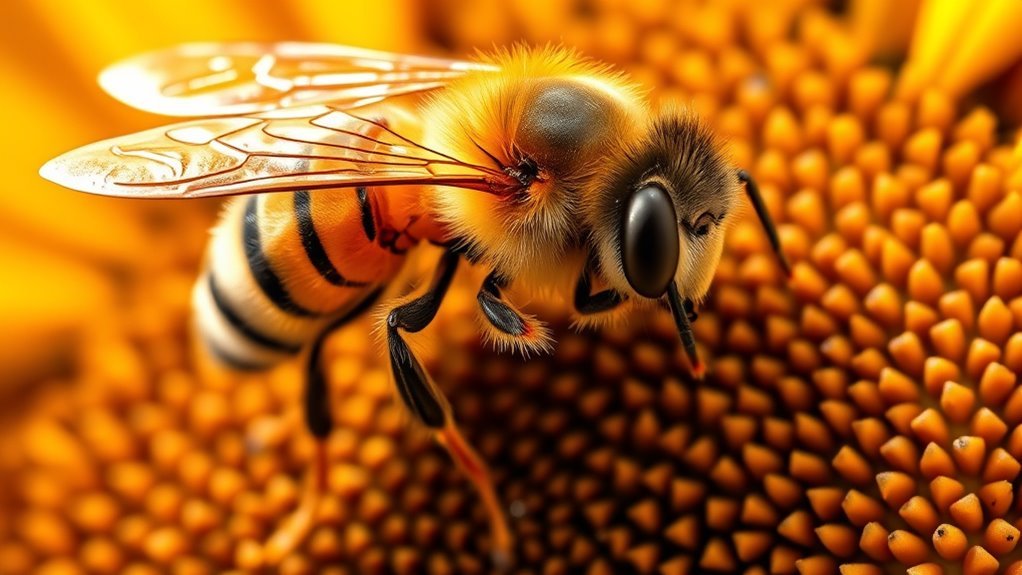
1) Larger, robust body for mating
The most visible trait is size and build. Drones generally have a larger, more muscular-looking torso with a rounded abdomen. This sturdy body supports flight and mating behavior, including the ability to compete effectively during queen mating flights.
2) Big compound eyes for queen detection
Drones also stand out for their prominent compound eyes, which enhance distant vision. These large eyes help males track and orient toward queens while in flight, improving the likelihood of successful mating.
3) No stinger
Unlike worker bees, drones do not possess a stinger. This absence aligns with their purpose in the colony—drones are not defense-oriented, nor do they perform sting-based behaviors.
4) Proportionately larger wings
Many beekeepers notice that drones appear to have larger wings relative to their body. These wings support agile flight patterns during mate-seeking activity.
5) Reproductive adaptations
Drones include specialized reproductive organs designed to transfer sperm. This evolutionary adaptation supports their central function in ensuring the continuation of the colony’s genetics through reproduction.
When you combine these features—size, eye prominence, wing proportions, and the lack of a stinger—drone identification becomes far more reliable.
Size Comparison: Drones vs. Worker Bees
Size is often the quickest way to differentiate a drone bee from a worker. In practical terms, the typical dimensions are:
- Drone bees: approximately 15 to 17 mm
- Worker bees: approximately 11 to 15 mm
This size difference reflects the drones’ specialized role. A robust build and comparatively larger body help drones perform mating-related flight and behavior efficiently. In contrast, workers are built for foraging, brood care, and colony defense.
In addition to body length, drones often appear to have a broader abdomen. Their lack of stingers further distinguishes them from workers, reinforcing their reproductive focus rather than labor or protection.
Recognizing these size distinctions helps you observe bee behavior more accurately and supports better beekeeping decisions—especially when monitoring brood patterns, drone presence, and overall hive performance.
Distinctive Coloration and Markings
Drone bee identification also relies on visible coloration patterns. While worker bees often show more varied striping and complex banding, drones tend to display darker hues with less intricate markings.
Here are common drone traits that beekeepers look for:
| Trait | Description |
|---|---|
| Base Color | Generally darker, often black or brown |
| Banding | Typically fewer and broader bands than workers |
| Markings | Less intricate patterns overall |
| Hair Coverage | Shorter, sparser hair |
| Overall Appearance | More robust and rounded |
By paying attention to base color, banding style, and hair coverage, you can more confidently distinguish drones from workers—even at a glance. These traits matter because drones play an important role in colony reproduction, influencing genetic diversity and helping maintain long-term hive resilience.
📋 About This Article
This article explains how to recognize a drone bee by its size, shape, and key features in the hive. It’s for curious beekeepers, students, and anyone trying to tell drone honey bees apart from workers and queens. You’ll learn what to look for—like their broader, darker bodies, simpler markings, and especially their large compound eyes—plus the fact that drones don’t have a stinger.
Frequently Asked Questions: What Identifying Traits Does a Drone Bee Look Like?
What does a drone bee look like compared to a worker bee?
A drone bee (male honey bee) typically looks noticeably different from a worker bee (female). Drones are usually larger and bulkier, with a rounder abdomen and more “stocky” body shape. Their antennae are also more prominent and often appear longer. Most importantly, drones do not have a sting—so they lack the narrow, pointed tail end many people associate with worker bees. Worker bees usually have a more tapered abdomen and finer, more streamlined features. If you see a bee that looks heavy-bodied with a broader midsection and no obvious stinger, it’s more likely a drone—though exact appearance can vary by species and region.
How can I tell a drone bee by its eyes?
One of the clearest identifying traits of a drone bee is its large, very prominent eyes. Drone bees have bigger compound eyes than workers and queens, which helps them locate mates. In many cases, their eyes appear to take up a larger portion of the head, giving the face a “wider” look. If you observe a bee up close, you may notice the head seems dominated by the eyes compared with the slimmer-looking faces of workers. This eye size difference is one of the most commonly cited features used by beekeepers when identifying drones.
Do drone bees have wings and how do their flight patterns look?
Yes, drone bees have fully developed wings, and they are capable fliers. However, their overall build and purpose differ from workers, so their flight and movement may look a bit different. Drones often move more slowly or appear less purposeful compared to the busy, task-focused flight of workers. During mating season, drones can be seen flying farther from the hive and lingering around areas where queen mating flights occur. In the hive, they may appear less active than workers, spending more time resting or moving around without the typical foraging behavior. Exact flight patterns vary, but a combination of “bigger body,” slower movement, and presence during warm months can be strong clues.
How can I identify a drone bee’s body shape and abdomen?
Drone bees often have a rounder, more blunt abdomen than worker bees. Their abdomen may look broader and less tapered, which contributes to a heavier appearance. Workers tend to have a more slender, streamlined look with a narrower waist. Drones also commonly appear “fatter” through the midsection, and the abdomen may look larger relative to the thorax. Another helpful trait is the overall lack of a stinger—because drones are males, they do not have the stinging apparatus found in worker bees. If you’re observing from a short distance, the most practical cues are the thicker body, broader abdomen, and less sharply pointed tail end.
Are drone bees seasonal, and does that affect what they look like?
Drone bees are strongly seasonal. In many temperate climates, colonies produce drones in spring and early summer, and drone numbers typically decrease later in the season. Because drones are mainly present when colonies are preparing for mating, your chances of seeing them increase during warmer months. Their appearance is generally consistent (large eyes, thicker abdomen, no stinger), but colony health and local environmental conditions can influence size and how many are present. You may also notice that drones look slightly different between regions or honey bee subspecies, but the core identifying features—especially their large eyes and bulkier body—remain the most reliable traits.
