

President Trump consistently emphasized the importance of drones in enhancing national security and modernizing military operations during his time in office. His remarks often underscored the strategic advantages of drone technology, particularly in terms of surveillance, precision strikes, and reducing risks to American personnel. This blog post will explore Trump’s drone policy, key statements, implications for national security, public reactions, future prospects, and comparisons with previous administrations.
Overview of Trump’s Drone Policy
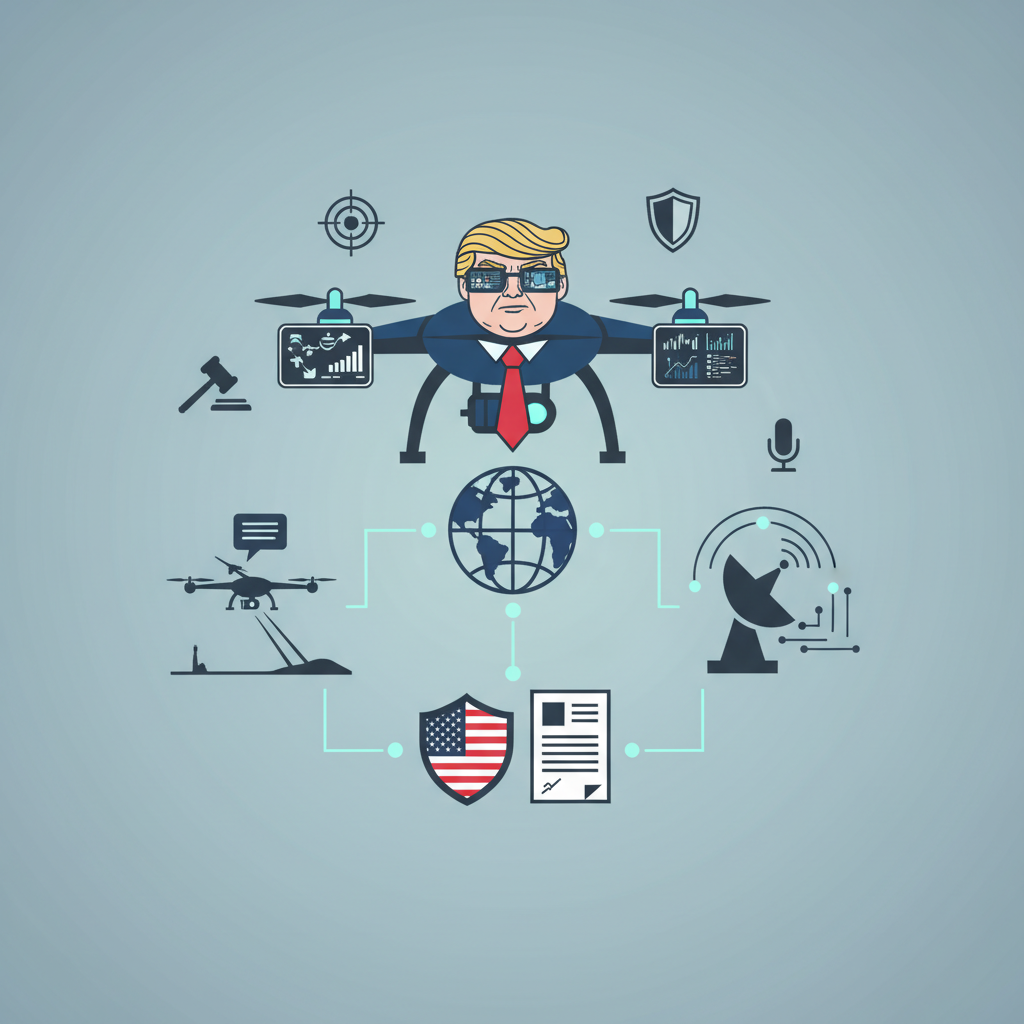
Under President Trump, the U.S. military saw an increased emphasis on the use of drones in various operations. Trump advocated for a robust expansion of drone capabilities, arguing that they were integral to modern warfare. He believed that drones not only provided critical surveillance capabilities but also facilitated precision strikes that could minimize collateral damage. This policy direction suggested a shift towards a reliance on unmanned systems to accomplish military objectives with enhanced efficiency.

For instance, during a 2017 speech at the Pentagon, Trump articulated his vision of a military heavily supported by drone technology, highlighting their role in conducting operations without risking the lives of American soldiers. The administration’s budget proposals reflected this commitment, with significant allocations aimed at advancing drone technology and capabilities, reaffirming his administration’s strategic focus on unmanned aerial systems.
Key Statements on Drone Technology
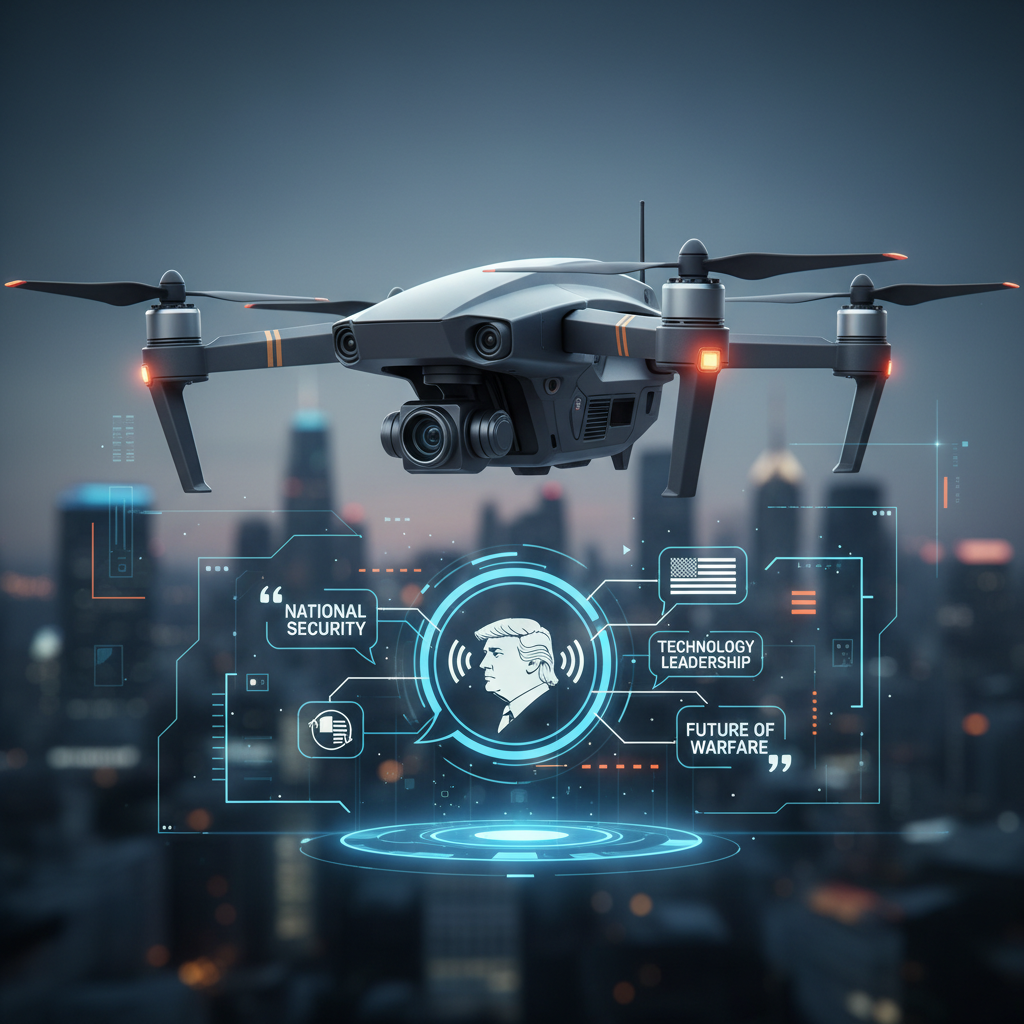
Throughout his presidency, Trump made several notable remarks regarding advancements in drone technology. He frequently praised the sophistication of drones, describing them as “the future of warfare.” At a press conference, he stated, “Drones give us unparalleled intelligence capabilities and allow us to strike with precision.” His comments often highlighted the transformative impact of drones on military strategy, reinforcing the notion that these technologies provide the U.S. with a tactical edge.
In addition to their military applications, Trump emphasized that drones significantly reduce the risks faced by American troops on the ground. He noted that deploying drones allows for the execution of missions that would otherwise put service members in harm’s way. This perspective helped frame drone usage as a safer alternative in combat scenarios, fostering a narrative of technological superiority in U.S. military operations.
Drones in National Security Strategy
Trump’s approach to drones was closely aligned with his broader national security strategy. He linked the advancement of drone capabilities to the enhancement of U.S. national security, arguing that they were essential tools in counterterrorism efforts. In various speeches, he mentioned the critical role drones played in identifying and targeting high-value threats, particularly within terrorist organizations.
For example, during a speech in 2018, Trump highlighted successful drone strikes that resulted in the elimination of key terrorist leaders. He asserted that these operations not only disrupted terrorist activities but also acted as a deterrent to potential adversaries. By presenting drones as a cornerstone of his counterterrorism strategy, Trump reinforced the narrative that technological advancement is crucial in addressing contemporary security challenges.
Public Reactions to Trump’s Drone Comments
Trump’s statements about drones elicited a range of responses from defense experts, policymakers, and the general public. While some applauded the efficiency and effectiveness of drone operations, others expressed significant ethical concerns. Critics raised questions about the implications of drone strikes on civilian casualties, sovereignty issues, and the potential for escalating conflicts.
For instance, human rights advocates often pointed to the lack of transparency surrounding drone strikes, arguing that this lack of oversight could lead to abuses and violations of international law. Conversely, supporters of Trump’s drone policy argued that the precision of drone strikes minimizes collateral damage, thus serving military and humanitarian interests simultaneously. This dichotomy in public reaction underscores the complexities surrounding the use of drones in modern warfare, reflecting the broader debate on the ethics of technology in military operations.
The Future of Drones Under Trump’s Leadership
During his presidency, Trump signaled a commitment to further developing drone technology, envisioning an expanded role for drones in both military and civilian applications. He frequently spoke about the potential for drones to revolutionize various sectors, from agriculture to infrastructure monitoring. This forward-thinking approach highlighted his administration’s desire to leverage drone technology for economic and strategic advantages.
Trump’s vision included integrating drones into the national airspace system, which would facilitate their use in commercial sectors while maintaining security protocols. This integration could lead to significant advancements in logistics, delivery services, and emergency response capabilities, thus broadening the scope of drone applications beyond military use. His administration’s focus on innovation and technology suggested a future where drones play an increasingly central role in various aspects of American life.
Comparisons with Previous Administrations
Trump’s approach to drones marked a distinct departure from previous administrations, particularly regarding their usage and public perception. While drone strikes were a feature of both the Bush and Obama administrations, Trump’s rhetoric around drones was notably more forthright and supportive of their expanded use. His administration focused on increasing transparency regarding drone strikes and their effectiveness, attempting to shift the narrative surrounding drone warfare.
Under Obama, drone strikes were often shrouded in controversy, with significant scrutiny over their legality and humanitarian implications. Trump’s administration, however, sought to frame drone operations as a necessary and efficient tool for national defense. This shift in perception highlighted the evolving dialogue on drone warfare, as Trump’s administration emphasized the strategic advantages of drones while addressing some of the ethical concerns raised by his predecessors.
In conclusion, President Trump’s statements about drones reflect a broader strategy of utilizing advanced technology for military and national security purposes. Through his advocacy for increased drone usage, he positioned drones as essential tools in surveillance, precision strikes, and counterterrorism efforts. While public reactions varied, the commitment to advancing drone technology suggested a future where drones play a pivotal role in both military and civilian contexts. As discussions continue around the implications of drone warfare, it is essential to consider both the benefits and challenges they present in an increasingly complex global landscape.
Frequently Asked Questions
What did President Trump say about the use of drones in military operations?
President Trump has expressed strong support for the use of drones in military operations, emphasizing their effectiveness in targeting enemies with precision while minimizing American casualties. He has often highlighted the advantages of drone technology in surveillance and strike missions, stating that they allow the military to conduct operations without risking the lives of ground troops. Trump’s administration frequently showcased drone strikes as a key component in the fight against terrorism, particularly in regions like the Middle East.
How did President Trump’s drone policy differ from that of previous administrations?
President Trump’s drone policy marked a shift towards a more aggressive approach compared to previous administrations. While both the Obama and Bush administrations utilized drones, Trump expanded their use and loosened the rules of engagement, allowing for more frequent strikes without extensive oversight. This change aimed to accelerate military operations against ISIS and other terrorist groups, reflecting Trump’s broader strategy of prioritizing swift action in combat situations.
Why did President Trump face criticism regarding his drone strike policies?
President Trump faced criticism regarding his drone strike policies primarily due to concerns about civilian casualties and the lack of transparency in military operations. Critics argued that the expanded use of drones led to an increase in unintended deaths of non-combatants and raised ethical questions about accountability. Additionally, human rights organizations highlighted the need for clearer guidelines and oversight to ensure that drone strikes were conducted in compliance with international law.
What are some key statements President Trump made about drone technology during his presidency?
Throughout his presidency, President Trump made several key statements about drone technology, often praising its efficiency and effectiveness in military operations. He referred to drones as “incredible” tools that provided the U.S. military with a significant advantage over adversaries. Trump also mentioned the importance of maintaining U.S. dominance in drone technology, asserting that it was crucial for national security and military superiority.
Which countries did President Trump mention when discussing the use of drones in counter-terrorism?
When discussing the use of drones in counter-terrorism, President Trump frequently mentioned countries such as Syria, Iraq, and Afghanistan, where drone strikes were commonly employed against terrorist organizations like ISIS and al-Qaeda. He framed these operations as essential to protecting U.S. interests and preventing the spread of terrorism. Trump’s administration also highlighted the importance of international cooperation with allies in combating terrorism through the use of drone technology.
References
- https://www.bbc.com/news/world-us-canada-40819818
- https://www.reuters.com/article/us-usa-trump-drones-idUSKBN1A12R7
- https://www.nytimes.com/2020/01/03/us/politics/trump-drone-strike-suleimani.html
- https://www.theguardian.com/us-news/2019/jul/19/trump-drone-strike-iran-attack
- https://www.washingtonpost.com/politics/trump-wants-to-build-a-drone-army-that-can-fight-and-fly/2017/02/08/18c1c7b0-e0a5-11e6-8b45-b7821d3dd47c_story.html
- https://www.c-span.org/video/?431322-1/president-trump-remarks-drones-iran
- https://www.defense.gov/Explore/News/Article/Article/1956603/president-trump-signals-future-of-us-drone-strikes/
- https://www.npr.org/2020/01/03/784329045/trump-says-drone-strike-that-killed-soleimani-was-necessary
