

Drones that weigh over 250 grams (0.55 pounds) must be registered, as well as all commercial drones, regardless of their weight. If your drone falls into the consumer or recreational category and exceeds this weight limit, registration is a necessity. Failing to register can result in severe penalties and legal issues. Understanding the full scope of regulations and requirements can help you navigate drone ownership more effectively.
Understanding Drone Categories
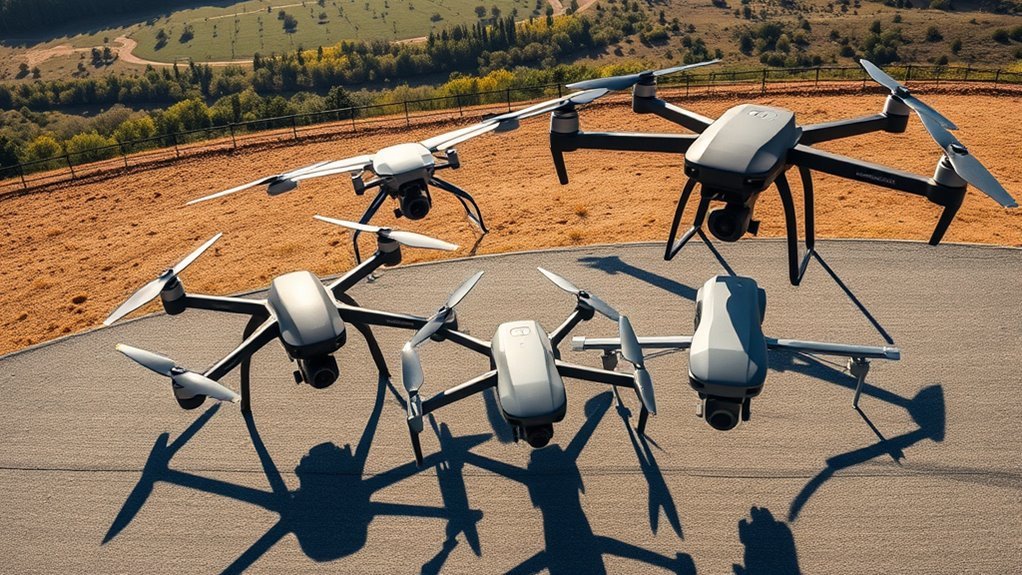
When you consider the various types of drones, it is essential to understand that they fall into distinct categories based on their intended use and specifications. Primarily, drones can be classified into consumer, commercial, and recreational types. Consumer drones are designed for personal use, often featuring cameras and easy controls. Commercial drones are utilized for applications like surveying, agriculture, and delivery, requiring more advanced technology. Recreational drones, while similar to consumer types, are often limited in capabilities and weight. Each category has different implications for the registration process, as certain drone types, particularly those exceeding specific weight limits or intended for commercial use, must be registered with aviation authorities to guarantee compliance and safety in the skies. Additionally, it’s important to note that registration is required for specific drone types based on weight and use, which helps promote responsible flying.
Weight Requirements for Drone Registration
To understand drone registration, you need to know the weight requirements that dictate compliance. Generally, drones exceeding a specific weight threshold must be registered, while lighter models may qualify for exemptions. Adhering to these regulations is essential for legal operation and safety in airspace management.
Registration Weight Threshold
Although registration requirements can vary by country, most jurisdictions set a specific weight threshold that mandates drone registration. Typically, if your drone exceeds 250 grams (0.55 pounds), you’ll need to engage in the registration process. This weight limit is essential as it delineates between hobbyist and commercial operations. Drone sizes above this threshold often pose greater risks to public safety and privacy, which is why regulatory bodies enforce these rules. Failing to register a qualifying drone can result in penalties, undermining your freedom to operate. Consequently, if you’re planning to fly a heavier drone, make sure you’re aware of the applicable registration requirements to maintain compliance while enjoying your aerial pursuits.
Exemptions for Lightweight Drones
While many drones require registration due to weight thresholds, there are notable exemptions for lightweight models. If your drone weighs less than 0.55 pounds (250 grams), you’re in luck—these lightweight exemptions can keep your flying experience hassle-free. Here are some key points to regard:
- Enhanced Freedom: You can operate without the burden of registration.
- Simplified Compliance: Lightweight drones often adhere to less stringent drone regulations.
- Increased Accessibility: More users can join the drone community without the red tape.
These exemptions are designed to encourage innovation and recreational use, allowing you to explore your passion for flying without unnecessary restrictions. Always stay informed about the latest drone regulations to ascertain you’re operating within the law.
Importance of Compliance
Understanding the weight requirements for drone registration is essential for any operator looking to stay compliant with regulations. Drones weighing over 0.55 pounds (250 grams) must be registered with the FAA, ensuring you avoid legal implications associated with unregistered flying. Compliance benefits extend beyond avoiding fines; they also enhance your operational credibility and safety. By adhering to these weight thresholds, you not only protect your right to operate freely but also contribute to a safer airspace environment. Ignoring registration can lead to severe penalties, potentially hindering your ability to enjoy aerial freedom. So, knowing the specifics of weight requirements isn’t just an obligation; it’s a vital step toward responsible and liberated drone operation.
Commercial vs. Recreational Drones
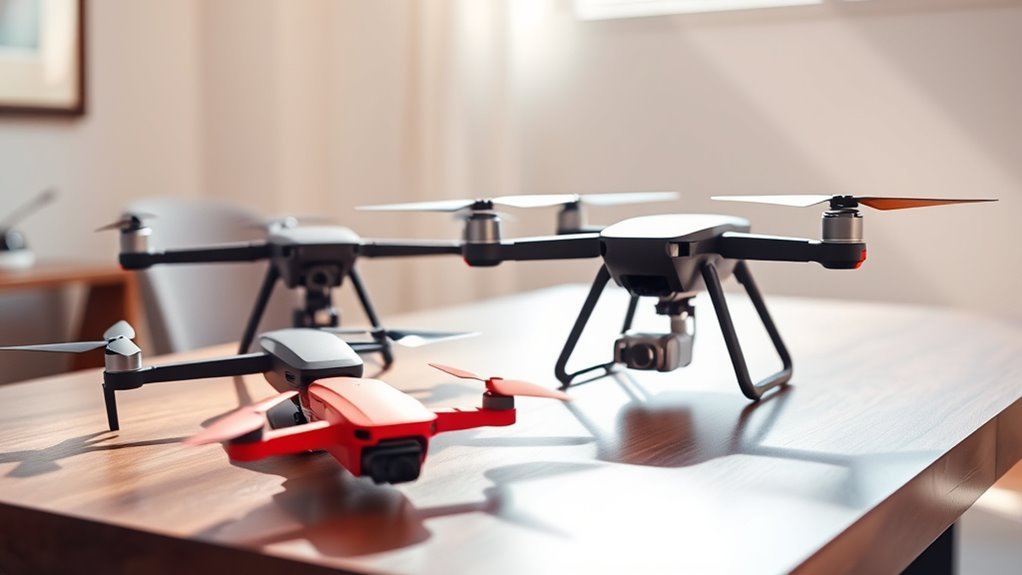
When considering drone registration, it’s crucial to distinguish between commercial and recreational drones. Each category has specific registration requirements and operational guidelines based on purpose and specifications. Understanding these differences will help you navigate the regulatory landscape effectively.
Registration Requirements Overview
As you navigate the world of drones, it’s important to recognize that registration requirements vary markedly between commercial and recreational use. Understanding these distinctions is significant for ensuring drone safety and compliance with regulations.
- Commercial drones must be registered regardless of weight, ensuring accountability in professional operations.
- Recreational drones weighing over 0.55 pounds also require registration, but the process is generally less stringent.
- Both categories necessitate adherence to guidelines that enhance safety and operational integrity.
The registration process serves as a fundamental step in fostering responsible drone usage. By registering your drone, you not only comply with legal obligations but also contribute to the broader goal of safe and enjoyable flying experiences for all.
Commercial Drone Specifications
Commercial drones are designed for specific applications that often necessitate advanced features and capabilities compared to their recreational counterparts. You’ll find that commercial drone features typically include enhanced payload capacities, longer flight times, and sophisticated navigation systems. These drones are built to meet rigorous drone industry standards, ensuring safety and reliability for professional use. For instance, high-resolution cameras and real-time data transmission are common in drones used for surveying or inspections. Additionally, many commercial drones support advanced software integration for mapping or analytics, which further augments their functionality. Understanding these specifications is essential as they dictate not only the operational capabilities but also the regulatory requirements that govern their use in various industries.
Recreational Drone Guidelines
While both commercial and recreational drones serve distinct purposes, understanding the guidelines that govern their use is vital for operators. For recreational usage, there are specific safety practices you must follow to guarantee a responsible flying experience.
- Always fly below 400 feet.
- Keep your drone within visual line-of-sight.
- Avoid flying near airports or populated areas.
These regulations not only secure your freedom to fly but also protect others and the airspace. Ignoring these guidelines can lead to penalties, and it’s important to stay informed. By adhering to these rules, you can enjoy the perks of recreational drone flying while contributing to a safer environment for everyone involved. Embrace your passion responsibly!
Specific Regulations by Country
When it comes to drone registration, regulations vary considerably from one country to another, reflecting each nation’s approach to airspace management and safety. In the United States, for instance, the FAA mandates registration for drones over 0.55 pounds, emphasizing compliance with specific drone laws. Meanwhile, in the European Union, the EASA has established international regulations that categorize drones based on weight and usage, requiring registration for most. Countries like Canada and Australia have their unique frameworks, balancing the need for safety with the desire for recreational freedom. Understanding these distinctions is essential, as maneuvering through diverse drone laws guarantees you operate within legal parameters, safeguarding your rights as a drone enthusiast while respecting airspace integrity.
Consequences of Flying an Unregistered Drone
Flying an unregistered drone can lead to significant legal and financial repercussions. Ignoring registration requirements not only jeopardizes your freedom but also exposes you to several risks, including:
- Legal consequences: You may face fines or even criminal charges, depending on the severity of your violation.
- Financial penalties: Authorities could impose steep fines that escalate with repeated offenses, draining your resources.
- Insurance complications: Unregistered drones often lack coverage, leaving you liable for damages or injuries.
Without proper registration, your autonomy in the skies is at stake. It’s essential to understand that flying freely comes with responsibilities. Failing to register can swiftly turn your passion for flying into a costly burden. Stay informed to maintain that freedom.
How to Register Your Drone
Registering your drone is an essential step in ensuring compliance with aviation regulations and safeguarding your flying experience. To begin the registration process, visit the FAA’s official website. You’ll need to create an account and provide details about your drone, including its make, model, and serial number. For drones weighing over 0.55 pounds, a registration fee is required. Once submitted, you’ll receive a registration number, which must be clearly marked on your drone for effective drone safety. Remember, the registration is valid for three years, after which you’ll need to renew it. Staying compliant not only enhances your freedom to fly but also contributes to a safer airspace for everyone. Additionally, ensure that your drone’s weight classification meets drone registration requirements to adhere to local regulations.
Frequently Asked Questions
Do I Need to Register My Drone if It’s a Gift?
If you receive a gift drone, you must register it if it meets certain weight criteria. Ownership responsibilities include ensuring compliance with regulations, so check the rules to avoid penalties and enjoy your flying experience.
Can I Fly My Drone Without Registration in Rural Areas?
You can’t ignore drone regulations, even in rural flying. If your drone exceeds weight limits or is used commercially, registration’s necessary. Always check local laws to verify you’re flying safely and legally, regardless of location.
Are There Age Restrictions for Registering a Drone?
In the domain of drone ownership, age serves as a gatekeeper. You must be at least 13 to register, ensuring responsible pilots navigate the skies. Understand the registration process requirements to release your aerial ambitions.
What Happens if I Lose My Registration Certificate?
If you lose your registration certificate, you can initiate the registration process again. The FAA provides replacement options, allowing you to obtain a duplicate certificate for your drone, ensuring you remain compliant and free to operate.
Is There a Fee for Registering My Drone?
You’d think the registration process would be a financial burden, but it’s not! For most drone categories, there’s a modest fee, ensuring your aerial aspirations soar without breaking the bank or your spirit.
